

Forget Resurfacing: A Cheaper Way To Smooth Rough Concrete Driveways
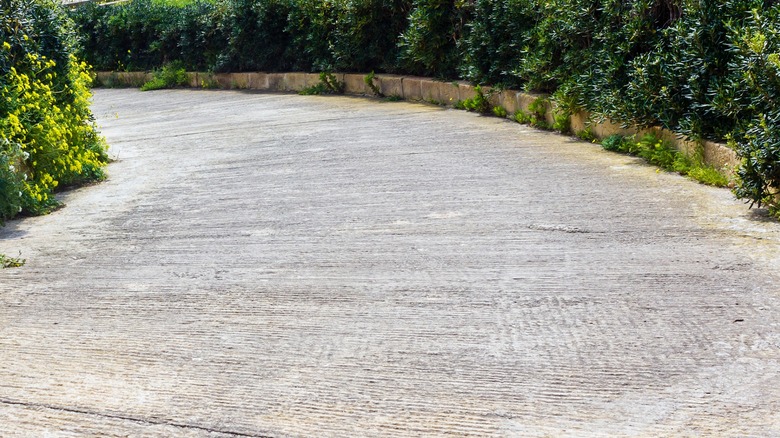
A concrete driveway can last 30 years or more, but that doesn't mean it will look like new forever. In most cases, the opposite is true. The surface gets tannin stains from falling leaves and twigs. It cracks and looks the worse for wear with each passing year. Before the damage gets bad enough to require resurfacing, you can restore the driveway's appearance and curb appeal by treating it like a hardwood floor and sanding it.
Yes, you can sand concrete. Although a specialty concrete sanding machine is the best tool for the job, the sanders you use for hardwood will also work, and they are easier and less expensive to buy or rent. The type of sander you need depends on surface area, extent of the damage, and the quality of finish you want. A walk-behind drum or orbital floor sander will tackle serious damage, but for light sanding, you might prefer a floor buffer. If you don't mind getting on your hands and knees, you can also use a handheld belt or orbital sander.
One of the advantages of sanding is that it preserves the original appearance of the concrete rather than covering it over with a resurfacing material. This is an important consideration if the concrete is stained or stamped with a pattern. Sanding also opens concrete pores, just as it does wood pores, so that protective sealers can soak in deeper and protect longer.
How to sand a concrete driveway
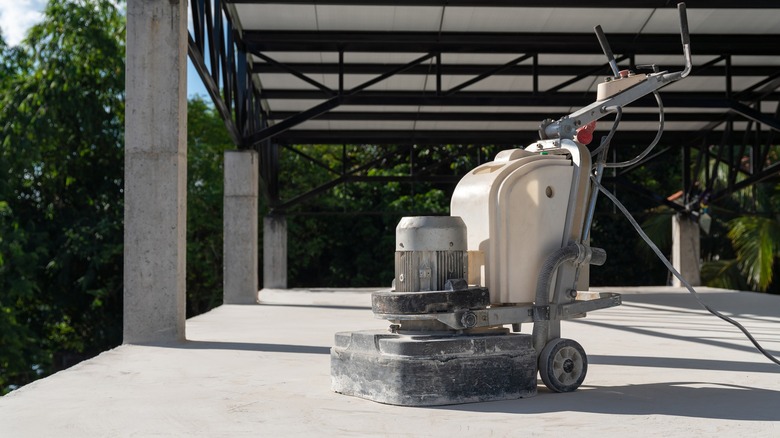
To sand concrete, you need to prep the driveway by cleaning it meticulously, repairing cracks with sealant, and letting everything dry and cure before you begin. Be sure to put on a respirator, goggles, and protective clothing, because you'll be raising a lot of cement dust, which is caustic and can burn your skin and damage your eyes. Even worse, it's full of silica dust, which can kill you if it accumulates in your lungs.
After you've chosen your sander, it's time to choose sandpaper. For serious damage, start with coarse 40- to 60-grit paper on a drum sander, then progress to finer grits to get a smoother surface. If the driveway isn't in bad condition to start with, you might be able to skip the coarser paper and start with 80-grit. Working on a dry day, run the machine over the entire driveway with your selected grit, blow off the dust, and check your progress. You may opt to do another pass with the same grit or move on to a finer one. Unless you're looking for a refined, polished look, which is uncharacteristic for most driveways, 120 is probably the finest grit you'll need.
When you're satisfied with the way the concrete looks, blow off the sanding dust, give the concrete a final sweep, and apply a penetrating concrete floor sealer. Your driveway will look like new, and if you reapply the sealer annually, it will continue to look that way for years to come.