

What Is The Meaning Behind A Purple Fence?

No matter what type of fence you install, it's common practice to either stain or paint the material for either aesthetic or longevity purposes (or both). Earth tones and greys are popular, and you might even see the occasional green or blue fence. If you come across a purple fence though, chances are the homeowner chose the color for other purposes. Depending on where you live, a purple fence is usually a visual sign that means "no trespassing," and it's advised that you follow suit.
With the availability of "no trespassing" signs, you might wonder why someone might choose to use purple fencing instead. There are a few logical explanations for putting purple paint on such structures. First, purple fences tend to be more common in rural areas, as they can stand out in certain spots like the woods where people might accidentally happen upon their properties while hiking. Painting a fence purple might also be a more practical and permanent option for landowners who don't want to deal with the hassle of having to replace multiple "no trespassing" signs that might fall, crack, or get stolen. Purple is also more detectable in natural areas versus green or earth tones that might otherwise blend in with the setting.
Differences in state laws and uses of purple paint you need to know
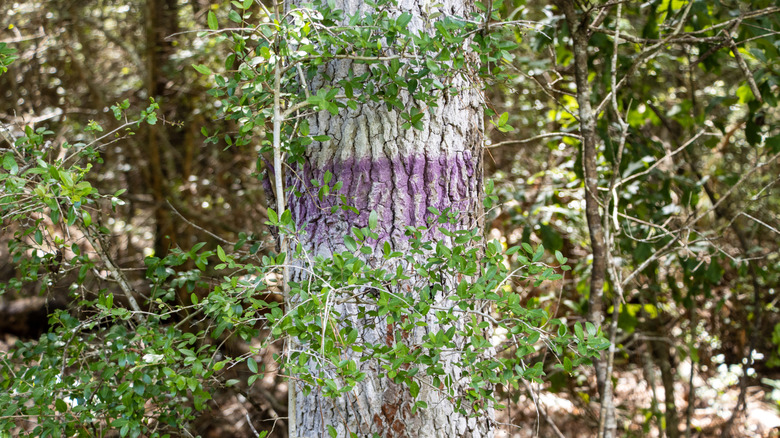
Purple fencing for no trespassing falls under "purple paint laws," which can vary by state. According to such laws, these purple markings are enforceable in the same way as posted warning signs. Many US states recognize the use of purple paint as a way to legally protect properties, while others might recognize other colors such as red, orange, or blue. Furthermore, some states recognize purple paint as a legal way to prevent certain activities only, such as fishing or hunting. If you're unsure what's legal in your own state, consider contacting your state's Department of Natural Resources office. An even better solution is to plan your hiking routes ahead of time whenever possible, and to turn around and steer clear of any suspected private property. Doing so can help prevent potential legal consequences related to trespassing.
Fences are also not the only entities painted purple as warnings to possible trespassers. You might spot purple lines on individual wood or galvanized fence posts, or perhaps on tree trunks lining the protected property. As a rule of thumb, whenever you see purple paint surrounding an unknown property, this is your sign to stay away. It's also worth noting that purple fencing doesn't necessarily replace other measures to keep trespassers off your property. Some areas still require that landowners properly display no trespassing signs around key entry points, such as gates or entrances to private roads. Finally, if you're considering painting your own fence purple to help warn would-be trespassers, it's important to know the laws in your own state regarding these practices.