

Poison Ivy Vs. Poison Oak: What's The Difference?
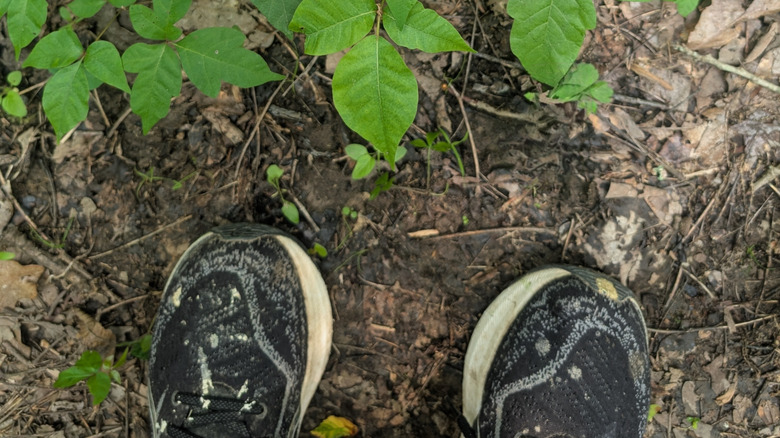
The mere mention of poison ivy (Toxicodendron radicans) and poison oak (Toxicodendron diversilobum) is enough to make your skin itch. Oftentimes, these two plants are talked about interchangeably due to their ability to produce notorious urushiol sap that can cause rashes. Both perennials also belong to the cashew family. Yet these are two different plants with varying characteristics. Aside from distinguishing physical features that set poison ivy and poison oak apart from one another, there's also differences in region to consider if you're looking to properly identify them for removal purposes.
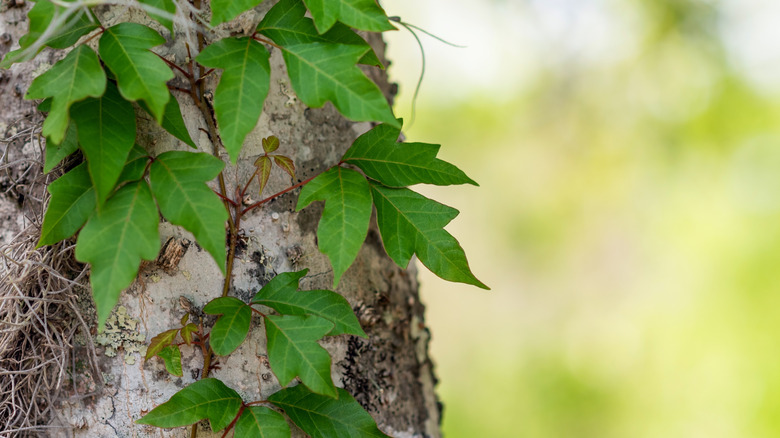
Among the easiest ways to tell whether you're dealing with poison ivy or poison oak is by their leaves. Both can grow in clusters of three leaves, which is why the plants are often confused with each other. Poison ivy leaves tend to be lobed, smooth, or pointed at their ends, depending on subspecies. As its name indicates, poison oak tends to produce leaves that resemble that of an oak tree. However, unlike true oak trees that produce singular leaves, poison oak leaves can occasionally grow in groups exceeding three. These also tend to be wider than poison ivy and have teeth or lobes with rounder edges. During the autumn months, the leaves of both poison ivy and poison oak are often red or yellow before falling off for the season. Both types of plants can grow as small vines or larger shrubs, although poison ivy is more likely to creep or spread in vine form.
Where poison ivy and poison oak plants grow
In the wild, poison ivy and poison oak do offer some benefits. For example, some birds eat the plants' berries, while wildlife such as deer may feed on the leaves. However, neither of these plants are desirable to have around a home garden or yard, especially if you have pets or young kids who might accidentally encounter them.
To that end, where you live is another factor that can help you figure out which plant you have on your property. Poison ivy is the most widespread of the two plants, as it can be found in all 48 contiguous U.S. states. It often grows as either a spreading or crawling vine, and you might spot the plant growing up trees in the wild. People often encounter the plant in woodland areas, as well as along edges of waterways such as rivers and lakes. Poison oak, on the other hand, is primarily located in western U.S., as well as parts of the east. It's not as abundant in central regions. But if found in these areas, you'll likely encounter poison oak in woodlands and along roadsides.
Despite their differences, these plants require similar removal methods
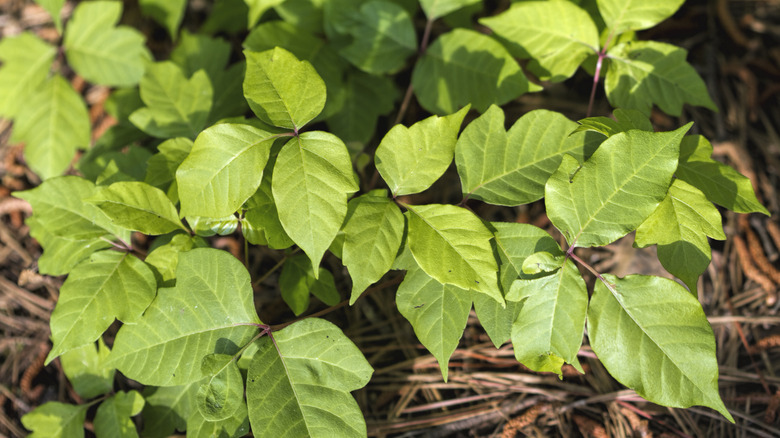
Once you've confirmed you have either poison ivy or poison oak on your property, now is the time to put together a plan for removal and control. First, you can mechanically remove either plant. Equipment such as lawn mowers or trimmers can be suitable to target larger plants close to ground level, while hand-pulling may be required for smaller ones that crop up in your garden. Taller plants may require the help of a saw before using other lawn equipment.
Know that despite mechanical removal, you may need to utilize herbicides during the growing season to help fully eradicate these plants. Look for products containing triclopyr or glyphosate for the best results. Always follow all herbicide safety instructions as well as indications for proper application – this will also help to protect other nearby plants, too. Furthermore, it's crucial you protect yourself before dealing with either poison oak or poison ivy. Always wear pants, long sleeves, and vinyl gloves to protect yourself from urushiol and subsequent skin reactions. (It's also a good idea to wash clothing separately after working near these plants, too!). Finally, don't forget to clean your tools after poison ivy or poison oak contact to fully remove urushiol residue.