

What's The Purpose Of A Crisper Drawer, And How Does It Work?
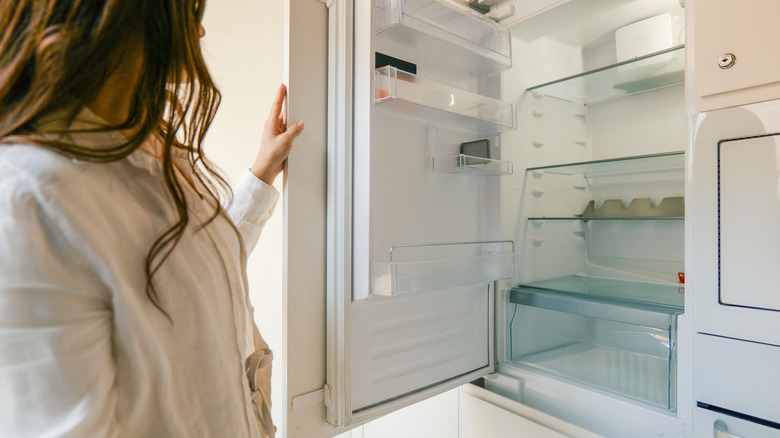
Modern-day refrigerators undoubtedly offer tons of storage opportunities for fresh foods, leftovers, and beverages alike. Such features often include both fresh drawers and crisper drawers. While sometimes these two types of drawers are used interchangeably, you may be doing your food (and your wallet) disservice if you do so. Unlike other components of a refrigerator, a crisper drawer is a dedicated spot for controlling humidity levels to help keep produce items fresh for longer, and many models are adjustable to suit your needs.
Knowing the purpose of a crisper drawer is undoubtedly a key part of understanding how to use a refrigerator. With the exception of mini-fridges, most refrigerators have at least one crisper drawer, and many have two. Also called humidity drawers, these clear bins are located towards the bottom of the refrigerator. A single drawer is likely a high-humidity drawer, especially if it lacks adjustable controls. However, refrigerators with two drawers are equipped with adjustable vents at the top of each one that you can slide into either an open or closed setting. This is essentially how you can keep your crisper drawer more humid or less humid, depending on what you're storing. (It's also a good idea to check your owner's manual or to contact the manufacturer for specifics related to your particular refrigerator model).
How humidity in a crisper drawer impacts fruits and veggies
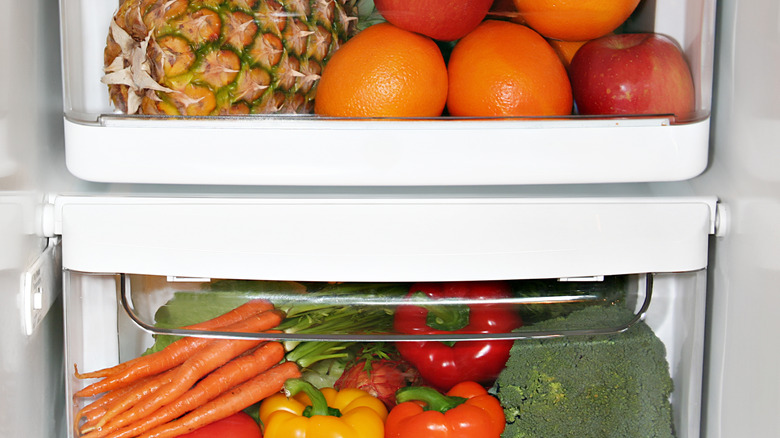
While some crisper drawers are labeled for storing vegetables or fruits for quick reference, it's also helpful to know which produce items thrive in more humid conditions. As a rule of thumb, items that wilt are best suited for crisper drawers with high humidity. Many vegetables tend to thrive best in high humidity crisper drawers, which have vents that are closed to keep the space as moist as possible. Leafy greens, fresh herbs, cucumbers, and cruciferous vegetables, such as cabbage and broccoli tend to thrive best in these humid conditions, as it keeps these veggies crisp without wilting or drying out prematurely.
Low-humidity drawers are ideal for fresh fruits, such as melons, berries, apples, and pitted fruits like pears and peaches. It's also a good spot for mushrooms. For a less humid drawer, it's important to make sure you slide the vents open. This helps to allow excess moisture to escape the drawer, and it also promotes better airflow overall. What's more, opening the vent in the drawer can allow natural ethylene gasses to escape from fruits, which can otherwise make them ripen prematurely when left trapped in the space.
Correct crisper drawer usage can mean less wasted food
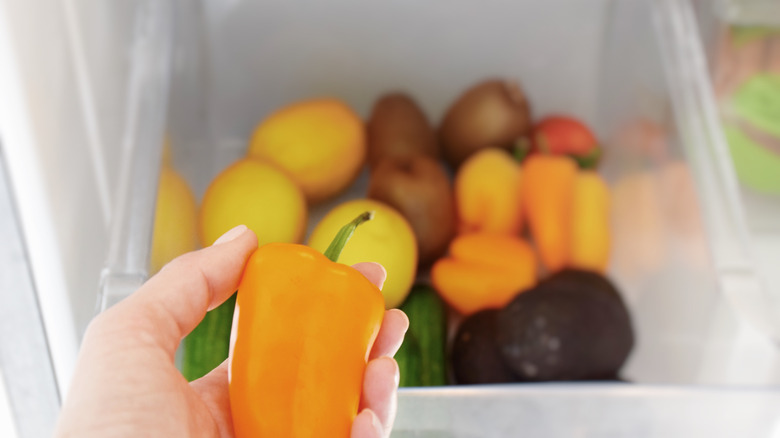
The humidity control offered via a crisper drawer makes a significant impact on the longevity of the fruits and vegetables you store. This can translate to less food waste overall. If conditions are too humid, ethylene-producing items can rot. On the other hand, if the drawer is too dry, certain items may wither. Either scenario can create disappointment, whether you encounter wilted lettuce when you're trying to prepare a salad, or moldy fruit when you need a healthy snack. It's also possible to have both drawers in the high or low humidity modes, depending on your exact food storage needs.
Aside from humidity levels, make sure that you store produce in a way that allows airflow between each item. To this end, MayTag recommends that you only fill the bins to about two-thirds of the way full. It's also best to store the most perishable ones towards the front of the drawer so you don't forget about them. Finally, don't let the humidity controls trick you into thinking you need to place all your produce in the fridge. Aside from storing your tomatoes all wrong, potatoes, bananas, and onions are common items that should not be placed in a refrigerator.