

Use Potatoes To Easily Upcycle An Old Wooden Ladder Into A Charming Outdoor Feature
We may receive a commission on purchases made from links.
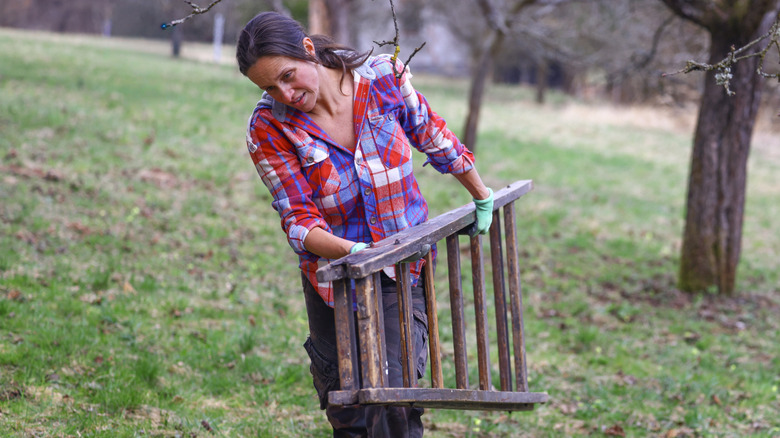
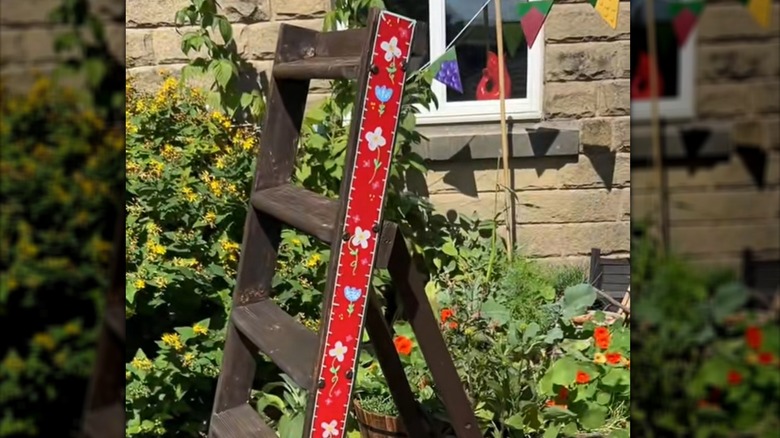
If you have an old wooden ladder with rickety rungs and a weathered appearance, you might think that it has reached the end of its life cycle. As such, it may seem prudent to just show it the door to make some much-needed room in your cluttered shed. However, if you're not opposed to a little DIY project, you can give it a new lease on life and turn it into a charming outdoor feature with a humble potato. Wondering if that's even possible? Documenting her journey on TikTok, mrsclarehoops shows how she transformed her old wooden ladder into a statement piece in her garden.
She gave it a little bit of TLC and added fun designs with potato stamps to bring the worn piece alive. To follow in her footsteps and take on this charming farmhouse DIY, you'll need an old ladder (if you don't have one lying around, you can always thrift one or check with your friends), one or two potatoes (depends on how many types of designs you want), some paint and stain, one or two paint brushes, a knife, and a few markers (this is optional). And if the ladder hasn't been used in forever or looks dirty, keep some soapy water handy to clean the built-up dust and grime. Or, you can use dedicated cleaners, like method's Daily Wood Cleaner. You'll also need a rough sandpaper grit to remove stains, along with a fine one to smooth out edges and scratches. You may also have to use a wood filler to fill in cracks. And to ensure all your hard work doesn't go to waste, get a wood varnish, such as Minwax's Fast Drying Polyurethane Spray.
How to turn your old wooden ladder into a charming outdoor feature with potatoes
The first thing you want to do is spread out an old cloth beneath your ladder prior to cleaning it. If you go the soapy water route, don't forget to go over the rungs and sides again with a damp microfiber cloth to ensure there's no residue. Also, give it ample time to air dry. Then, inspect it carefully to see if there are any loose hinges or screws. If you find a few rusted pairs, replace them so your ladder doesn't wobble under weight. This is also a good time to apply wood filler if required. Once done, get your rough-grit sandpaper and rub it against the wooden surface to remove dried paint and other mysterious stains. Follow this with a fine-grit paper to prime it. Now, you can stain and paint it per your preferences.
While it dries, prepare your potato stamps. Cut a piece in half and press a cookie cutter to its surface such that it's lodged in halfway through. Then, use a knife to trace the cutter's shape before cutting out a thick layer from your potato. However, if you want bespoke designs, a paper clip with a pointed tip will be useful for carving out minute designs (with intricate detailing), whereas a utility knife will help you make quick work of chunky patterns. Whichever way you go, your chosen design must be at least ¼-inch deep of your potato to function as a stamp. Wipe your makeshift stamps on a paper towel and dip them in your favorite paint colors before pressing them to your ladder's side and rungs. Alternate patterns and designs until you're satisfied. Finally, apply a protective seal before housing your plants or gardening supplies.