

Pantry Moth Webs Look Different: Here's How To Identify One In Your Kitchen

Maintaining a clean pantry is good for aesthetics and helps you keep track of everything, but it's particularly important for preventing bugs from getting into your food. Pantry moths, sometimes called flour or meal moths, are tiny bugs that lay their eggs on or near food. They can chew their way into boxes and bags of food, destroying and infesting your pantry staples like flour, cereal, and rice. The next time you're organizing your pantry, look for signs of pantry moths. One clear indicator is the sticky white or gray webbing left behind by the larval stage. These webs can look like spiderwebs, but there are a few differences to keep an eye out for.
Pantry moth webs often have a different structure to them than spiderwebs do. Moth webs are made naturally as the larvae move through the pantry. This means the threads follow the larvae paths through your cabinets or food rather than a pattern. The result is webs that may look more random or wispy than the classic spiderweb shape, with heavy infestations sometimes resulting in a layer of webbing over your food.
Another key difference between spiderwebs and moth webs is location. While cobwebs and moth webs may both be in the dark corners of your pantry, spiderwebs are highly unlikely to be inside your food containers. Pantry moth larvae webs inside containers may stretch from the lid or sides of the packaging over the food, or look like an odd clump where the food is stuck together.
What to do if you suspect you've found pantry moth webs
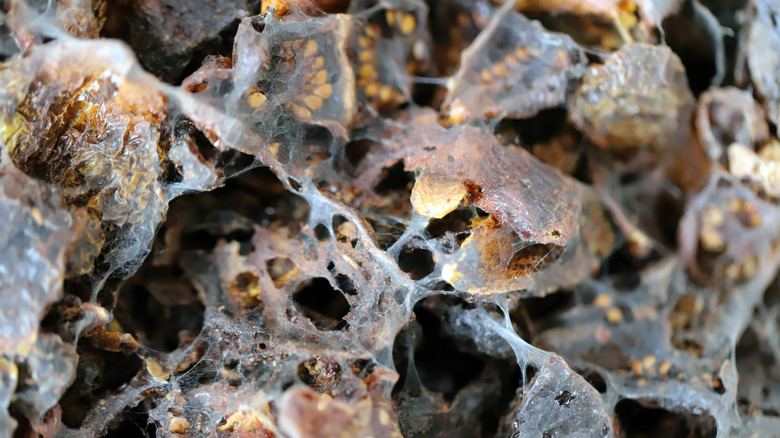
If you think you've found pantry moth webs but aren't certain, don't panic. The moths, larvae, eggs, and webbing themselves aren't harmful. However, it's a bit unsettling to have bugs in one's food, and they could be a sign that your food is not fresh, as the moths would need enough time to make their way through the items and reproduce. If the webs are present inside your food, it will have to be sealed and thrown away outside to prevent any moths or larvae from making their way back to your pantry. This guide to getting rid of pantry moths can help you from there.
However, it may be worth investigating further if the webs are outside your food. Check for thin strands that aren't part of a web. Strands coming from above could indicate that a spider dropped down from higher up, but horizontal strands across the surface of the shelf could be from pantry moth larvae crawling across it. In addition to webs, look for mature moths. Pantry moths are tiny and can range in color from gray to shades of brown, which can make them hard to see. Cocoons made of the same silk as the webs may also be present. Check both the insides and outside of your food packages carefully for webbing, and toss anything that seems contaminated. Whether the webs turn out to be from pantry moths or some interloping cellar spiders, they're also a good sign that you need to clean your kitchen cabinets and pantry.