

3 Things Your Zucchini Plants Need In August To Keep Producing All Summer
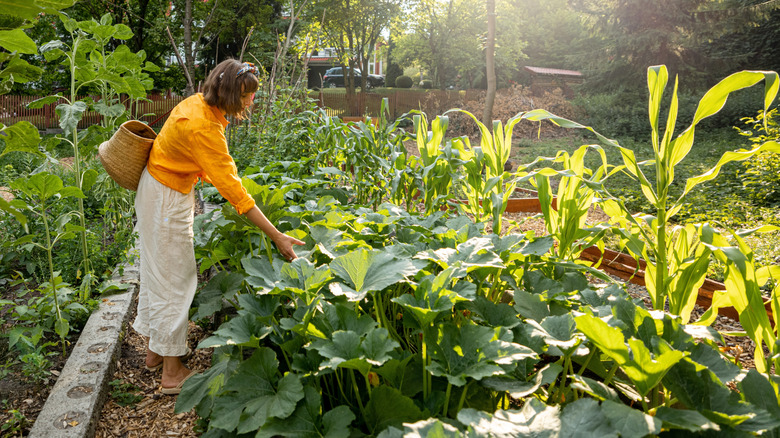
By August, you've got two tribes of zucchini growers. One group has an abundant crop to both cook up and share with neighbors for National Zucchini Day on August 8. However, the other category puzzles over their plants slowing down or becoming unproductive, ruining their dreams of enjoying zucchini bread as fall approaches. If you belong to the second category, there are three things you must do in August to keep your plants productive throughout summer. You should harvest them as often as you can, keep the beds watered, and prune away any dead, decaying, or diseased leaves. Taking these steps may rekindle your plant's vigor and production.
That being said, in case you lost a few plants to pests like squash borers and bugs early in the season, consider succession planting. Since pest activity typically slows by August and the first frost is still a couple of months away, you may still have time to sow new seeds and enjoy a nice crop. Indeed, many gardeners sow zucchinis at regular intervals of four to six weeks to maintain a steady supply until frost kills them.
Harvest them young and frequently
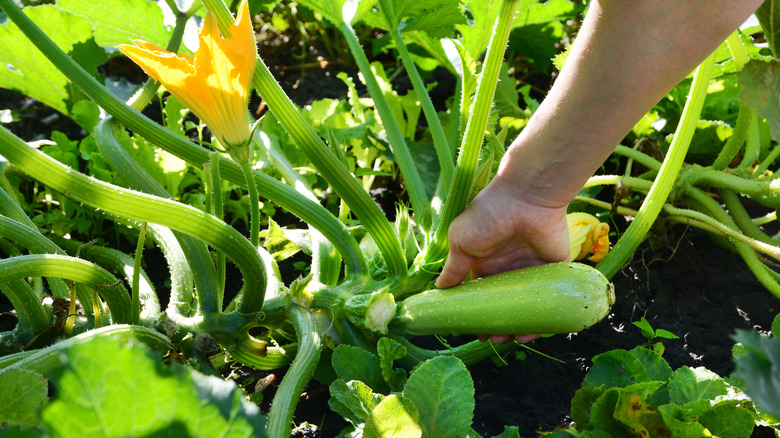
As a member of the summer squash family, zucchinis are warm-season vegetables. They thrive when the summer heat is on, as it is during August across many parts of the country. As a result, it matures quickly and may be harvested within four days of flowering.But if you put off the task, the plants continue to pump their resources into the young fruit, causing it to grow rapidly. These large zucchinis taste terrible, as they're chockfull of seeds and have a rough skin. Left on for long, they may even rot on the stem.
However, the worst part is they expend the resources that could have gone into new flower and fruit production. The result is a decline in overall yield with no extras to share with your friends and community. To avoid that, be sure to harvest baby zucchinis when they're about 6 inches in length and tender to the touch. If you spot any large fruits, pick them off to avoid wasting more resources. Inspecting your plants daily can help you stay on top of this task.
Keep the beds well-watered and disease-free
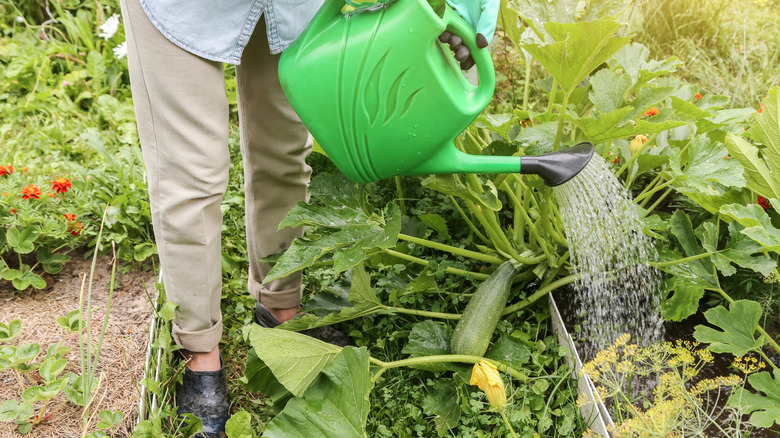
August is the time when many gardens still grapple with dry spells or watering restrictions. This doesn't bode well for zucchini plants for several reasons. First, they're water-hungry, especially when they're setting or developing new fruit. Plus, if they're under-watered or irrigated inconsistently, they struggle to absorb nutrients like calcium. This can saddle them with blossom-end rot disease, which quickly terminates the growing fruit.
To avoid these repercussions, keep your veggie beds well-watered, down to a depth of 12 inches. Check the beds for dryness at least once a week or more often, especially if there is a heatwave or your plants are growing in sandy soil that tends to dry out sooner. This also applies if you're growing zucchini vertically. It's also a good time to top up the organic mulch, as it improves the soil's moisture-retentive capacity.
However, while you're caring for your zucchini plants, it's equally important to examine them for diseases. Although the bulk of pest pressure is off, powdery mildew can still infect the plants as hot days are either marked by high humidity or punctuated by cool nights. Their large leaves can trap moisture, block airflow, and crowd out the interior growth, making the environment hospitable for fungi. For this reason, pruning zucchini plants weekly becomes essential. After picking off any yellowing, old, or dead leaves, snip away the leaves in direct contact with the soil or congesting the center. You may also pinch the tops to redirect resources into fruit maturity, rather than leafy production.