

Caulk Vs. Grout: What's The Difference?

Like jam versus jelly, yam versus sweet potato, and alligator versus crocodile, some words are easy to conflate, even when they have distinctly different meanings. While caulk and grout aren't used quite as interchangeably, they're frequently mixed up because they have similar functions and often look alike (at least from afar). Both materials are used to fill gaps, but they serve different purposes. In short, caulk seals gaps between separate building materials, while grout fills the space between tiles. But there's more to unpack.
So, what exactly is caulk? It's a versatile substance made from acrylic, latex, silicone, polyurethane, or butyl rubber, and it's commonly used to block moisture and prevent drafts while creating a seamless and aesthetically pleasing look. One use for caulk is sealing around the edges of a bathtub or sink. However, caulk is also used to seal windows, doors, baseboards, and more. It's usually applied with a caulk gun.
As for grout, it's a mixture of cement, water, and sand, making it more rigid and less versatile than caulk. However, grout's sturdiness makes it ideal for filling and solidifying the space between tiles, holding them in place and blocking moisture, whether it's for shower walls or ceramic tile floors. There are few tools for applying grout. But it's typically applied with a grout float, which spreads the material between tiles, and then the excess is scraped away.
Knowing when to use caulk and when to use grout
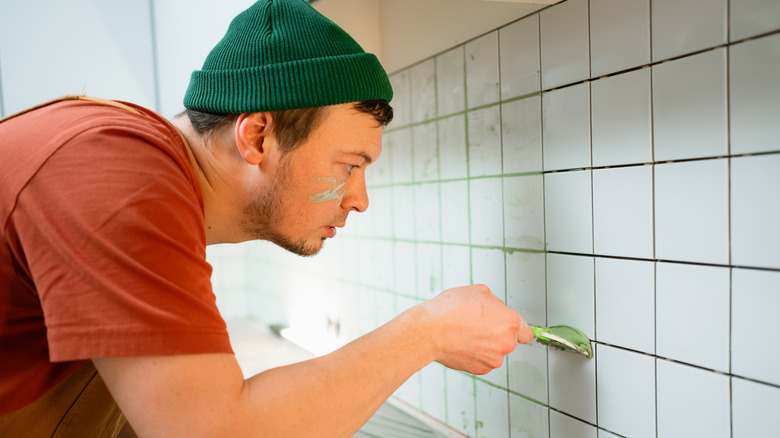
Despite the fact they're both used to seal gaps, it's important not to mix up when to use caulk and when to use grout. Caulk, on its own, isn't strong enough to provide structural stability for an entire wall of tile. Meanwhile, grout is too rigid to seal a sink, and movement over time will cause it to crack. It's also not advised to apply caulk over grout, even in a pinch to fill tiny cracks or holes. Not only would it look slightly different, but the caulk would peel over time. Instead, you should regrout the area by removing the old grout and applying a new layer, as it's best to avoid putting new grout on top of old grout.
Eventually, both grout and caulk must be replaced. Grout lasts about eight to 15 years but typically needs to be resealed every year or two, especially if you want to get the most years possible out of it. The lifespan of caulk varies widely depending on the type you use, where it's applied, and how well it's maintained, but you can expect somewhere between five and 15 years. Make sure to clean grout and caulk regularly, even weekly, as both are susceptible to mold and mildew, especially because they're often used in areas with a lot of moisture.