

Keep Grass Off Of Lawn Mower Blades With A Cheap Kitchen Staple
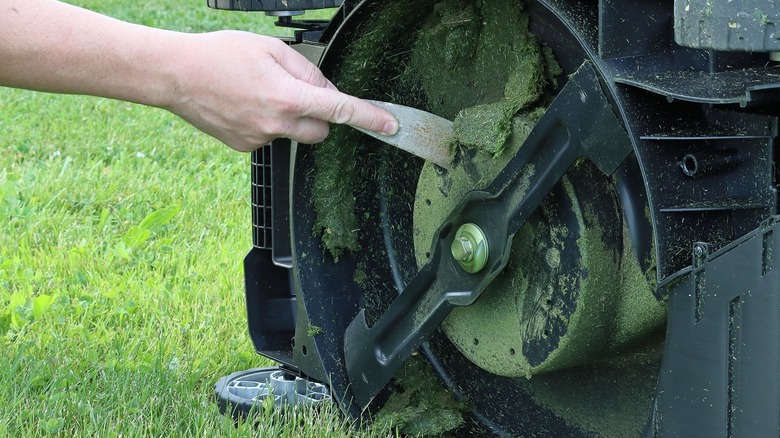
As co-owner of a small garden and landscape business, one of my priorities was to keep the lawn mower clean and sharpen the blade to ensure that it cut the grass efficiently without overworking, We had two walk-behind rotary mowers — and one of my jobs was to thoroughly clean them after each use. Sometimes it was a real chore, especially after cutting wet or long grass, because cuttings would stick to the deck, the blade, and the drive shaft. For a while I simply scraped, until I got the idea to spray a non-stick coating to make the next cleaning easier. I would sometimes grab a can of PAM vegetable oil spray from the kitchen to create the barrier.
Anything you can use to season a cast iron skillet and prevent eggs from sticking, I figured, would prevent grass from sticking to a lawn mower, and it turned out that it actually was helpful for most routine mowing jobs. A fine layer of grass cuttings still collected around the base of the deck near the wheels and the blade and drive shaft, but it seldom needed scraping; it would come off with a power washer.
PAM, a kitchen staple that has been around since the 60s, is a combination of canola, palm, and coconut oil blended with soy lecithin as a non-stick agent. It also contains wheat gluten, which bothered my wife and prevented her from using it very often in the kitchen, but the lawnmower didn't seem to care.
Giving your lawnmower the PAM treatment
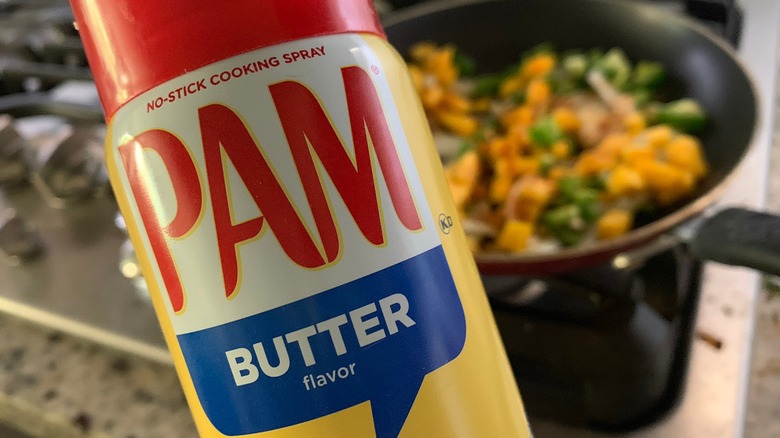
PAM isn't the most effective non-stick spray I've used on lawn mowers, but it's cheap and definitely better than motor oil, which can damage the grass. It isn't as long-lasting as a silicone spray specifically made for lubricating machinery. These days I try to keep a can of WD-40 Specialist handy for prepping the mower, because it combines silicone with the rust-fighting properties of WD-40. PAM remains a go-to option when I run out, and there is always some in the kitchen.
PAM or any other non-stick spray won't lift off grass that has already stuck to the mower, so before spraying, it's important to clean off all the cuttings. I usually do this by disconnecting the spark plug, turning the mower on its side with the gas tank facing up, spraying the undercarriage and blade with a pressure washer, and manually scraping off any grass that won't wash off. I then let the mower dry in the sun or, if I'm in a hurry, I dry it with a hair dryer or leaf blower.
I spray PAM liberally on the undercarriage and blade, but not to the point at which it starts to drip. It needs a little time to dry, and again, you can speed things up by blowing air. One word of caution: Some mowers have a drive belt, and it's really important to cover that with paper towels before spraying, or it will start to slip.