

What Is The 6-12 Rule For Outlets?

If you've ever rearranged a room in your home, bought a new lamp and searched for the perfect location to place it, or wanted to charge your phone while you're sitting on your sofa, you know how important conveniently placed outlets are. Whether you plan to renovate an older home, build a new house, or simply want to know how far apart outlets should be in a room, the 6-12 rule is something to consider.
The 6-12 rule (sometimes referred to as the 2-6-12 rule) is a guideline in the National Electrical Code that specifies how electrical outlets should be spaced throughout your home. Also known as the NFPA 70, this code establishes the safety requirements for electrical systems installed in homes and businesses.
The 6-12 rule is broken down into three parts. The 6-foot rule states that if you pick a point anywhere on a wall at floor level, it can't be more than 6 feet from an outlet. The 12-foot rule says that outlets can't be installed more than 12 feet apart. Basically, this means if you stand next to a wall, you should be able to reach an outlet within 6 feet. The rule also requires all walls 2 feet or longer to have an outlet.
This is convenient, because you'll find that many appliances and other powered items come with a 6-foot cord. The 6-12 rule helps eliminate the need for extension cords, which are often misused. Overloading cords can cause them to overheat, putting your home at risk of fires and electrical shock. A tangle of extension cords can also present a tripping hazard.
Should you upgrade the outlets in your old home?
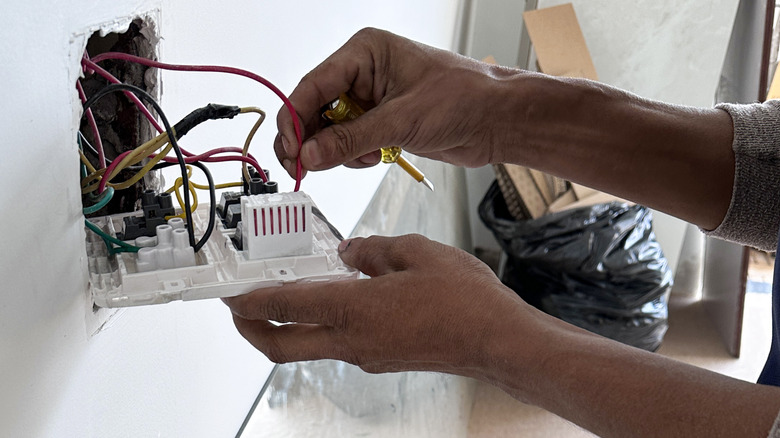
Before 1959, outlets followed a 20-foot rule. Homes built before 1959 weren't designed to handle the number of electrical gadgets and appliances we use today, which overload outdated electrical panels and can be one reason for arcing in an electric panel. As a result, if you live in a home that's around 70 years old, the outlet placement falls short of the 6-12 rule. While you're not legally required to rip open your drywall to update an older home, you must bring your electrical system up to compliance if you're planning on tackling any major renovations.
To comply with the 6-12 rule in an older home, an electrician can add an outlet to an existing circuit or run new wiring through existing wall cavities. Also, if you still have a fuse box or ungrounded two-prong outlets or if your home's panel provides less than 100 amps, you'll probably need to fully upgrade your panel and even install a whole-house surge protector so that the new circuits can handle the increased load and current safety requirements.
There are several exceptions to the 6-12 rule. Kitchens follow the 2-foot rule, which states that when placing outlets along countertops, no point along the wall should be more than 24 inches from an outlet. In hallways, the rules are slightly more relaxed. Only one outlet is required in a 10-foot hallway. Also, in utility rooms and garages, outlets prioritize having ground-fault-interrupter protection over wall spacing requirements, though it's recommended to have one outlet every 4 to 6 feet. By understanding these rules, you'll ensure your home remains both functional and compliant during your next home renovation.