

Skip The Shower Curtain: There's A Smarter Way To Upgrade Your Bathtub
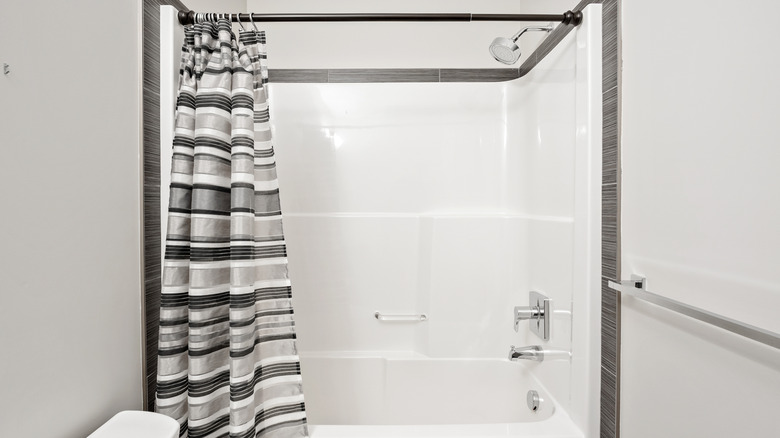
Shower curtains are a simple and affordable solution to keep water contained in a tub-and-shower combination. With so many designs available, they can look really attractive too. But if you are sick of your curtain constantly letting water leak out around the edges or just want a sleeker, more elevated look that shows off your stylish tile, it might be time to look into shower curtain alternatives like a glass tub screen.
This type of partition is essentially a glass panel screen that installs to the wall beside the shower and aligns with the top of a tub in a tub-and-shower combo. It works like a shower door, blocking water from splashing out while you're showering, but doesn't extend the whole length of the tub. If you want something that covers the entire area, consider a glass tub door, which has a track along the entire tub area. Tub screens are usually affixed to the wall on one side of the tub next to the shower area, providing a long-lasting, easy-to-maintain barrier and a relatively straightforward installation for confident DIYers.
Screens are a chic, practical alternative to shower curtains
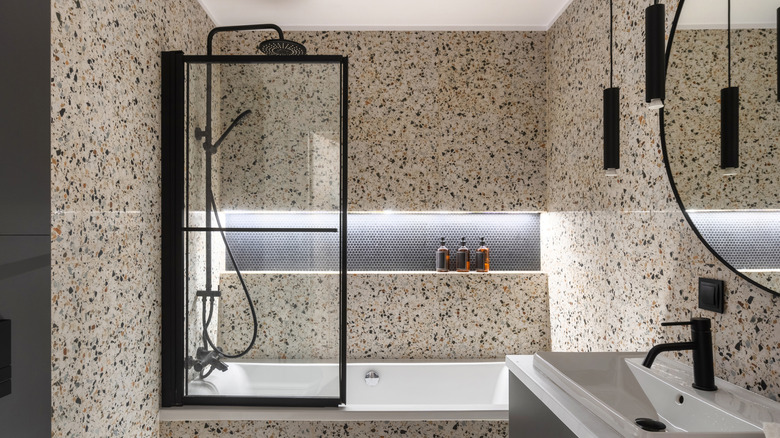
Tub screens are available in a few designs, both in terms of construction and style. The most simple is just a fixed tub screen, like the Glass Warehouse Solaris Frameless Tub Door, which is a stationary panel. Swing tub screens like the DreamLine Aqua Uno Hinged Tub Door have a hinge mechanism that lets them swing back and forth. This offers a bit more space for getting in and out of the tub, which can be important for small tub enclosures.
Folding and sliding tub screens are also available to give you a larger opening than fixed options. These don't need as much space for a pivoting door that you get with a swing tub screens. However, with more complicated mechanisms (more hinges, panels, and tracks) comes more chances for mechanical problems, as well as more gaps and corners to clean.
Tub screen options aren't as varied as curtain designs, which come in all sorts of patterns and colors. Clear, frosted, and fluted glass options are available, as are clean, contemporary frameless looks and more traditional grid designs (or faux frames that offer the look without the extra nooks and crannies). You can also find curved or straight varieties to fit your tub's shape, and some screens have matching extensions or return panels to close off your tub if it's open on the end. The variety is limited, but that might not be bothersome if you're going for a minimalist or modern bathroom design.
There are a few pros and cons to consider with tub screens
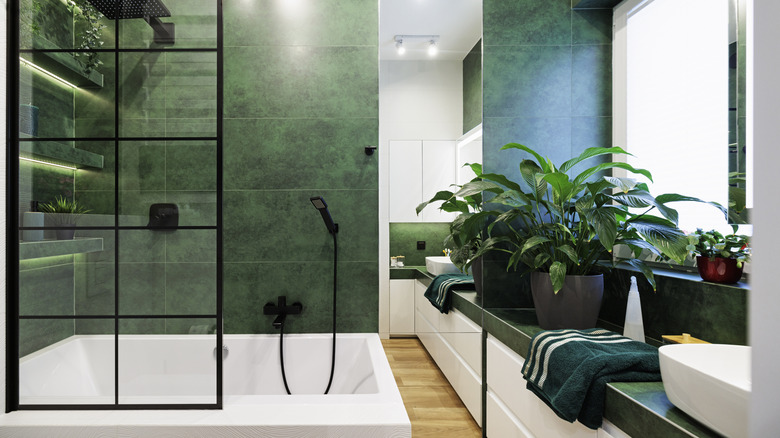
Screens are an appealing shower and bathtub idea because, unlike shower curtains that cover up the space, they can make the bathroom look more open and lighter, especially if you're exposing a shower window. Many have minimalist designs that work well in modern bathrooms. They also tend to be more comfortable to use than a curtain since it won't billow and stick to you if you accidentally touch it while showering. And even though they show streaks more readily than a hidden shower curtain liner, tub screens generally won't give you the same mold and mildew problems.
One of the biggest downsides of tub screens is the cost. While a shower curtain can cost as little as a couple of dollars, a typical glass screen will cost a few hundred dollars from a big box store. Many are possible to install on your own, but you may have to drill into tile to set the vertical mounting rail into the wall. Manufacturers often recommend professional installation to avoid mishaps, which will drive the cost up even more. Since it's made of glass, these screens also offer less privacy, unlike curtains that offer full coverage (which can be a major bonus in busy shared bathrooms).