

Skip Standard Gravel: Here's A Clever DIY Solution For Your Yard
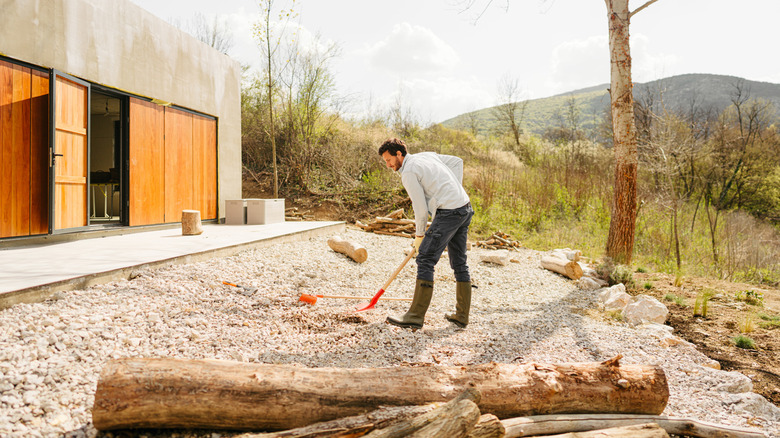
Gravel might seem like the most obvious choice when creating garden paths and walkways in your landscape. It's low maintenance, easy to use, and durable. But it's also one of the most common landscaping materials around. If you're after something with a bit more personality, this idea from DIY Landscape design's YouTube channel is bound to be a better option. Instead of throwing out plastic nursery pots after transplanting plants, you can cut them up and use them as forms to create perfectly round concrete pavers.
Nursery pots come in a variety of sizes, which means you can DIY pavers with a whole range of diameters. That makes for endless design possibilities, and however you arrange them, the final result is going to be unique in the truest sense of the word: There won't be anything else like it. It will be like a patio or walkway made with wood rounds, except that these pavers provide a more stable surface, and they won't rot.
You make the forms by cross-cutting the pots into sections, and the width of the section determines the thickness of the paver. A good width is 2 ⅜ inches, since that's the standard thickness of concrete pavers, but you can choose any width. You can even vary the widths to make pavers of different thicknesses if you want different levels on the walking surface. That's a lot of creative potential from something you were going to throw away.
Why buy square concrete pavers when you can make round ones?
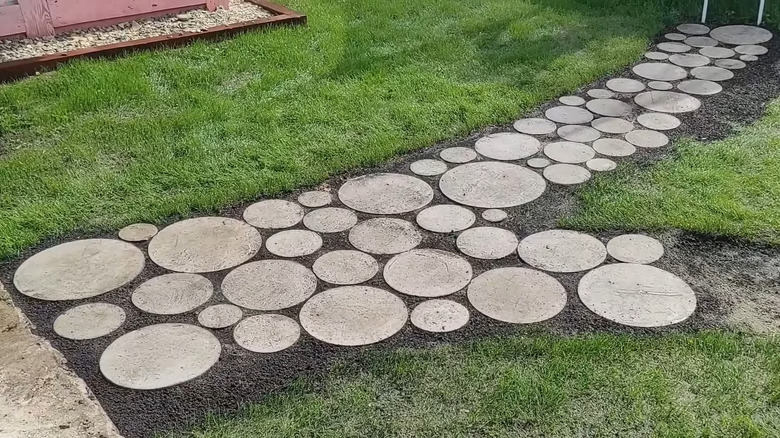
The procedure DIY Landscape design used is simple enough. He started by cutting plastic nursery pots into sections using scissors for the small ones and a circular saw for the large ones. (If you'd rather avoid using a circular saw, try an angle grinder with a cutting disc instead.) He then laid the sections flat and filled them with concrete. It was pretty much as simple as that, but with a few modifications to make stronger, more usable pavers.
The most important was to drop hardware cloth into the concrete after the form is halfway full, then finishing the pour. The addition of steel mesh made the paver much more resistant to cracking and breaking. He also laid out the forms on a mortar bed, but you could lay them out on plywood covered with plastic sheeting. The plastic will prevent the concrete from sticking, and the plywood will make the underside of the paver flat.
After the concrete has set and you remove the plastic forms, you can install the pavers just like standard ones. Dig down about 7 to 8 inches, lay a 4-inch gravel bed, cover that with an inch of sand, and then lay the pavers. Once you've laid them, you'll need to fill in the gaps between them. You can brush in sand, or you can use mulch — or even pea gravel — for wider gaps.