

There's A Durable Alternative To Flagstone That's Cheaper And Looks Nice
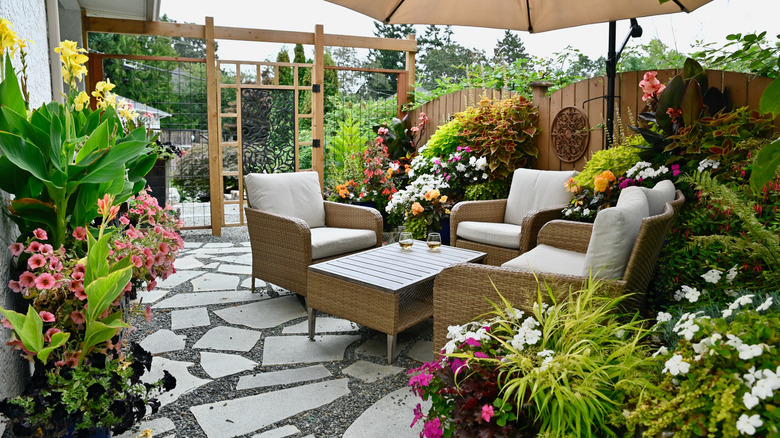
Flagstones are naturally occurring rocks, look classy, and are highly durable. Considering these benefits, you might want them gracing your yard, walkway, or patio. However, before you take the plunge, know that they are also costly, uneven, difficult to install, and available in limited colors. Instead, consider investing in precast pavers: They're cost-effective, more durable, and much more versatile.
While pavers and flagstone cost roughly the same per square foot — $15 to $45 to have flagstone installed versus $22 to $35 to have pavers installed — pavers are a good DIY installation material for your patio, which can lower initial costs significantly. Moreover, unlike flagstones, you won't have difficulty finding a matching color or shape to replace a cracked or faded stone, or end up replacing an entire walkway or driveway to get things to match. Instead, just replace specific, weathered pavers and call it a day (buying and storing extras is a good idea).
Since they're engineered in factories, pavers are available in multiple shapes and colors, making them ideal for curves, tight spaces, and customization. Another advantage is that you can pick specific precast paver types that suit your needs. Some types are better for high-activity zones like driveways and patios, while others perform well in light to medium traffic conditions or as decorative touches in a garden. For a rustic highlight, you might go with tumbled or textured pavers. But if you get heavy rainfall, opt for porous or permeable concrete pavers which encourage drainage.
Pavers aren't perfect: They can be prone to movement or cracking when installed improperly. It is worth noting that, while precast pavers are generally low maintenance, you will need to keep them clear of weeds, and reapply joint sand every year or two. Sealing pavers periodically can also help with weed prevention.
Types of precast pavers
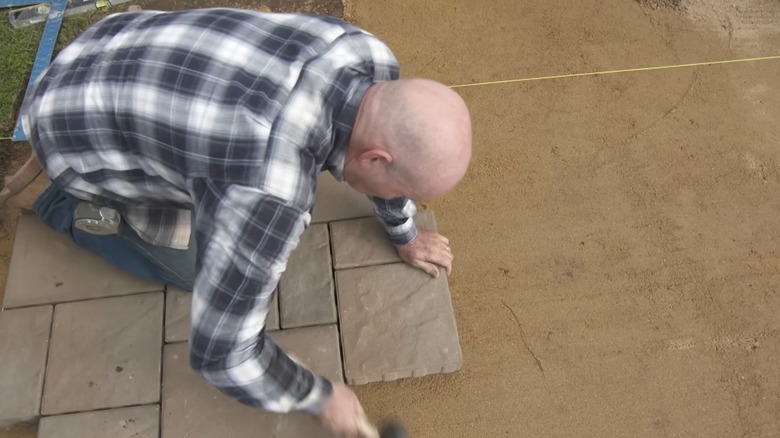
Interlocking concrete pavers are laid out in a fashion wherein one block gets locked in tightly with its neighbors in a pattern or grid, and held in place with friction and joint sand or polymeric sand. This makes them sturdy and one of the best materials for garden paths and steps. When used in driveways, interlocking pavers can actually be more durable and longer lasting than poured concrete, which is prone to cracking and more difficult to repair or replace.
On the other hand, non-interlocking pavers — made of concrete, stone, or clay — are best-suited for areas that are less frequented and less heavily trafficked, since they aren't locked with each other and instead sit on a stable (usually mortar) base. This makes them less flexible and more prone to damage than interlocking pavers, limiting their use to decorative displays and borders. Because you can dictate the shape, finish, and texture — there are concrete pavers that mimic weathered wood grain, for example — it makes non-interlocking pavers an excellent choice to match the aesthetic of outdoor entertainment zones, flower beds, and gardening spots.
If you reside in a rain-prone zone and wish to avoid flooding, look into permeable, interlocking concrete pavers. Since they allow rain water to percolate through into the ground, instead of running off, they help prevent storm drains from backing up, reduce pollutants in the runoff, and support local soil and groundwater health. As a bonus, if your municipality allows, you could qualify for a rebate for such an installation. But before you install them, check the subgrade soil conditions and the depth and compaction of your base. Since water is percolating through, a loose or overly organic base could mean wear and subsidence happens sooner than expected.