

Everyone Does It: The Landscaping Trend That Makes Your Yard Look Dated

Trends are constantly shifting, whether it's clothing style or home decor. When it comes to your home, it's not just your house itself that can be seen as outdated. For decades, homeowners prided themselves on having a perfectly striped, well-manicured lawn. Initially, this pristine design gave off a "I have my life together" curb appeal. Now, an overly perfect lawn is seen as unnatural and sterile. Charlotte Harris, an award-winning garden designer, told Gardens Illustrated, "Gone are the days of perfectly edged, high-maintenance borders and central lawns." Aesthetically, it's the equivalent of a living room that looks like a hospital lobby.
However, it's not just the way it looks that makes it dated. At a time when people are more conscious about protecting wildlife, it's hard to discount the negative impacts a striped lawn has on our environment. When speaking with Gardens Illustrated, Mark Straver, CEO of the Hortus Loci plant nursery, shared his strong opinion on "massive, bright green, immaculately striped lawns." He said they're "a desolate, barren wasteland of nothing." In addition to providing little habitat for birds, pollinators, and other wildlife, well-manicured lawns require a lot of maintenance, namely pesticides. These harsh chemicals can poison or kill local birds, beneficial insects, and other animals.
Rather than spending time, money, energy, and a lot of water on maintaining a striped lawn, shift toward a more naturalistic landscape that supports wildlife. In addition to looking more current, having native plants can increase your property value. So, how do you do it?
How to modernize your lawn with natural landscaping
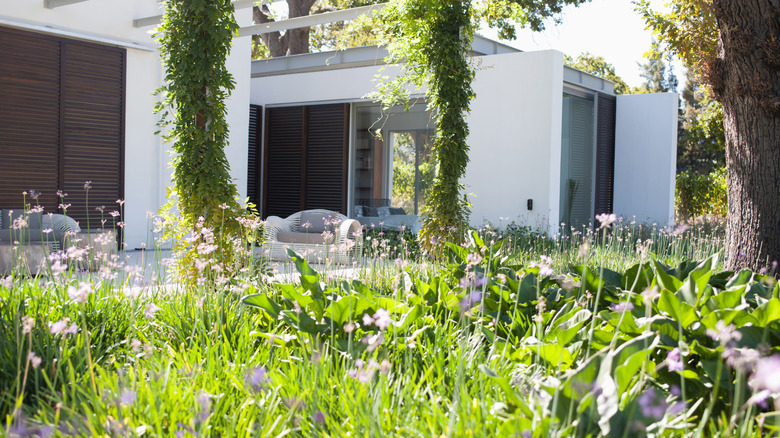
Rather than striping your lawn, focus on designing a landscape that feels airier and more natural. The simplest alternative to lawn striping is letting most of your grass grow freely. Create paths or focus on mowing the parts people actually use, like near play areas or near entryways. You can also replace your turf with a lower-growing species, such as fescues that only reach 6 to 12 inches tall. To take it a step further, mix in pollinator-friendly flowers with your grass to create a bee lawn. Self-heal (Prunella vulgaris ssp. lanceolata) and Dutch white clover (Trifolium repens) are among the best options to mix with turfgrass, according to the University of Minnesota. To keep your new pollinator visitors safe, skip harsh pesticides and stick to organic lawn care practices.
Once you've softened the look of your lawn, you can increase curb appeal by incorporating more native plants. You need to be somewhat strategic, so it can be helpful to draw a landscape plan to get an idea of the overall space available, which areas receive sunlight, and other growing conditions. You don't need to redesign your entire property to make an impact. Small garden beds and borders can make a significant difference. For bigger projects, take inspiration from nature and work in layers, similar to the layout of a forest. Plant tall trees and shrubs in the back, then gradually transition to lower-growing shrubs, perennials, and groundcovers in the front.