

That Thrift Store Rug Could Turn Out To Be Worth Hundreds
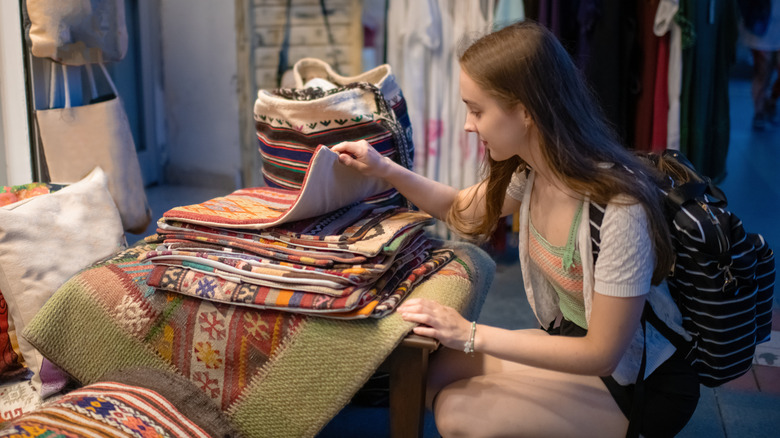
Of all the places to get truly unique rugs, one of the coolest spots to find good options is your local thrift store. You really never know what you might find in there, as there is nothing quite like shopping in person, even if you do know how to use Facebook Marketplace like a pro. That said, it's even better when a thrift store rug turns out to be something highly valuable, especially when you hardly paid anything for it in the first place. This could be the case if you've come across a Persian rug! Handmade 19th-century and early 20th-century rugs from Persia, modern-day Iran, can easily be worth $400 to $1,200. That is, if they are in good condition. If you're looking at anything older, or a particularly desirable pattern, the prices could increase!
You likely already know what to look for, as the motifs of Persian rugs are quite popular in modern reproductions. However, it's time to hunt for the real thing. "Hand-knotted Persian rugs hold their value exceptionally well if in good condition," furniture restoration specialist Sally-Anne Salter told Good Housekeeping. "The key signs to look for are: natural dyes (slightly uneven coloration is good), hand-tied knots on the back, and traditional motifs. Even small runners can command strong prices." That said, if you don't plan to resell, the rugs are becoming very popular in home decor, too. They are sustainable and offer a warm, lived-in aesthetic that many can't get enough of.
Why Persian rugs can be worth so much money
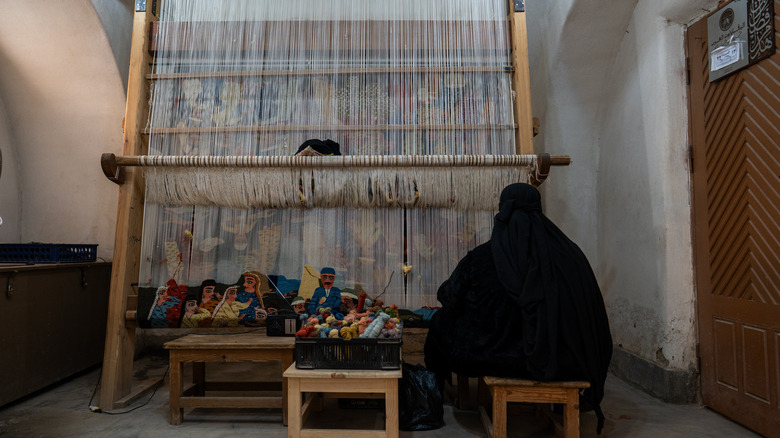
Persian rugs can be worth so much money because of the craftsmanship needed to create them. These pieces were not mass-produced, and creators could not purchase materials from a store. Instead, villagers were in charge of each step of the process and worked painstakingly to ensure quality. They would often even shear the sheep themselves, create and color the yarn, and then cast the rug on their loom — all by hand! In addition, they didn't always follow a pattern, either — many village weavers simply created. This labor begets a higher price. In particular, if the rug you purchased was created before the 1940s, it might be worth even more due to its ties to this historical process. While some modern rugs are still created in the same fashion, many are not. Instead, they use old-world designs to invoke a similar look, but the same level of artisanship hasn't been involved. Modern Persian rugs and copies are often machine-made.
The value of an antique Persian rug stems from the rug's origin story, as well as how it holds up to everyday use. Typically, they are long-lasting. So you don't have to relearn how to clean a rug, as age only adds to their character! "You're walking on art," Sheba Khodadad, rug shop owner and expert, told Style by Emily Henderson. "Persian rugs are the most labor-intensive hand-woven items in the world. That quality lasts and sustains age gracefully. The dyes soften over time to create a beautiful patina. The colors mellow rather than fade, unlike synthetic dyes that can fade quickly."