

Your Ceiling Fan Isn't Actually Lowering The Temperature In Your Room
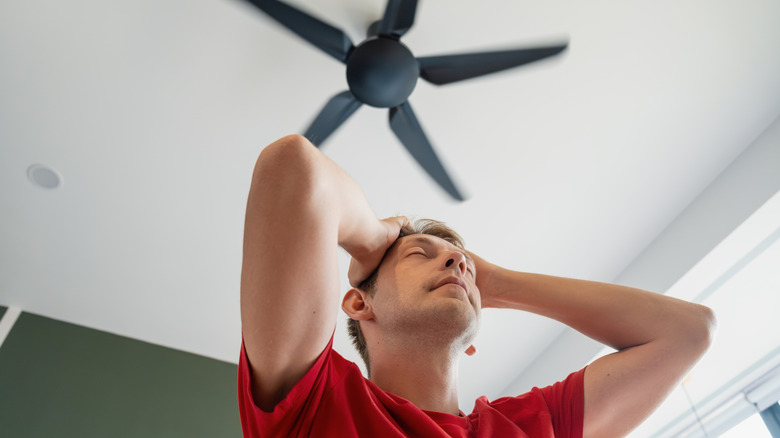
Ceiling fans might seem like a cheap and easy way to cool your home without an AC. You just need to turn on the associated switch and set the regulator to the highest possible setting to beat the heat. Or, so you think. In reality, ceiling fans don't have the power to lower the temperature in a room. Wondering how they make you feel better during summer months, then? You feel cooler when you turn on a fan because of the wind chill effect.
So, basically, there's an ever-present layer of moisture on your skin. Its thickness will depend on how oppressive the weather is, but your body will produce sweat to regulate inner temperature. And when this layer comes into contact with air, it evaporates from your skin, helping you feel cooler even if the temperature of the place you're in doesn't change. This is what happens when you switch on a ceiling fan. Although it doesn't affect the overall temperature of a room; it accelerates the evaporation of sweat. This cools your body down (up to 4 degrees Fahrenheit) and makes you feel like your room is not as hot as it was initially. However, don't run it non-stop and ensure to turn it off when you're not in the room, or it might end up heating your space (slightly). This is because the motor inside gives off heat when a fan is in use. Plus, with no one around to enjoy the wind chill effect, it'll just be consuming electricity instead of cooling your home.
Tips to help you cool down this summer with a ceiling fan
Though a ceiling fan can't cool down a room, it can help you feel better during hot months if you follow a few tips. For starters, see if your fan's direction can be reversed. Check the owner's manual or look for a small switch around the base. You might even be able to control it via a remote if you have a newer, smarter model. In case your fan does allow a change in direction, ensure the blades rotate counter-clockwise during summer. This simple switch will push air down toward you and lead to a cool breeze, enhancing the wind chill effect. And your fan should be installed at least 8 feet above the ground for the best results.
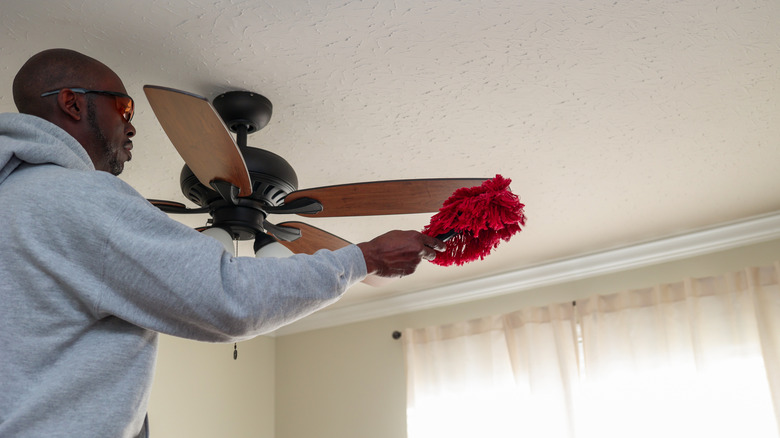
You also want to clean your ceiling fans every week so it does its job well. Otherwise, the accumulated dust might interfere with the motor's performance. So, lightly wipe down the blades weekly and deep clean them every month — or at least during hot seasons when you're running them throughout the day. Additionally, turn it off when you leave a room. And if you wish to save money on your electric bills, feel free to turn up your thermostat by 4 degrees Fahrenheit when you turn on a ceiling fan. This won't just reduce your home's energy consumption (by about 10 to 15%) but also help you maintain a comfortable environment indoors. Better yet, your AC won't have to work overtime to beat the heat so it will age slower.