

Ditch Traditional Hostas: This Shade Plant Has Striking Purple Flowers

If you have a shade garden, you've likely thought about growing hostas (Hosta), or perhaps you already have them. Indeed, hostas are a popular landscaping solution for shady areas, as they look gorgeous with little maintenance and sunlight. But along with their infamous ability to attract deer, hostas have a number of other downsides, and they're not a universal solution for all shade gardens. And while their summer- and fall-blooming white-to-lavender flowers are pretty, hostas are best-known for their beautiful leaves. If you want to mix things up in your shade and have the time and patience to wait for a plant that can produce gorgeous purple flowers, consider trying the giant trillium (Trilium chloropetalum).
Also commonly called giant wakerobin, giant trillium is a shade-loving perennial that belongs to the lily family. While several types of trilliums may be found in the wild across the U.S., giant trillium is native to parts of the West Coast. Unlike hostas, which flower in the summer, giant trillium is a spring bloomer, so planting both may support pollinating visitors at different points of the season. While noted for their deep purple flowers, some plants may also produce varying shades of red, as well as yellow or white blooms. Nevertheless, all flowers consist of large, three-petaled blooms that grow from the centers of three-leaf clusters. All these features truly break the mold of the typical hosta plants that are so commonplace in shade gardens.
What to know about growing giant trillium in your own garden
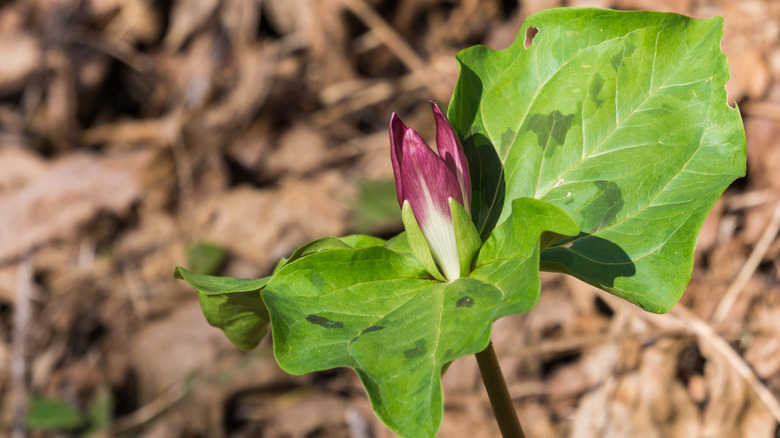
Giant trillium is suitable for hardiness zones 6 to 9, and it prefers moist, well-draining soil. It's extremely shade tolerant, although you can also plant giant trillium in partially shaded areas that receive no more than two to six hours of direct sunlight per day (preferably in the morning hours). These are generally low-maintenance plants that can still thrive in drought-like conditions, when necessary, too. Be aware that once these slow growers take off in your garden, they can grow 1 to 2 feet tall and wide. They also go dormant during the summer and reappear each spring.
One of the biggest downsides to trillium plants is their notoriously slow growth rate. When planting from seedling, it can take each plant up to 3 years to produce their notable three leaves. Also, be aware that it can take up to 5 years for a giant trillium plant to bloom. If you have time for this shade plant to fully take off in your garden, you may find it's well worth the wait. Another issue is that the plant's roots and fruits are considered toxic to humans, so you'll want to take care with this selection around young children. Unfortunately, like hostas, trilliums can also become deer snacks, so it's imperative that you actively employ measures to keep deer out of your yard and garden.