

Ditch The Pricey Lawn Aerators: Use A Cheaper Tool That's Already In Your Shed
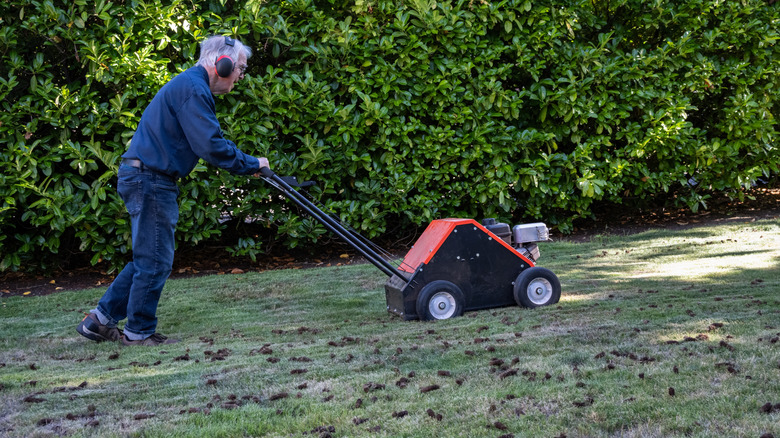
If the lush, green lawn of your dreams has recently turned into the scraggly lawn of your nightmares, it may be time to grab some lawn makeover tools. An aerator will cut holes in your lawn, loosening the soil and allowing air and water to penetrate it and revitalize your grass. However, lawn aerators can come with a hefty price tag. You can save some money by using your handy garden fork or pitch fork instead! The spikes of the garden fork were designed to help aerate garden soil, but they can be used for affordable DIY lawn aeration as well.
If you already have a garden fork or pitch fork in your shed, you can skip shopping entirely and aerate your lawn for free. If you do need to buy one, you're still likely to save money. An inexpensive garden fork can cost around $10 to $15, while a core aerator can cost $75 on the low end. Spike aerators are more comparable to garden forks, with a price range starting at $10. However, garden forks have an extra benefit — they're multi-purpose. A spike aerator is really only good at aerating your lawn, while a garden fork is also useful for gardening.
Since you can use a garden fork more often, you can get your money's worth more quickly. Unfortunately, the trade-off for this is time and effort. Some lawn aerators are motorized or rotating, allowing you to cover more ground quickly and efficiently. Garden forks and pitch forks typically are not, meaning you'll need to aerate your lawn by hand. If you have a small lawn, or are particularly dedicated to saving money, then this may not be an issue. However, if you have a larger space to aerate, an aerator may be worth the extra cost.
How to aerate your lawn with a garden fork
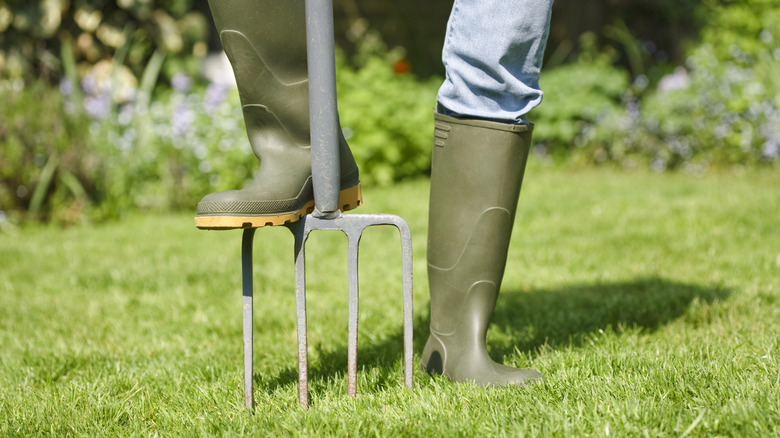
If you already know how and when to aerate your lawn, then switching to a garden fork should be an easy adjustment. Starting at one edge of your lawn and working your way across, stick your garden fork into the ground at relatively regular intervals. You only want a few inches of space between each set of holes. Apply plenty of pressure with your foot or hands to ensure the tines penetrate as deeply as possible. You want them to sink at least a couple inches into the ground, so that the holes are deep enough to provide the roots with relief. Wiggle or shift the garden fork while it is in the ground to widen the holes. Repeat the process throughout your yard, and you're done!
There are a few potential problems you could run into while aerating your lawn with a garden fork. While you're saving money, you may find yourself spending more time and effort than you expected. The good news is that you don't need to aerate your entire lawn at once. In addition to taking plenty of breaks, you can focus on just the parts of your lawn that are used more frequently. Another potential problem is heavily compacted soil. If you struggle to push your garden fork into the ground, or if you've noticed other signs of compaction such as standing water after a rainstorm, you'll need a new tactic. Garden forks and spike aerators may provide limited relief for mild compaction, but they are generally less effective. Core aerators are generally the most effective option because they remove plugs of soil, allowing the surrounding soil to loosen. However, you can still save money while treating mild compaction by growing plants adapted to excess water in those areas.