

What Happens If You Put Dish Soap In Your Toilet?
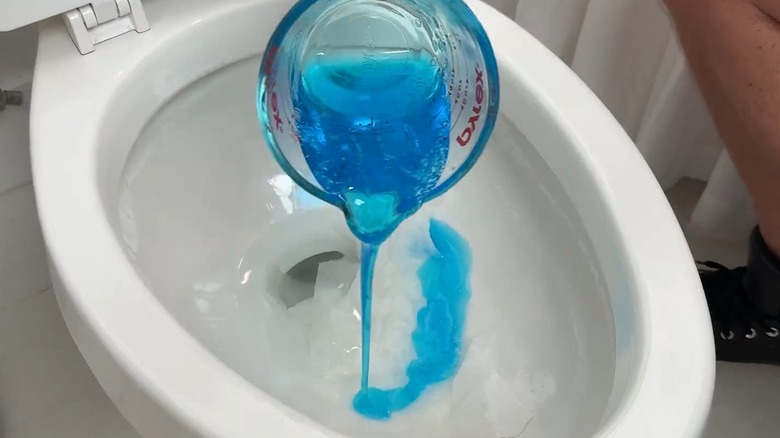
It's time to clean your bathroom again. Dish soap is one of the six cleaning supplies you really need, and you may have already used it for bathroom tasks. You may have seen the social media trend of adding a little dish soap to the toilet tank, for example, but that can cause more harm than good, as it can damage rubber fittings and seals over time. What happens if you pour dish soap into a toilet bowl, though? As it happens, a little dish soap and hot water can sometimes be useful for loosening minor clogs. And the good news? This isn't just a TikTok hack — plumbers also recommend trying this DIY trick before you call them.
Dish soap works essentially the same in the toilet as it does on dirty dishes. Unlike many molecules — which are either hydrophilic or hydrophobic — soap has both. Soap molecules grab onto fats, oils, and grime, then helps to pull them away from whatever they're stuck to. When used to unclog a toilet, soap can help loosen stuck paper or waste so it can more easily be flushed away. It doesn't even have to be dish soap — any surfactant will do. Hand soap and shampoo both do the trick. That said, you generally want to avoid using harsh cleaners or bleach-based products.
Should you put dish soap in your toilet bowl?
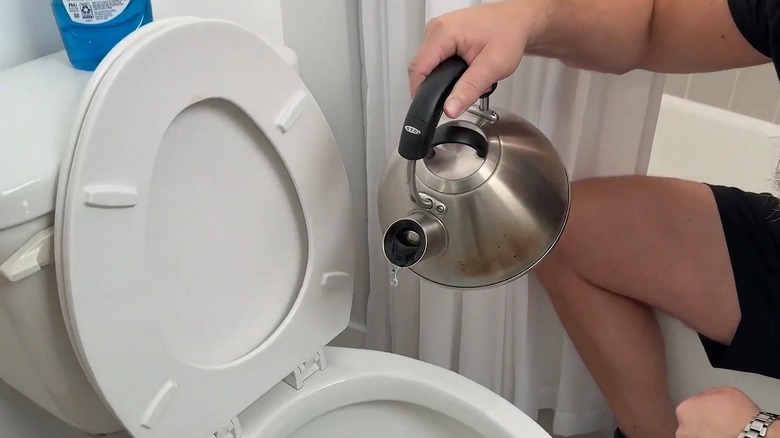
To clear minor clogs using dish soap, you'll first want to stop the water from flowing. This is especially important if you're using dish soap, as the last thing you'll want is an overflow of water and bubbles. If you've spotted the clog while flushing, first open the tank and pull up the float to stop the water, then reach behind the toilet and turn off the water, using the knob connected to the pipe that goes into the wall. It also helps to then remove some excess water filling the bowl. At this point, pour a good amount of dish soap or other soap (about half a cup is good) into the bowl. Let it sit for 5 minutes, then pour hot, but not boiling (you don't want to crack the bowl), water over the soap. Let that sit for a few minutes more before flushing. You may need to repeat the process a few times if necessary.
Although dish soap can help loosen minor clogs, it may not be effective enough for severe obstructions. Additionally, soap won't effectively clear clogs caused by foreign objects — it's not going to dissolve a toothbrush tossed into the bowl by a curious toddler. Generally, you should stick to products made specifically for toilets. However, if you're in a pinch, it won't hurt your toilet to occasionally use dish soap to unclog your toilet.
To prevent future clogs, never attempt to flush anything besides degradable toilet paper. In fact, most plumbers agree that even flushable wipes aren't exactly as flushable as you'd think. It's also a good idea to regularly use dedicated cleaners that are designed to clear toilet pipes.