

No More Boring Hardwood: Joanna Gaines Has A More Unique Idea For Your Floors
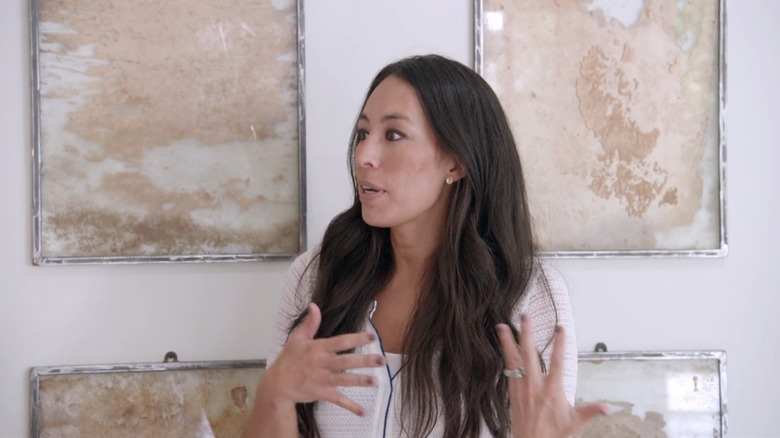
Hardwood floors have long been a classic flooring choice that complements any home, but because they're everywhere, they can also come across as a little bit boring. Luckily, Joanna Gaines has a more unique idea for your floors that adds an eye-catching detail to a relatively basic design. On Season 5, Episode 11 of "Fixer Upper," the HGTV star elevated the look of her clients' basic hardwood floors by adding a tile inlay to the entryway of the home. Instead of rolling out a rug to create visual interest, the floor itself is pulling the weight. The black and white tiles create an intricate pattern of crosses and stars. Meanwhile, their slightly weathered look against the shiny new wooden planks is a nice contrast, serving as an unexpected twist that adds real character to the space.
While Gaines chose to include this smart swap in the renovated entryway of a French-inspired modern farmhouse, the look will translate beautifully in other rooms and with different types of houses, too. For example, a contemporary mudroom would benefit from this tile option, as one of the things to know about tile floors is that they are so durable and easy to clean. The same approach can also be used in mid-century modern and even Victorian homes, particularly in their long hallways, where long stretches of hardwood flooring would otherwise feel very flat.
How to create this unique tile inlay without a full renovation
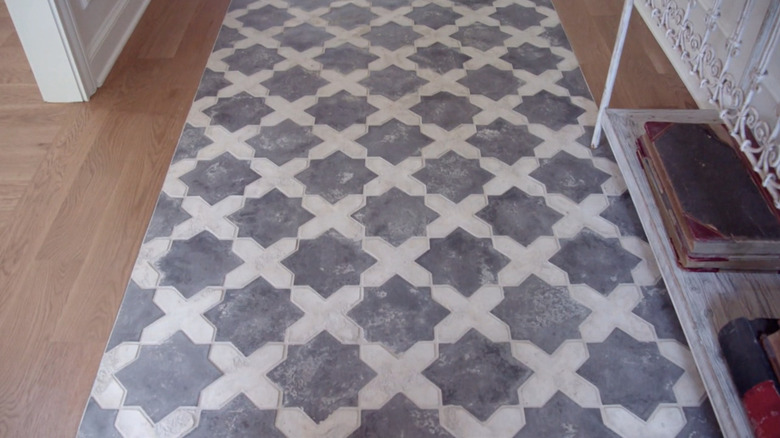
If your hardwood flooring is in need of some zhuzhing up, this upgrade is more in reach than you might think. In fact, it can be DIYed if you have the right materials needed to tile a floor and know how to remove the hardwood. First, select the tile you'd like to include. You shouldn't be afraid to go bold, but consider the existing design of your space to avoid creating a tacky clash. As Joanna Gaines wrote on the Magnolia Blog, "If you are intentional about carrying the color palette from the rest of the house forward (trim and wall color, hardware, etc), different flooring can actually give the room a little added character that prevents it from feeling like a new build." These visual clues elsewhere in the space ensure the inlay feels purposeful rather than a random afterthought plopped in the middle of the floor.
Next, you'll need to carefully measure the sections of hardwood that will be cut away in order to lay the tile. Positioning is important, as an off-center inlay will ruin the entire look. Be sure that the distances on either side of the tile's long ends are even. The short ends of the tile do not necessarily need to be placed evenly within the space, but there still needs to be intention behind the choice — for example, placing the tile closer to the front door than to the end of the hallway. Then comes the laborious part: cutting the hardwood, preparing the subfloor, setting and leveling the tile, and caulking the gaps. By the time you're done, though, your floor will look anything but ordinary.