

The '70s Oak Cabinet That Outshines Modern Options
We may receive a commission on purchases made from links.
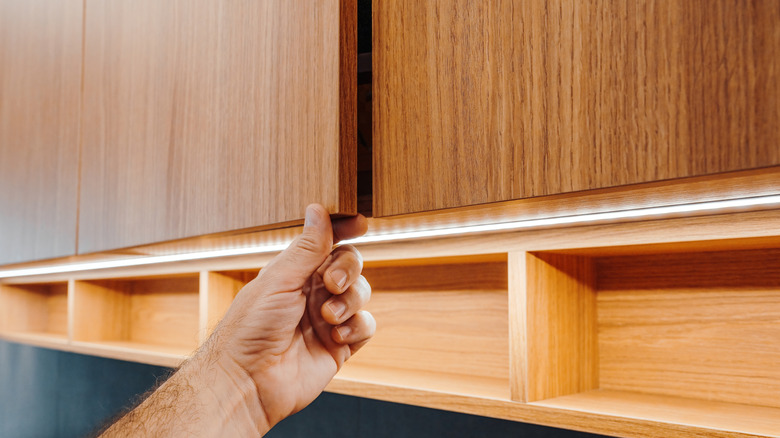
You can search and search for the perfect piece of furniture, but it often seems like you have to make a choice between form and function. Some items look amazing but are impractical; others are incredibly functional but leave something to be desired when it comes to style. But every so often, you find a piece that blends both, where form wonderfully intertwines with function, and one striking example is the modular wall unit of the 20th century. And the Instagram account stuffeastbay posted a video of a vintage modular wall system, which accomplishes precisely that. The large oak cabinet is both gorgeous and elaborate. Along with a small workspace, the unit has multiple shelves, drawers, and glass-fronted cabinets to store all sorts of items, whether they're for practical or decorative purposes.
The concept of modular furniture — i.e., creating furniture with separate and interchangeable parts — stemmed from the lean practicality of Bauhaus architecture in the early 1900s. It really took off after coming into shape in the 1960s, when architectural pioneer Fritz Haller designed a modular furniture system, now known as the USM Haller system, which could be rearranged to suit the storage needs, space limitations, and overall aesthetic of its users. Despite being a relatively recent breakthrough in the history of design, modularity is so useful, logical, and fundamental that it's just as important in the 21st century, if not more so. From sprawling farmhouses to compact apartments, we need furniture that adapts to our living situations.
Unpacking modular cabinets: vintage vs. contemporary
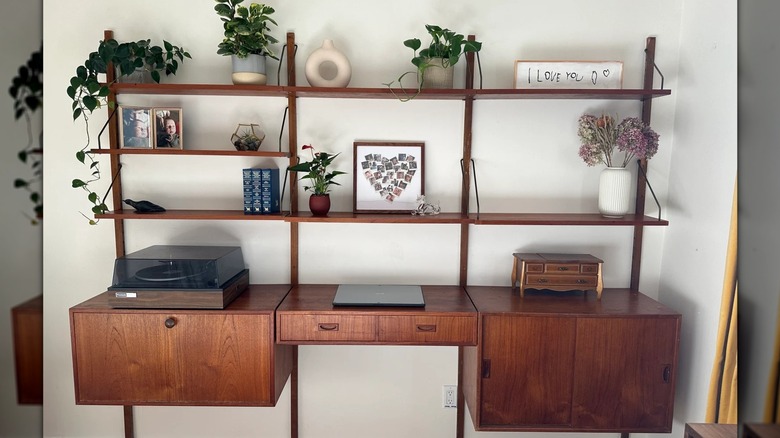
Fortunately, modular furniture isn't just a staple of the past. There are countless options available today, whether it's modular sofas and sectionals, coffee tables, or cabinets. You can always mix modern and antique furniture, but there are a few details to keep in mind. Prices for vintage furniture vary widely, but high-quality, handmade pieces, especially from the mid-20th century, can be expensive. There's no price listed online for the '70s oak cabinet found above, but a cautious estimate would be in the thousands. A comparable modular oak shelving system on 1stDibs is listed for $9,206.85. Similar pieces made out of teakwood, which is generally more expensive than oak, are listed on sites like Etsy and 1stDibs for around $5,000.
If these vintage wall units are out of your budget, there are plenty of places to shop for affordable furniture. For example, West Elm's Pierce Wall Desk is around half the price, retailing for $2,498. Another option would be something like Wayfair's Beritan Desk, which is far more affordable at $500.
Of course, one reason similar items are now cheaper is that they may not use real oak, teak, or rosewood but opt for engineered wood, which is less durable and less elegant. The gap in quality and price is, unfortunately, a tradeoff we often have to make, one way or the other, when choosing between traditional and contemporary furniture. No matter where you land, the timeless flexibility of modular furniture is well worth it.