

Not Butterfly Bush Or Coneflower: The Flower That Attracts Butterflies Like Magic
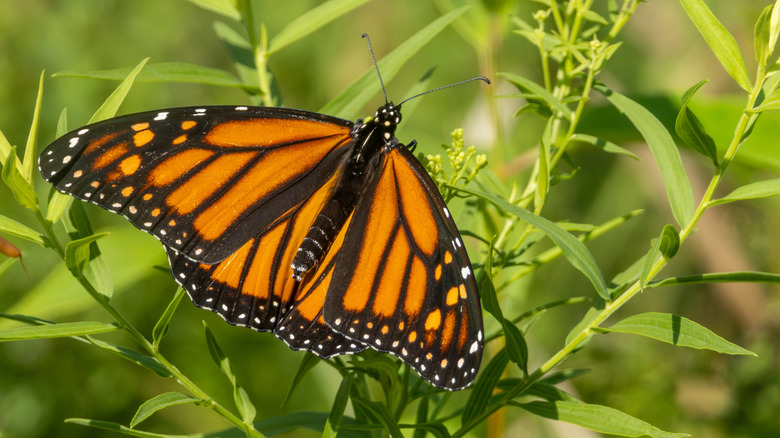
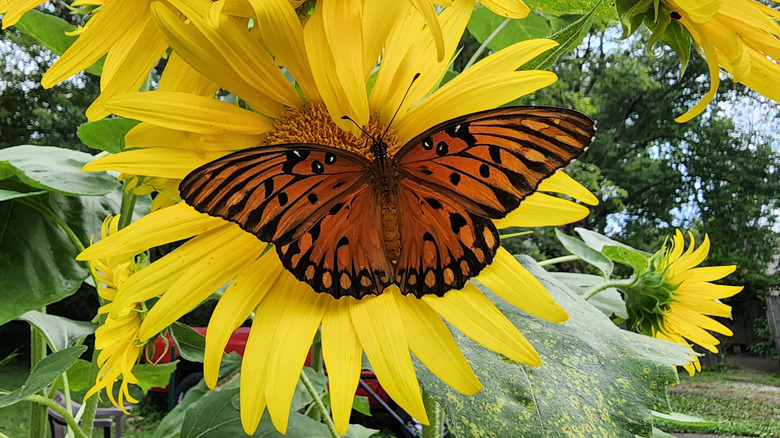
If you appreciate butterflies, you know how the sight of these winged insects in your yard or garden can be both thrilling and rewarding. You can plant stunning plants that attract butterflies to attract them, and you can also feel good about providing them with essential nectar. Many people are familiar with common types of plants that may attract butterflies, including butterfly bush and coneflower. Yet one overlooked alternative that's easy to grow and can attract butterflies through the fall is the sunflower (Helianthus annuus).
While many gardeners plant butterfly bush, the biggest issue with this selection is the plant's invasive status. Coneflowers can also attract butterflies, but they primarily bloom during summer months. Sunflowers can be a viable alternative to these two plants because they are native and late-season bloomers that can provide nectar for butterflies between August and November (depending on the exact species).
Aside from late blooming times, these stunning flowers appeal to butterflies in multiple ways. While drawn to their wide range of colors, as well as their large, accessible flowers. According to the University of Georgia, sunflowers support at least 66 types of butterflies and moths. A variety of butterflies are attracted to sunflowers, but they're particularly favored by monarchs and silvery checkerspot species, says NC State Extension.
Tips for planting sunflowers to attract butterflies to your garden
While sunflowers are suitable to grow among gardeners of all experience levels due their low maintenance and rapid growth rate, knowing a few key sunflower planting rules will ensure you have the most success possible when trying to attract butterflies. First, know that most types are annuals. Other sunflower varieties may be perennials, and are suitable for hardiness zones 2 to 11.
It's best to plant sunflowers in an area of your garden that will get at least 6 hours of sunlight each day. Sunflowers also prefer well-draining soil with occasional waterings once established. If you want to use fertilizer, choose a balanced formula only. Too much nitrogen carries the risk of reduced flower growth, which will subsequently mean fewer butterflies, too. Consider planting multiple sunflowers for butterflies if you have the space in your yard and garden.
To maximize the potential impact of your own butterfly garden, consider sunflowers as just one key part that can support these insects later in the season. Ideally, you should also plant other annuals and perennials that bloom at different points between the spring and fall months. This ensures butterflies will have sustenance throughout the season. Aside from butterflies, you're likely to spot other pollinators around these flowers as well, such as bees, beetles, and parasitoid wasps. Sunflowers are also important for birds during the winter months, when they take the opportunity to eat the seedheads — you can also save the seeds directly after sunflowers bloom.