

Forget Gravel — There's A Less Messy, Weed-Resistant Landscaping Option
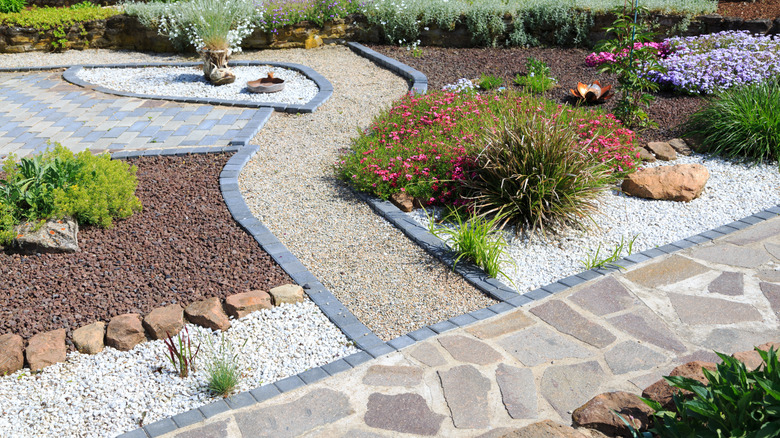
One of the go-to solutions for landscaping is filling empty space with gravel. This low-maintenance landscaping option for backyards is good for drainage and controlling weeds, while also improving visual interest. However, you may not be a fan of rough, scraggly gravel pieces that are easily washed into other parts of a lawn through wind and rain. Fortunately, there's a similar hardscaping method that's just as easy to install as gravel. It has many of the same benefits, but with some characteristics that set it a step above gravel filler. The next time you're looking for a landscaping solution, opt for river rocks instead.
River rocks are a great solution for boosting your curb appeal. Laying river rocks requires the same steps as laying gravel; however, it's a less messy business. While gravel comes in pieces around 1 inch or smaller, river rocks typically range from 1 to 3 inches. The larger size makes it easier to corral them when pouring bags over your landscape, especially if you also invest in some of the best types of landscape edging. Start by calculating how much river rock you'll need, then clear the area, lay down a tarp, and pour the rocks in place.
River rocks tend to be smoother and more aesthetic than gravel. They may have better visual appeal and come in bigger sizes, but they still provide many of the same benefits, such as weed-resistance. This makes them a more stylish and practical solution for decorative landscapes.
When to choose river rocks and how to use them in landscaping
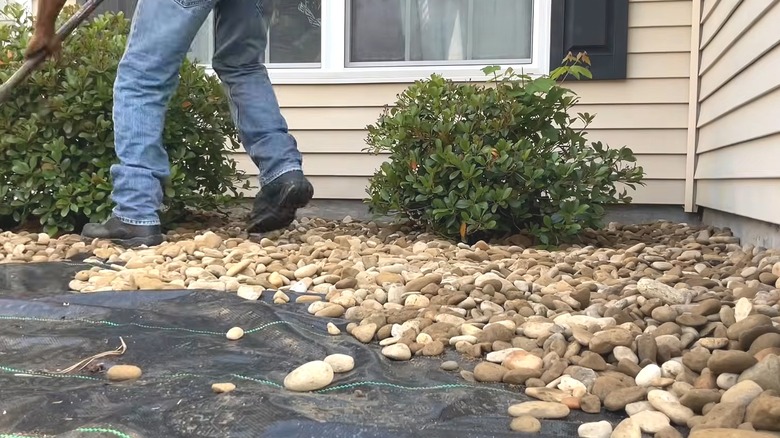
Before you begin, evaluate whether river rocks are the right choice for the job at hand. Keep in mind that there are some avenues where gravel is the way to go, such as when paving walkways or driveways that require more traction and compaction to withstand heavy traffic.
In most other cases, river rocks can serve as a substitute. They can still be used in low-traffic walkways, especially when laid to border larger tiles or stepping stones. You can also use them around landscape features, where they have many of the same benefits as gravel. Use them as groundcover and to fill extra space around trees, gardens, water features, and flower beds. These pieces aren't easily washed away and lost in lawns, and when pieces do get washed out of place, they're easier to find and put back in place because they're significantly larger than gravel pieces.
There is more to river rocks than decorative appeal. Piles of medium to large-sized river rocks leave gaps that allow water to pass through, improving drainage. They also provide erosion control by stabilizing the soil. When laid over the earth, they impede weed growth by taking up space where weeds can grow. They're especially effective when paired with a landscape fabric or other underlayment, creating a double barrier against weeds. To truly optimize their weed-resistance, also add another form of edging around the river rocks, whether it's made of stone, metal, or plastic material.