

Say Goodbye To Fences: This Evergreen Tree Provides Natural Privacy All Year Long
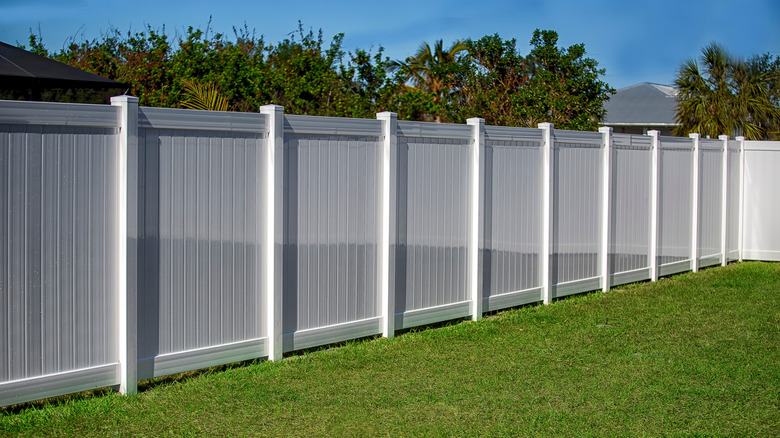
No matter how much you like your neighbors, sometimes you just need a little bit of privacy. If you've been trying to figure out the best way to build a fence for your landscape, you may have run the gambit, looking at all the possible materials and styles. After weighing your options and pricing things out, all roads seem to lead to a living fence — an excellent decision on all fronts, especially if you go with Arborvitae trees.
Known for its luscious foliage, evergreen trees from the arborvitae family are a favorite for folks looking to create a little more seclusion in their lives. A line of them around your backyard not only acts as a visual barrier, keeping folks from peeping into your space, but they can also reduce the amount of noise that both exits and enters your yard.
Unlike fences, which start their process of breaking down the moment they're put up, your natural fenceline will grow bigger and fuller with each passing year. As a matter of fact, its speedy growth rate is a big reason people like this species for the job. Some varieties can grow several feet a year. Plus, they are notably low-maintenance. Other than the occasional branch trimming when you want to achieve a specific shape or pulling out the hose during particularly dry weather, you won't have to fuss with them too much.
Variety matters when choosing trees
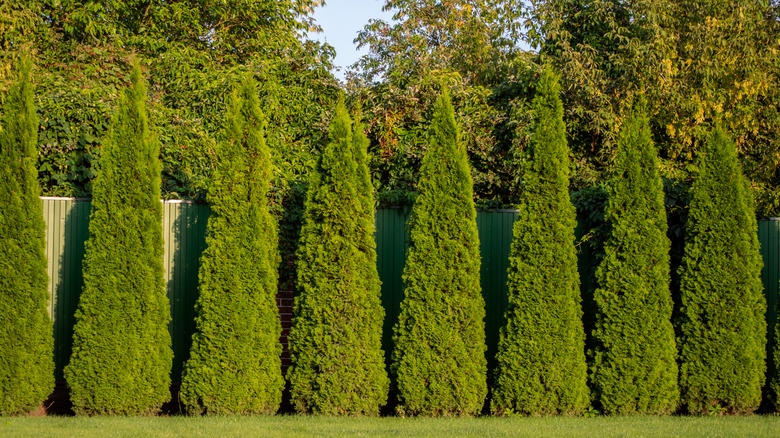
To make a living fence, trees can be planted in a row around property borders, with the idea being that they provide both the structural posts and the privacy-providing infill. In the case of Green Giant arborvitae, which is among the most popular evergreen trees for landscaping, this can happen rather quickly, as the trees can grow between three and five feet a year. However, if trees that reach 50 feet tall with about a 12-foot spread are too big for your space, you might opt for varieties like Emerald Green, which stay around 12 to 15 feet tall and up to 4 feet wide (though they grow six to nine inches a year). There's also Green Screen, which will grow a foot a year until it reaches 10 feet. For a denser wall on a faster timetable, you might try staggering the trees in two alternating rows. Some folks actually recommend placing deciduous trees between the evergreens to improve airflow, reduce illness, and encourage flowering at different times of the year.
Though they ask for little in return (only well-draining soil and full sun to partial shade), arborvitae trees can add so much to your space. Arborvitae literally translates to "tree of life," and it's no wonder! In creating a fence with them, you also create an entire ecosystem that is available year-round for local wildlife to nest, hunt, hide, and thrive in. It will invite life into your space in many forms. Songbirds probably won't line up to sing on your privacy fence, but they'll be happy to croon in your living green screen.