

Why Do Some Houses Not Have Gutters?
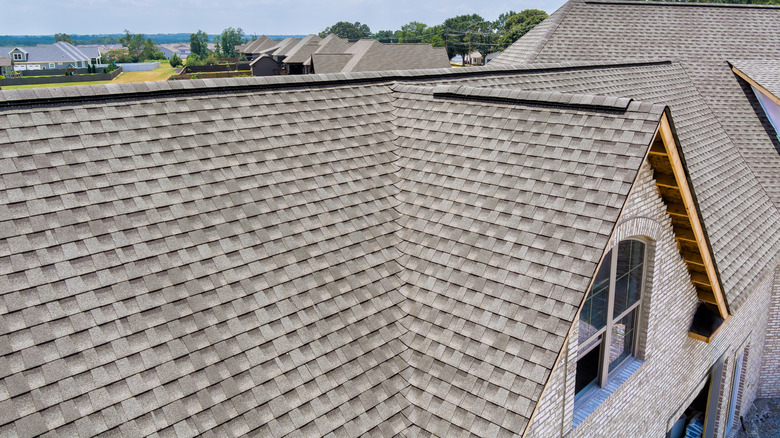
Gutters may never cross your mind until they're packed full of pine needles or hanging off the side of your house after a heavy storm. The best types of gutters depend on your budget, roof style, and local climate. But sometimes the best gutter is no gutter at all. Homes that are located in extremely dry areas, on hilltops, or with certain architectural features like large overhangs or flat roofs, simply don't need them.
To answer the question "Why do some houses not have gutters?", it helps to first understand their basic function. Essentially, gutters are channels made of vinyl, metal, or wood. They collect rainfall and moisture from melted snow and ice from your roof before directing it away from your home's foundation through your downspouts.
In areas with high or even average rainfall, going without gutters can lead to pooling water that causes foundation issues and mold problems. However, gutters aren't really necessary when a home is located in an extremely arid climate with infrequent rain. They're also not terribly helpful if your home is located in a high elevation area compared to your surroundings, since gravity will naturally pull water away from your home.
Gutters are unnecessary on several popular and historic house styles

Even if your house is located on a relatively flat spot with occasional rainstorms, if your roofline extends several feet beyond your foundation, water is unlikely to pool close enough to cause serious damage. There are several popular housing styles that achieve this. Prairie style homes typically have a lower pitched roof with a wide overhang, and they were originally designed by acclaimed architect Frank Lloyd Wright, who famously hated the look of gutters. Extended overhangs that don't require gutters are also common in both newer energy-efficient homes and older Craftsman and Colonial ones. In fact, many historic homes have such unique architectural features for managing water that the National Register for Historic Place guidelines forbids adding them.
Contemporary houses are also less likely to have gutters. Most seamless gutter systems are too linear for homes with curved or rounded turrets or rotundas, and custom radius versions can be cost-prohibitive. While modern homes with flat roofs can have gutters, many rely on parapet walls and scuppers instead. Since this system creates a channel that is similar to a gutter but routes water through rather than over your roofline, they also need to be regularly cleaned of leaf buildup and other debris for optimal drainage.