

Cool Down A Room Without AC With An Easy DIY Solution

We may receive a commission on purchases made from links.
As the mercury climbs ever higher and the summer heat builds up, you're glad to have air conditioning to keep your home cool and comfortable. But what if your air conditioner decides to take a summer vacation and breaks down, there's a power outage, or you just don't want to deal with the skyrocketing electric bill? Whatever your reason for being without AC, a key secret to keeping your home cool during a heatwave is preventing the heat from coming in.
Blocking the sunlight with blinds, curtains, or shutters is one way to keep the indoor temperature down, but closing gaps and cracks will minimize any chance of heat sneaking in. Just as you would caulk and seal to prepare your house for winter temperatures, you want to caulk and seal along windows, doors, and any other minor openings to prep your home for summer heat. When paired with quality insulation in the home, air sealing it can help lower your energy bills by up to 15%, according to the EPA.
Move your hand along the frame of a closed door or window. If you feel air coming through, that's a sure sign that it's time to reseal. You could also check trouble spots, like around doors or windows, with a flashlight to see if light seeps in anywhere, indicating a gap. Other signs that your windows and doors might need new caulk or weatherstripping include high levels of dust and pollen inside the home and significant noise pollution from outdoors. Along with windows and doors, consider sealing around openings inside and entering your home, such as those by outlets, dryer vents, air ducts, and cable or utility lines.
How to seal your home to block out the heat
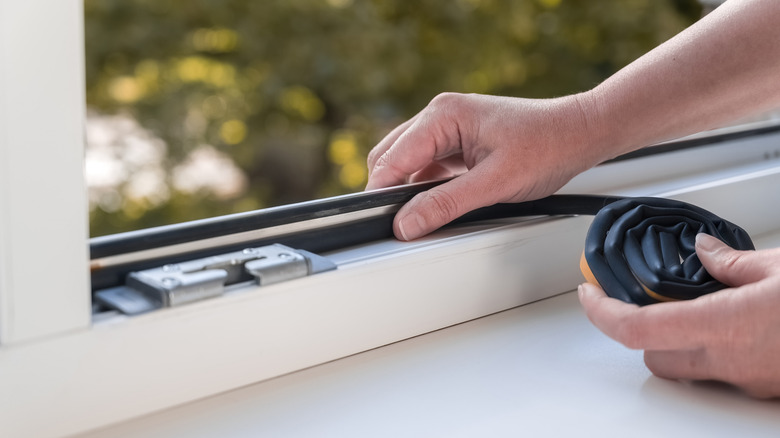
Whether you caulk or add weatherstripping to keep hot air from seeping into your home depends on the area you need to seal. Use caulk to seal gaps, seams, and holes, such as around the exterior window and door frames, the sides of an electrical outlet box, or minor holes in siding. Use weatherstripping on windowsills or for joints. Generally speaking, if you're trying to seal something that moves, use weatherstripping.
Be sure to choose the right caulk or sealant when sealing holes, cracks, and gaps inside and outside the house. Look for a product that flexes and expands, such as silicone caulk, for outdoor use so that it won't crack or become otherwise damaged in the heat and elements. For gaps larger than about ¼ inch, use an expanding foam like GREAT STUFF Gaps & Cracks Insulating Spray Foam Sealant. Paintable acrylic latex, meanwhile, is often ideal for sealing along window and door frames, baseboards, and other interior gaps. Higher priced caulk tends to have a long life that budget-priced products, with some varieties lasting upwards of 20 years. So, it may be worth it to spring for the pricier sealant and weatherstripping materials.
You can choose and install weatherstripping to seal the sides and bottoms of most types of windows or doors. To be effective, there shouldn't be any gaps or cracks between the weatherstripping and the surface you're sealing. The same is true for caulk — you want a continuous line of caulk, without any gaps or breaks. Along with weatherstripping, consider installing a door sweep at the bottom of any doors to keep air from coming in at the base of the door.