

5 Common Problems With Frigidaire Dishwashers
We may receive a commission on purchases made from links.
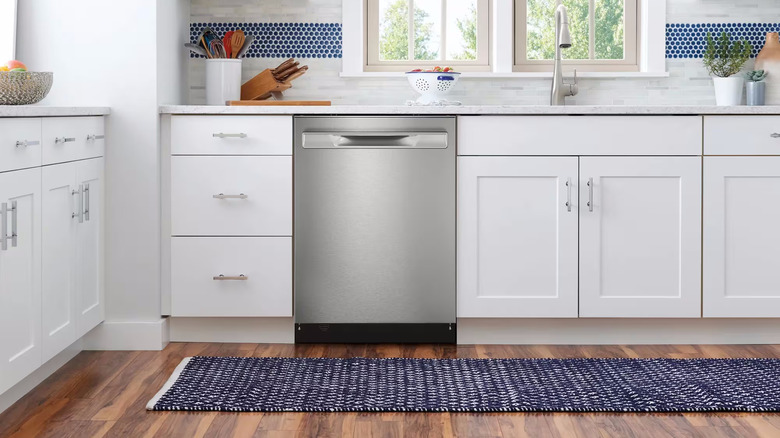
The conventional wisdom about Frigidaire dishwashers is that they're pretty good for a budget option. But there are hidden implications behind that reasoning that can be frustrating to Frigidaire owners. The smaller the price, obviously, the smaller the expense and effort dedicated to engineering and manufacturing parts, and this can result in some of the reliability problems we see with Frigidaire dishwashers today, like clogged spray arms, broken circulation and drain pumps, fragile touchpads, and even leaking.
To diagnose a problem and get a handle on the right solution, it helps to understand the basic process a dishwasher follows to clean your dishes. Water is supplied to the dishwasher by a supply line that connects to an inlet valve. Once opened, that valve fills the dishwasher tub. A circulating moves the water through a heating element and to the spray arms. When the washing is complete, this circulation stops, and a drain pump carries the water away to your sewerage system.
There are a lot of opportunities along the way for things to go wrong. On a typical budget-friendly Frigidaire dishwasher, many of these assemblies — both motor/pump assemblies and the spray arm supports and assemblies, in particular — seem to be designed for replacement rather than maintenance, and they're not always very sturdy to begin with. To make matters worse, some problems like poor cleaning and other pump problems can be caused by an improperly loaded or improperly cleaned dishwasher.
Not cleaning due to clogged wash/spray arms
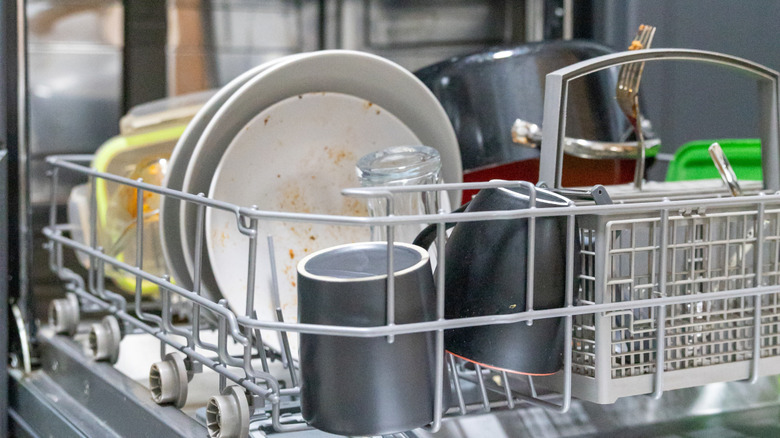
If you've had an inexpensive Frigidaire dishwasher for long, you've almost certainly experienced this problem before. The plastic spray arms used in many models have, as you'd expect, small spray orifices, and these will get clogged with food and other debris from time to time. The wash arms are usually very easy to remove, and clearing the orifices is not challenging. The usual DIY process involves poking a paper clip or a segment of wire coat hanger into the clogged orifices, then reattaching the spray arms and hoping for the best.
With that particular process, the best outcome is usually a very temporary clearing of the spray arm holes. Because the spray arms usually can't be opened, and because you've left the debris inside the spray arms, the water circulating through the dishwasher is almost certain to re-clog the holes with the same schmutz that caused the problem in the first place.
The solution, aside from replacing the spray arms, seems to be to poke the debris into the spray arms as described above, then use a combination of water and motion to attempt to force the debris out of the large hole in the center of the spray arm. A compressor blow gun can be handy for directing substantial force into the jets, which helps to some extent. But the process is mostly made effective by time and repetition. Take your time, and do it as many times as necessary to clear the debris.
Not cleaning due to broken impeller on circulation pump
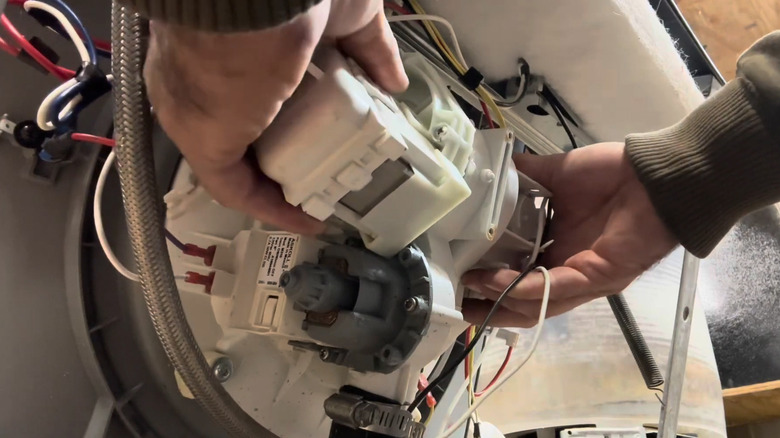
A dishwasher might also not be cleaning well because of problems with the circulation pump that provides the water pressure used to clean dishes. It is possible for the pump's motor to fail, but more often something has gotten jammed in the impeller housing and broken either the impeller or its shaft. A broken impeller might still provide some reduced cleaning power; a broken shaft will provide none. Unusual loudness can be a sign of a problem with your circulation pump impeller. To be certain of the issue, you'll need to remove the motor/pump assembly and inspect it. If you're fortunate, cleaning out your dishwasher pump to clear a clog might put you back in business immediately.
The most frustrating result of your inspection might be that the motor is in good working order, but the small plastic impeller has lost a couple of fins, making it far less effective. On some models, the impeller can be replaced separately, but on many, the motor and pump must be replaced as a single unit. It can be frustrating to replace an entire motor and pump because a cheap plastic part is broken, but this design reduces the number of opportunities water has to leak, simply because there are fewer components that must interface with each other. And the direct drive of the impeller by the motor, which is enabled by their being housed as a single component, makes the pump more powerful. It's also a good way to force people to replace more than they really need to when making a repair.
Not draining due to drain pump and motor problems
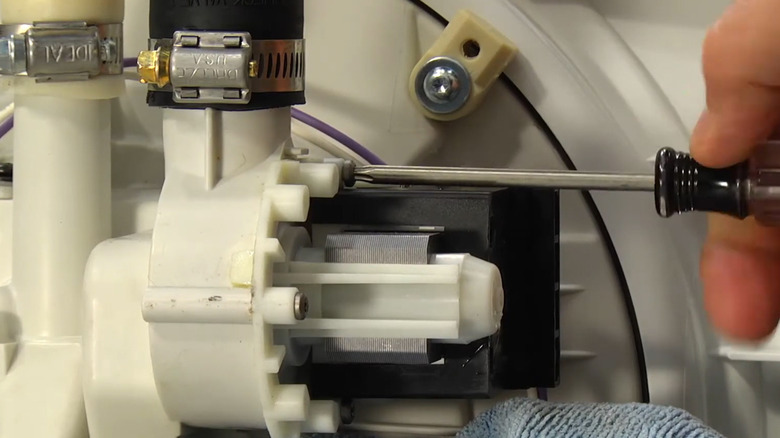
A Frigidaire dishwasher might not drain properly if you have not kept the filters at the bottom of the tub clean, if there's a clogged hose somewhere along the drain path, or if you have a control board problem. But the most likely course of action to fix a dishwasher that has standing water in the bottom is replacing a failed drain pump. Like the circulation pump, this is an assembly that includes a motor and an impeller. It connects to the bottom of the dishwasher where it can move wastewater through to the drain hose. The drain pump assembly can fail because the pump has burned out, or because the impeller or its shaft are damaged.
The replacement process is easy. If you're comfortable with a multimeter, you can check for electrical continuity within the drain pump motor. And, mechanical damage to the shaft or impeller is easy to spot. Replacing the assembly itself is usually a process of disconnecting a few wires, removing a few screws, and making the swap. If you can replace the impeller separately, that will be the most cost-effective option for you.
Always check for the other possibilities before concluding that you need to replace a drain pump. Check your drain hose, garbage disposal (if applicable), and drain valve for clogs. Unclog your Frigidaire dishwasher's filters to make sure they're not blocking water flow. And check the condition of the ball in your dishwasher's check valve. It normally serves to prevent drain water from backflowing into the dishwasher, but a damaged ball can get stuck and prevent draining altogether.
Controls not working due to bad touchpad or control panel
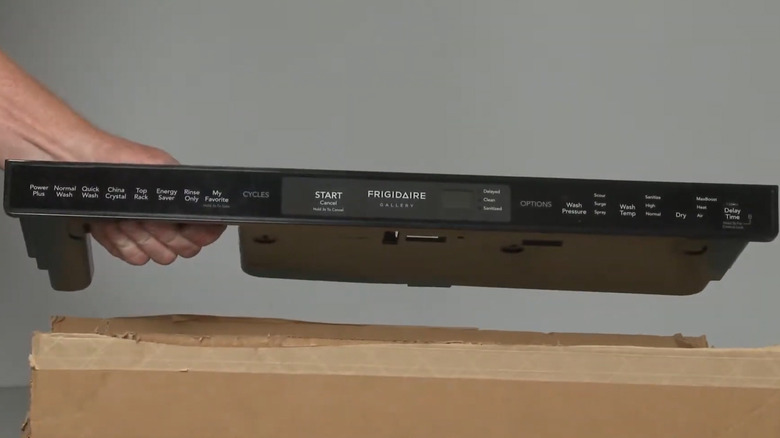
It does you no good at all to have a perfectly functioning dishwasher, to the extent that there is such a thing, but be unable to use it owing to a failure of the buttons you press to get things going. Because of the water/humidity involved in dishwasher operation and the usual position of the controls so that they're constantly assaulted by steam and vibrations, problems with the control panel or touchpad(s) are actually fairly common. This may indicate that a complete replacement of the control panel is necessary.
As with so many aspects of dishwasher repair, the most daunting part of replacing a touchpad interface or the entire control panel is getting to the part that needs to be removed. For a control panel replacement, this usually means cutting the power source for safety, then removing the outer door panel, taking off the user interface panels and display, disentangling the control panel from the control board, and removing the board. Then swap out the control panel and put everything back together. It helps to take a photo before you start removing the various wiring harnesses from the control board. The user interface (touchpad) replacement process is similar, but stops with removing and replacing the touchpad circuit board(s). The touchpads and control panel might be sold together or separately.
Leaking caused by wash arms and door seal problems
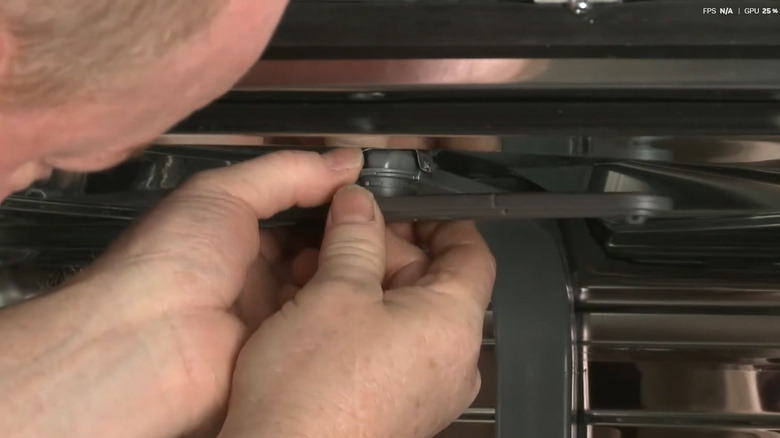
Dishwashers use water, and water often finds a way to leak out, eventually. When the leak is underneath your dishwasher near the motor components, that's probably the origin of your leak as well. But with Frigidaire dishwashers, it's actually very common to see leaking in front of the unit, below the door. It happens because the bits that prevent leakage, like the wiper gasket at the bottom of the dishwasher door, are sometimes more optimistic than effective. The gasket stops water from passing under the door, and it's effective so long as everything else is directing water where it's supposed to go. The same is true of the door seal, and that's worth checking as well.
What can happen is a crack, melted area, or other imperfection in the washer arms can cause the misdirection of water toward the wiper gasket or door seal, which is not engineered to deal with the force of a forceful direct spraying. Replace any damaged spray arms, and make sure any supports for those arms are properly tightened in order to control the direction of water. You should also replace any damaged door seals and gaskets. Simply pull the broken one off, clean the channels with a damp cloth, and pop a new one into place.