

Give Your Tomato Plants Sweeter Flavor With One Simple Soil Swap
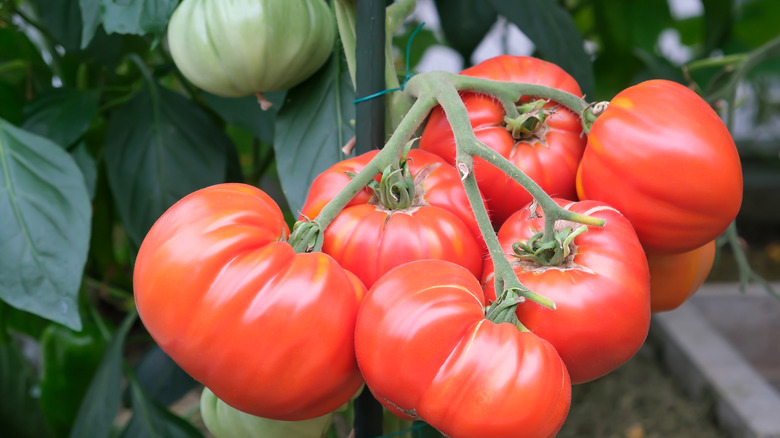
You take a bite of the first home-grown tomato of the season, and it's ... not great. While you may have poured your heart and soul into growing tomatoes, sometimes the fruits of your labor just don't taste sweet. When garden tomatoes turn out lackluster, bland, and not super appetizing, there's one place to put the blame, and that's on your soil. It turns out, having too much nitrogen in the soil causes your tomato plants to focus on producing leaves, rather than fruits. The result? Lush, leafy green plants with tomatoes that taste like nothing. Fortunately, the fix is pretty simple — cut back on the nitrogen.
Nitrogen is one of the three main nutrients found in most commercial fertilizers. It's also found naturally in certain types of soil. One of the main things nitrogen does for plants is aid in the process of photosynthesis. That's why having high levels of nitrogen in the soil around your tomato plants leads to lots of healthy green leaves.
While nitrogen is useful early in the growing season, when you first set your tomato plants in the ground, once it's time for the plant to flower and set fruit, it's going to need greater quantities of potassium and phosphorus. With potassium, your tomato plants can more efficiently move sugar and water to its fruits, resulting in tastier tomatoes. Phosphorus also helps your tomato plants flower and produce fruits. Use a fertilizer with higher amounts of both nutrients to get the sweet, homegrown tomatoes of your dreams.
Tips for the sweetest homegrown tomatoes
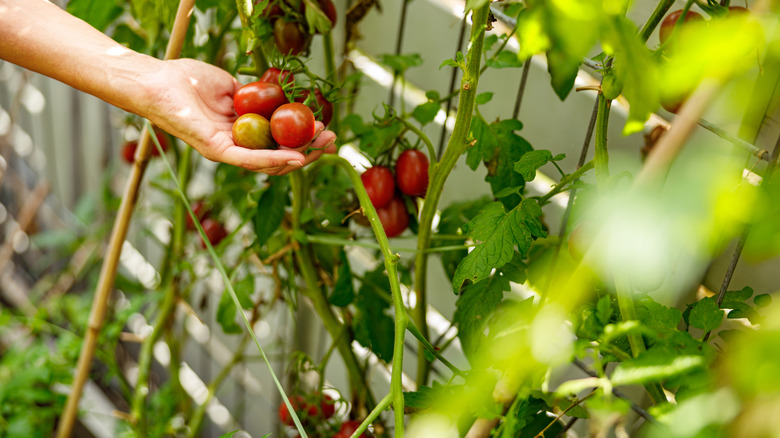
Before you start giving your tomatoes plant food, test your soil so you know exactly what's going on with it. A soil test will let you know which nutrients, if any, are lacking, and what garden soil amendments will make the most sense for you. The test results will tell you how much nitrogen, potassium, and phosphorus are already in the soil and will help you avoid adding too much when you fertilize.
If you do need to add fertilizer to your soil, you've got two options: You can either use a conventional (synthetic) fertilizer or an organic fertilizer. Should you decide to use a synthetic fertilizer, look for one labeled 5-10-10, meaning it has more phosphorus and potassium than nitrogen. Apply once a month, according to the package directions. Organic fertilizer that's high in potassium includes kelp meal and wood ash. Compost is also a good source of potassium.
There are a few other things you can do to get sweeter tomatoes. Ensuring your tomatoes have the right amount of water and sun will also improve the quality, i.e. sweetness, of your harvest. Tomatoes need full sun, ideally eight hours per day. They also need consistent moisture. You can tell if you're under or over watering your tomatoes by squeezing the soil. It should be damp enough to stick together if you squeeze it, but not sopping wet. Finally, amp up the sweetness by choosing a variety that's naturally sweeter than others, such as orange or yellow tomatoes, which contain more sugar.