

Texas Gardeners Love This Heat-Tolerant Flower For Creating A More Colorful Backyard
Most Texans will tell you that we only really have two seasons down here: Summer and more summer. Living in a USDA hardiness zone with a high number can be difficult if you want a colorful, thriving backyard. Plenty of plants that work perfectly well elsewhere just can't handle the Texas heat. This is why we love lantana (Lantana camara) to spruce up our flowerbeds. These perennials come in plenty of colors, like orange, yellow, red, and even purple, and spending most of their time in 90-degree Fahrenheit weather and direct sunlight doesn't phase them at all. We don't have to prune them much, and with an automatic sprinkler system to take care of watering, they are almost a set-and-forget type of plant. Even when temperatures really start to soar and we're worried that the rest of our yard might bake, we don't have to bring lantanas inside or put up a shade cloth — nothing. They have root systems that hold up well to the weather in all sorts of soil.
Choosing lantana for Texan gardens can also help the other plants thrive, leading to an even more colorful spread. That is, the plant is one of the hanging basket flowers that will keep hummingbirds coming back all summer long. Having plenty of pollinators hanging around is essential for success. Generally, deer also don't like to eat lantana due to the plant's texture, which is great for more rural Texans, though young leaves may not be totally resistant to deer nibbles.
Is lantana a good fit for your yard?
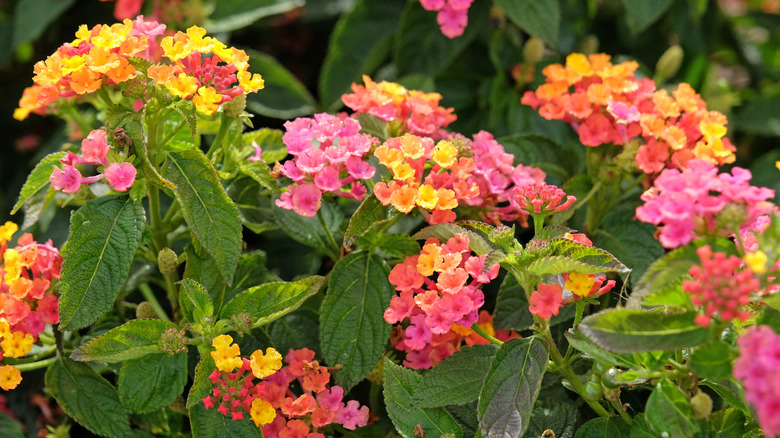
Before you rush out to buy lantana, remember that these plants grow best in USDA zones 8 to 11. If you live in one of these, great! If not, it might be a little bit too chilly where you live for the flowers to thrive. While these colorful blooms can sustain themselves year-round in warmer weather, they don't do well with frost. In fact, if there are consistent periods of time in your area where the weather is less than 55 degrees Fahrenheit, then these flowers are likely not a good fit for your garden. In some parts of the United States, lantanas are also classed as invasive and can cause some trouble. For example, even though the colorful blooms can grow quickly and without much care in the Florida heat, they have also been known to compete with trees in citrus groves for resources. Even though this is unlikely to be a major issue in your backyard, it's still something to be aware of.
In addition, if ingested by pets or people, these plants can be very toxic. Having berries on your lantana is a normal part of the process, but if they are eaten, they can make people quite sick, including a severely upset stomach. All parts of the plant are toxic to animals like cats, dogs, and even cattle, no matter what part is eaten. To avoid any trouble with pets, style them in harder to reach places in your yard.