

The Dishwashing Habit From Britain That Seems Strange At First — But We Get It
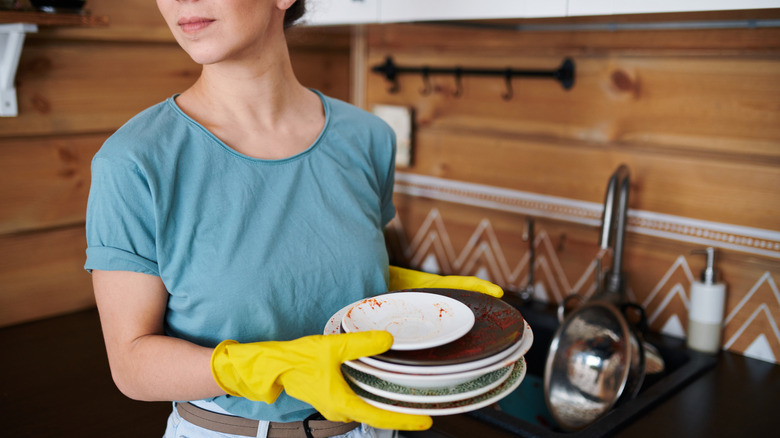
Not everybody pops their dirty dishes in the dishwasher after a meal. In fact, plenty of folks in the U.K. don't even use a dishwasher at all. If the horrified videos on social media have taught us anything, it's that Americans are always shocked to learn that not only do most British people wash their dishes the old-fashioned way in the sink, but the water isn't running the whole time, either. Instead, Brits just put a washing-up bowl in their sink and clean all their dishes in the soapy water, leaving the tap off.
Sure, this seems a little strange at first, but honestly, we get it! It saves plenty of water versus running the tap for a rinse the entire time, which is an easy way to make your home more sustainable. You also use less water overall because you aren't filling up the entire sink, just the washing-up bowl. Plus, since you're only using one side of the sink for dishes, the other half is still free for other tasks during busy dinner prep.
There is, however, one bit of the tradition that's particularly strange to most Americans — and that's the lack of rinsing at all. Brits typically don't rinse the dishes at the end. They just stack them on a drying rack to let evaporation do its thing. However, this technically isn't unsafe! Experts confirm that leaving a little bit of soap behind isn't really a big deal, health-wise, but that it's still best to remove it.
How to wash your dishes like the British
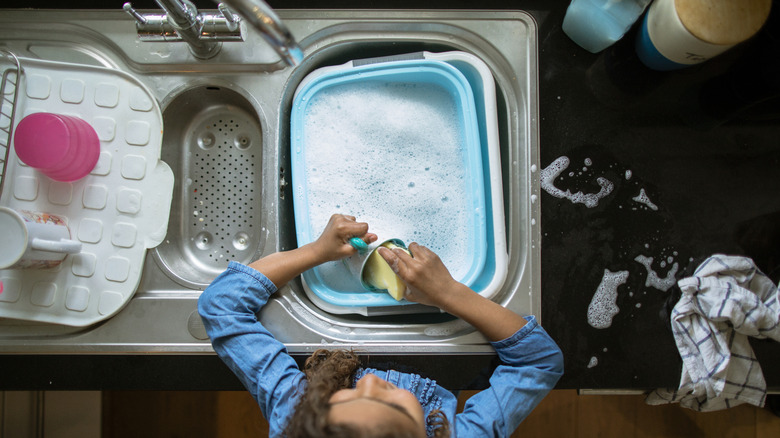
If you're ready to leave the mistakes you're making with your dishwasher behind and channel your inner Brit, the first thing you should do is grab a plastic bowl. This is now your official washing-up bowl. Fill it about 2/3 of the way full with hot water from the tap and add in a drop or two of dish soap – DIY dish soap is fine. But remember, it's now actually called washing up liquid, so you can really get the immersive experience. From there, scrape the big bits off into the trash, compost, or garbage disposal. Now you're ready to wash.
Give each dish a good scrub with a sponge, rinsing off any suds or further dislodged bits by dunking the dish back into the soapy water. Typically, you wouldn't change out the water until you've cleaned all the dishes from the meal. However, use your best judgment. If you made something light that doesn't leave behind a lot of residue, fine. If there are a lot of things floating around and it's dark brown, you have permission to refill the basin — same with giving things a quick rinse. Sure, it uses more water, but if you want to, go for it. Then, you can give the dishes a quick once over with a towel and pop them onto a drying rack. And with that, you have quite the eco-friendly kitchen straight from the other side of the pond.