

Why Are Side-Mounted Outlets No Longer Allowed On Kitchen Islands?
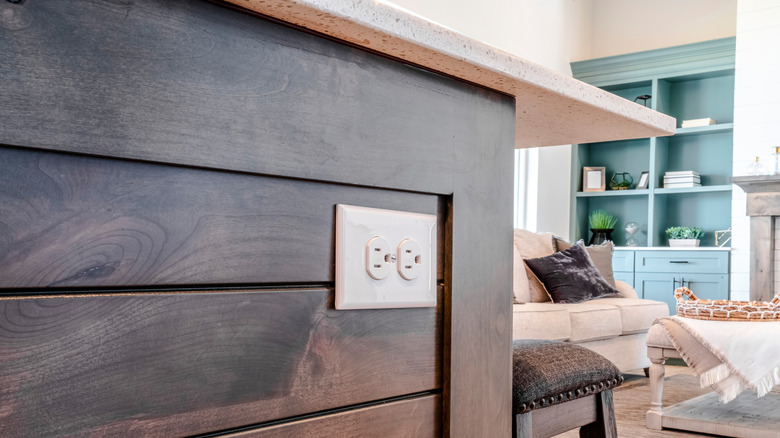
If you've been looking for kitchen island design ideas to upgrade your island or peninsula, one item that might be on your list is a side-mounted outlet. As a functional work space, the island seems like a reasonable place to plug in small appliances and devices to avoid running long cords across walkways. However, you may be out of luck. Side-mounted outlets aren't allowed on kitchen islands anymore, due to a change in electrical regulations. As of 2023, the National Electrical Code (NEC) states that these outlets situated below countertops and work surfaces are too dangerous — having cords stretching off the counter and the outlets exposed below the work surface can potentially pose tripping and shock hazards.
When a device on your island counter is plugged into a side-mounted outlet and the cord stretches over the edge, you'll ideally just brush past it. But that isn't always the case. People can trip on the cord, or you might snag something on it and yank the device off the counter. That could lead to a broken device or worse, if the item you had plugged in was something heavy and dangerous like a blender. If you have children in your home, the cord could be at the right height for their heads to become caught, and having the cord within reach could lead to curious kids pulling the device off the counter on top of themselves. Side-mounted outlets on kitchen islands are also more likely to come into contact with liquids. Any spilled drinks or ingredients on the surface of your kitchen island could potentially flow over the edge and onto the outlet. This can lead to short circuiting, electrical shocks, and potentially even a fire.
Should you remove side-mounted outlets from the island?
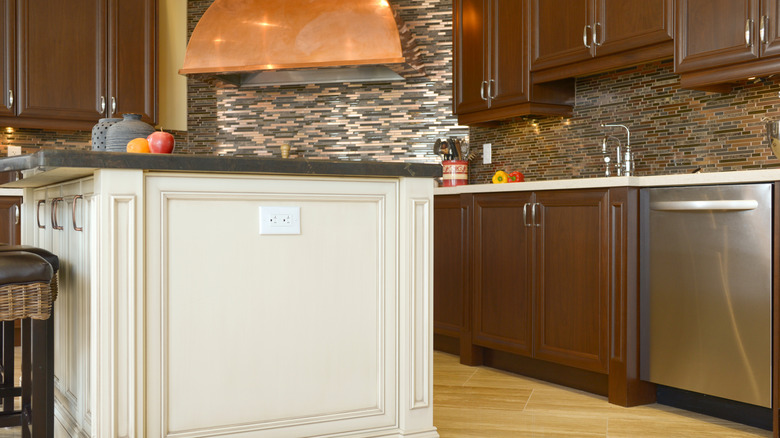
If you're worried about being penalized for having side-mounted outlets, you can breathe a sigh of relief. The NEC generally doesn't enforce changes to pre-existing setups, meaning these code changes only apply to new outlets being installed. Side-mounted outlets that were already installed before the code changes went into effect don't need to be removed, so if you like your outlets the way they are and haven't had any issues, you're likely allowed to keep using them.
However, you may want to consider updating your outlets anyway. Even if you haven't had problems yet, there is still a future risk. You can install a new GFCI outlet in a nearby wall or even in a drawer in your kitchen island to keep the convenience of an outlet by your workspace without as many risks. GFCI, or ground fault circuit interrupters, offer extra protection in wet areas, so you're required to use them in kitchens in order to be up to code.
If you need an outlet for your kitchen island but don't have a conveniently placed wall or drawer, you might want to consider installing a pop-up outlet. There are plenty of benefits to these seamless electrical outlet upgrades, but most importantly, pop-ups are NEC-compliant and pretty convenient. You will need to cut or drill a hole in the top of your counter for the power cord and outlet to sit in, which may be less aesthetically pleasing and potentially tricky if you don't have the right tools or experience. But if you want to upgrade your outlets and are nervous about doing it yourself, contact a professional electrician to help plan and install them!