

Why There's Simply No Need For A Wood-Burning Fireplace Anymore
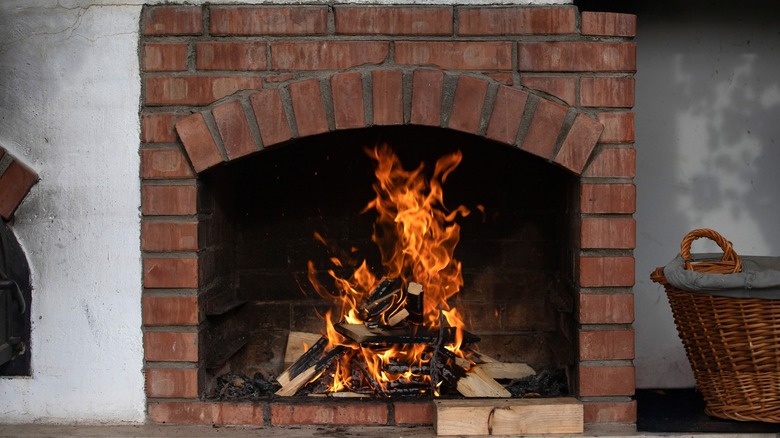
Many boomers can remember when an open wood-burning fireplace was a standard feature in the home, and images of families gathered around it populated ads in magazines, movies, and black-and-white TVs. Those days are gone, along with unpolluted air and the blissful illusion of energy so abundant that it was almost free. As it turns out, burning wood in an open fireplace is an extremely inefficient way to heat a home, and it releases greenhouse gases. Since people have figured out more eco-friendly ways to use their fireplaces to keep them warm, there's simply no need for the wood-burning kind anymore.
Burning wood in an open fireplace is inefficient because the heat rising through the chimney creates an updraft that sucks air out of the room, reducing air pressure and pulling outdoor air in through cracks in doors, windows, and walls. As a result, the room can end up feeling colder, unless you're very close to the fire. Unfortunately, that's how a fireplace is supposed to work, but if the chimney is obstructed or the wind is particularly strong, the updraft can turn into a downdraft that fills the room with noxious gases. If the updraft is working, on the other hand, those gases pollute the atmosphere.
Let's not forget the hassle of cleaning up wood ash and buying and storing firewood. If you stack firewood outside, it's likely to be a nesting place for insects and rodents. Plus, if it rains, and you try try to burn wet firewood, you'll have a weak fire and probably get smoked out.
Eco-friendly alternatives to a wood-burning fireplace
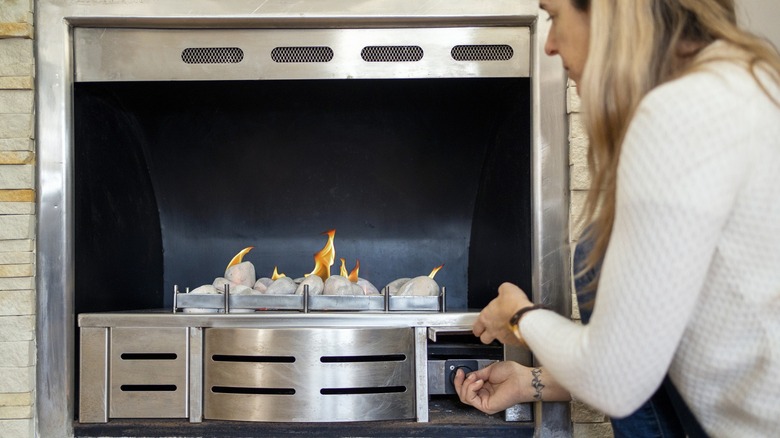
If you move into a house with a traditional fireplace, you have several options for using it that don't involve burning wood. You can convert it, burn some other fuel, such as gas or ethanol, that produces fewer emissions than wood-burning and leaves no residue, or you can install an electric fireplace insert. These different types of fireplaces feature sealed chambers that protect you from hot flames or electric elements, and don't suck air out of the room.
You don't have to sacrifice the aesthetic of a burning flame in the living room. The flame produced by burning natural gas or propane is bright enough to light up a dark room, and the non-combustible logs that come with many models provide a convincing imitation of burning wood. You can install a gas fireplace that exhausts through the chimney or vents through the wall, or you can install a ventless unit. While generally considered safe, ventless fireplaces aren't legal everywhere, so do your research before choosing one. An ethanol fireplace also provides burning flames, and it doesn't need venting, but ethanol doesn't burn as hot as other fuels, and it's more expensive.
If you're satisfied with just the illusion of burning flames, you may prefer an electric fireplace insert. It has a heating element and air distribution fan sealed inside a chamber, and some models display a burning flame on the front of the chamber. The heat is clean, and the fireplace is maintenance-free.