

Why Is One Prong Slot On Electrical Outlets Bigger Than The Other?
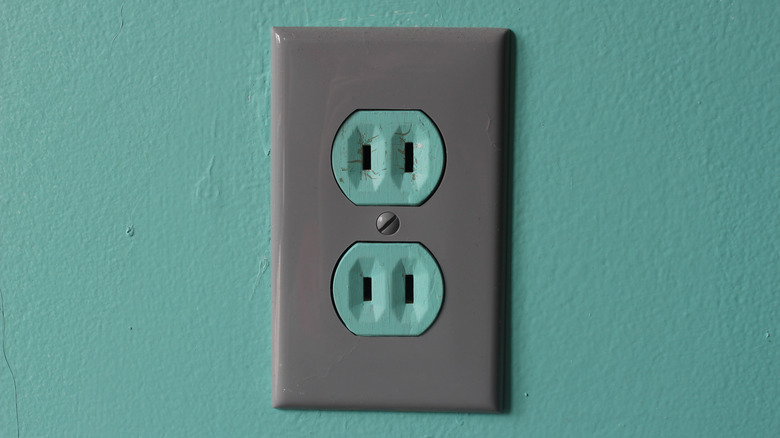
Electrical outlets have been around for a long time, but that doesn't mean they aren't still a mystery sometimes. You may find yourself wondering why your electrical outlet is upside down, or why they look like a face. If you've ever tried to plug something in, only to realize it wouldn't fit and had to flip the plug around, you might even be curious about why one prong slot is larger than the other. Believe it or not, it isn't just designed to frustrate you as you try to plug your phone charger in at night! Having one longer slot is actually an important safety feature that reduces the risk of electrocution.
Two-pronged outlets have two wires, typically called a hot wire and a neutral wire. In outlets with mismatched slots, called polarized outlets, the larger prong on the plug matches the neutral wire, and the smaller corresponds to the hot wire. When the circuit is completed by plugging something into the outlet, the hot wire carries electricity in, the current flows into your device through the matching prong, and it exits through the neutral prong and wire. Since the prongs are different sizes, there's only one way to connect the plug and outlet. This means that the circuit will be completed correctly every time, as long as the wiring is installed correctly.
However, if the wires were switched or if you somehow forced the plug to fit incorrectly, you could end up with reversed polarity. This means the circuit is operating backwards. The electrical current may be able to flow into your device through the neutral wire, but can't flow back out through the hot wire, leaving parts of the device electrified even if you turn the device off. That could leave you with a nasty shock!
Do all electrical outlets have one larger slot?
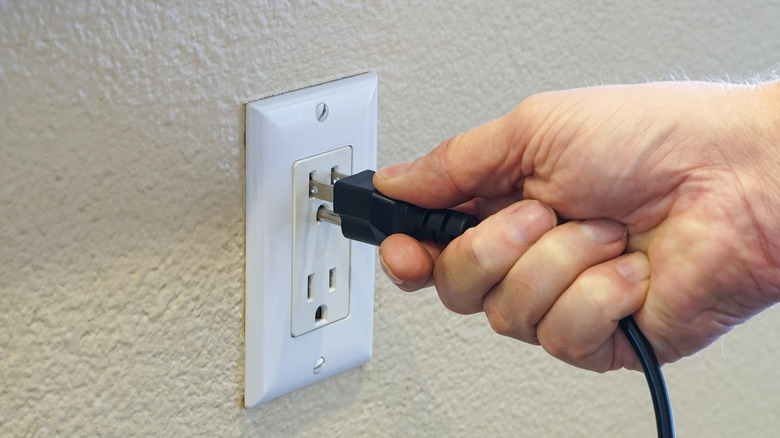
Since having mismatched slots can help protect you from electrocution, you might think that every outlet should have them. However, it depends on the type of outlet you have. If you have a three-pronged outlet, then you'll be relieved to know that your outlet is also polarized. Although three-pronged plugs can only be inserted one way, three-pronged outlets do still typically have one larger slot. This ensures that any two-pronged plugs you want to plug into them are inserted correctly. Additionally, the third prong is actually a grounding pin, so any rogue electrical currents should travel safely down it rather than arc off or linger in your devices. If you're nervous or curious, you can check to see if your outlet is grounded properly using a multimeter.
However, if your house is older, you may actually have non-polarized outlets. These outlets have two slots that are the same size. Even if you haven't looked at the slot sizes, you may have noticed that some of your plugs don't fit into them. The neutral prong on a more modern plug is too large to fit into the smaller slots of non-polarized outlets. If you can, update your outlets to a polarized plug for increased safety. It's a good idea to hire a professional to do so if you don't have electrical experience, as they'll be able to identify the hot and neutral wires and ensure everything is up to code. Additionally, you may want to have them take a look at the rest of your wiring. Since polarized outlets became standard in the early 1960s, having non-polarized outlets may be a sign that your electrical systems are in need of a check-up or updating.