

Here's What To Do When You Find Flying Ants Near Your Home
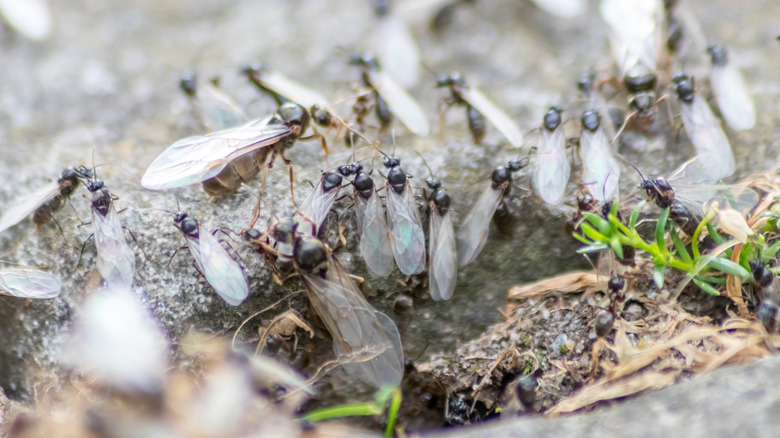
Perhaps the only thing more frustrating than dealing with an army of ants crawling into your home is watching them take flight. Also known as alates, winged ants are typically reproductive ants looking to form a new colony. They tend to be more of a nuisance than a danger — though some species can bite or sting you.
If you find flying ants near your home, the first step is to make sure they're actually ants. Flying ants look strikingly similar to termites, which can cause significant damage to your home. If you're dealing with ants, their antennae will be elbowed rather than straight, and they'll have thinner waists than winged termites. Additionally, a flying ant's hind wings will be smaller than the set in the front, while termites have wings that are similar or identical in size. If you're uncertain, it's best to hire a professional to rule out the more destructive of the two.
Once you're sure the winged creatures in your home are ants, the next step is to determine where they're coming from. Look for potential entry points near your doors and windows, as well as any other ant activity, such as ant trails or nests. The simplest method for eliminating them from your home is to grab the vacuum and suck up any visible flying ants. Then, immediately go outside to empty the canister. To get rid of ants without harming pets, you can also spritz them with a mixture of dish soap and water.
How to prevent flying ants from coming into your home
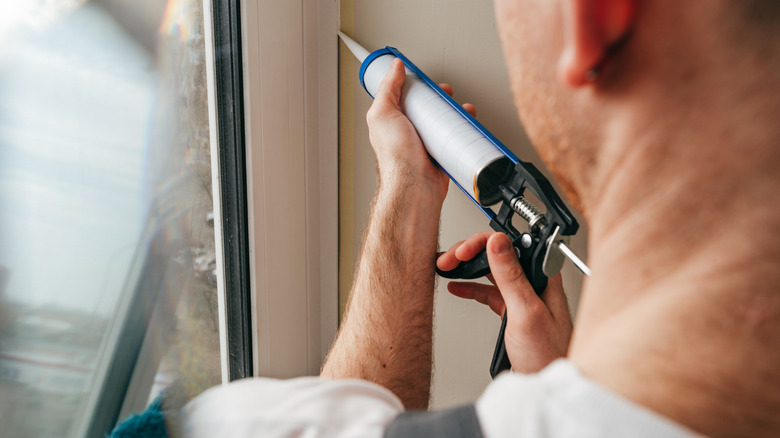
If you want to prevent more flying ants from coming into your home, focus on integrated pest management for long-term prevention. Flying ants aren't dangerous, and, thankfully, they rarely sting. So, it's best to avoid using harsh chemicals that might harm beneficial insects or even pets. Instead, you'll want to seal any ant-accessible entryways into your home. Fill cracks, holes, and other openings with caulk, and remove any food and water sources — especially sugary foods or drinks. Stay on top of wiping spills and cleaning up crumbs, and keep pet food in an airtight container.
To stop flying ants congregating outside, you should remove potential nesting sites and eliminate any food sources. Ants love to nest in damp or damaged wood, so repair any rotting wooden structures and remove any decaying logs or branches near your home. Flying ants are also attracted to sugary honeydew; for this reason, try to plant shrubs and trees away from your house or other areas you'd prefer to keep ant-free. Ants nest in mulch, grass, and other plants, which means it's best to keep dense vegetation and mulch at least a few inches away from the foundation of your house. Repair or replace any leaky water sources, like outdoor faucets, as they can lure in thirsty ants, too. You can also set up ant traps or hang up sticky tape to get rid of ants that continue to linger nearby.