

The Simple Doorway Decor Idea That Makes Your Whole Home Feel Elevated
We may receive a commission on purchases made from links.
As a completely plant-addicted interior designer, my automatic go-to design mantra is often: when in doubt, put a plant on it. Boring bookshelf or empty corner? Add a plant in a cute pot. Window looking bare? Find a clever way to hang a plant in front of it. The pop of life, organic color, and natural vibrancy a houseplant provides is often what's needed to invigorate a lifeless space. My husband (who kindly takes on the task of weekly plant watering at our house) may take issue with my sweeping foliage-obsessed statement. However, I certainly do not mean that every house needs to look like an overstuffed greenhouse like mine. Instead, find thoughtful, interesting, and even unexpected ways to use plants to bring your space to life.
Take a standard doorway. You walk through it multiple times a day and likely never give it much design thought. But instead of leaving it as a utilitarian necessity, why not transform it into a unique way to display your plants? Simply install a ledge above the door for more upright plants and add long trailing plants to the ends. This will frame the opening in an organic, beautiful way. Just like that, the passageway becomes a slice of paradise straight out of a bohemian resort. With just a couple of basic tools and supplies, you can tackle this elevated plant DIY in an afternoon. So let's break down all of the details about selecting, installing, styling, and caring for an over-the-door (or window!) plant shelf.
Measuring, planning, and building a doorway plant ledge
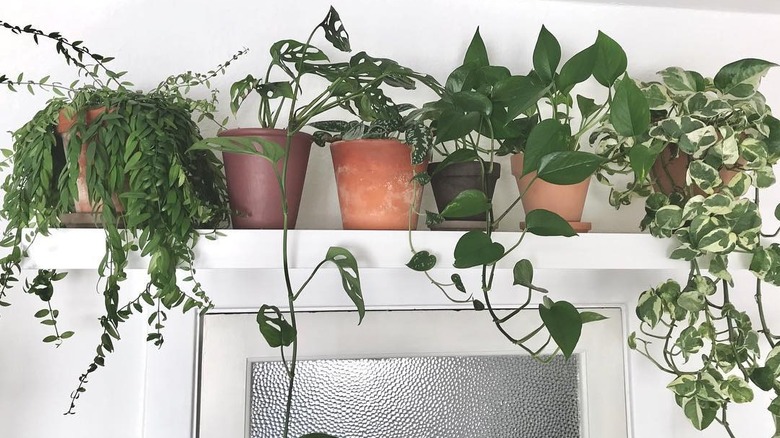
Begin this over-the-door plant shelf project by measuring the opening where you'd like to install the ledge. Measure from the outermost points of the door casing so the ledge runs at least the whole width. You may want to extend it beyond the doorway to allow for support brackets below the shelf.
Before committing to a ledge length, I recommend pre-locating your studs using a stud finder. Then, you can plan the bracket location and alter the length as needed. Studs are typically located directly adjacent to the door frame and are usually doubled up. Depending on how wide your door casing is (or for a drywall opening with no casing), you may be able to find a stud just outside the trim. Otherwise, there may be studs located in the header above the door that you can use to support upward-facing L-brackets. Regardless of your particular configuration, the ledge absolutely needs to be properly supported on studs to hold the weight of the pots, plants, and soil.
Once your measurements are planned, you either need to purchase or build a plant ledge in the correct dimensions. While purchasing a shelf is straightforward, building a basic ledge isn't too much harder. Simply buy a piece of hardwood (cut to size) and decorative brackets that fit the style of your home. Seal the wood with polyurethane for protection against soil and watering spills. To hang the ledge, place the horizontal shelf piece on top of the trim or floating just above, securing the brackets with appropriate fasteners to the studs.
Styling and caring for your doorway plant ledge
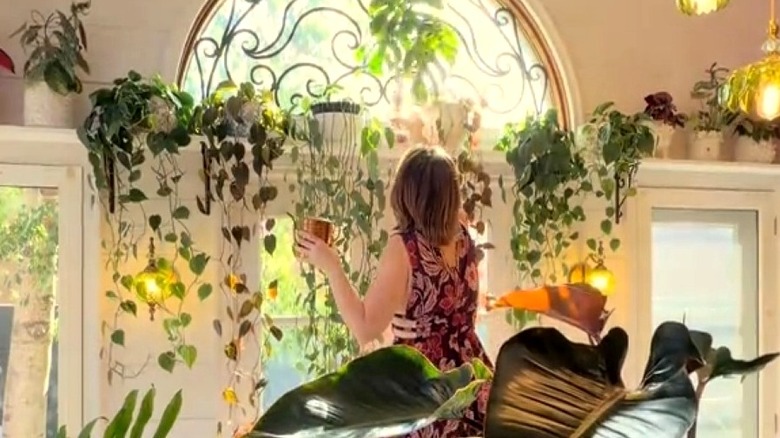
Once your plant ledge is hung, it's time for the fun part: adding plants. Use lightweight pots for safety since they're located above your head, and consider securing the pots with heavy-duty museum putty. Mix materials, sizes, and colors of planters for a curated, eclectic look with visual interest. If you prefer a cleaner, cohesive vibe, use pots all within the same general color family, such as warm neutrals. Just be aware that going too matchy-matchy may fall a little flat. Use the planters to visually block any L-brackets used to support the shelf from above, though I also recommend painting them the wall color to further disguise them. Use taller upright plants for the middle of the ledge and long trailing plants for the outsides to frame the doorway in a flowy, organic way. Be sure you are choosing plants appropriate for the natural light in your particular space.
While it may seem like the plants would be challenging to care for located up high, many houseplants actually only need to be watered about once a week. A hygrometer, like the XLUX Soil Moisture Meter, can help you gauge their watering needs without removing them from the ledge. Watering can then also usually be done in place, just be sure to place the pots into trays or saucers to catch any overflow and protect the ledge from damage.