

What Is 'Poor Man's Concrete' And Is It Worth It?
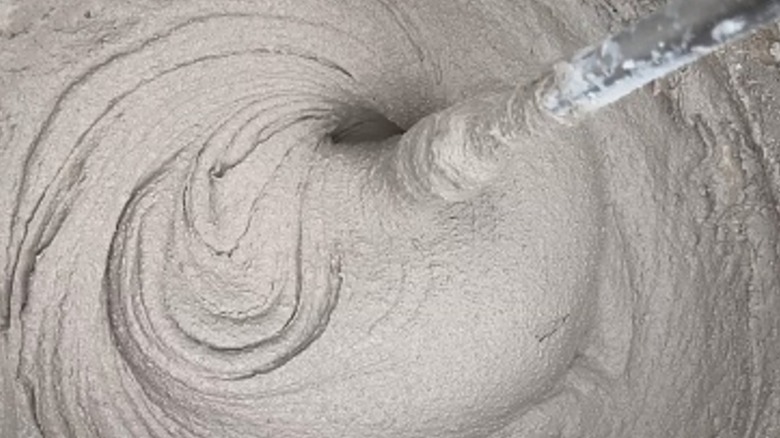
The term "poor man's concrete" sounds like it refers to a cheaper — and probably less strong — type of concrete. The term isn't a common one, though, and an online search leads to various users on forums disagreeing on a universal meaning. When used to make a driveway, it could refer to something as simple as using gravel instead of actual concrete, but it could also be a whitish mixture that hardens when combined with water, as described in a 2010 discussion in a recreational vehicle user's forum. If the latter, then poor man's concrete is probably a mixture of aggregate (sand and stones), Portland cement, and a filler, and the two main filler candidates are fly ash or some form of lime.
Lime is a traditional substitute for Portland cement with a long history of use. Masons usually use it to make mortar, and it adds the flexibility needed for brick and concrete restoration projects. Lime is more expensive than Portland cement, though, so it's hard to see how a lime-based mixture would have earned the reputation as poor man's concrete.
That puts the focus on fly ash as the additive that turns regular concrete into poor man's concrete. So, is it worth it? It's a by-product of coal combustion, so it's cheap, abundant, and environmentally friendly, and its use as a concrete filler is common. As it turns out, poor man's concrete is anything but inferior to regular concrete.
Adding fly ash makes concrete stronger
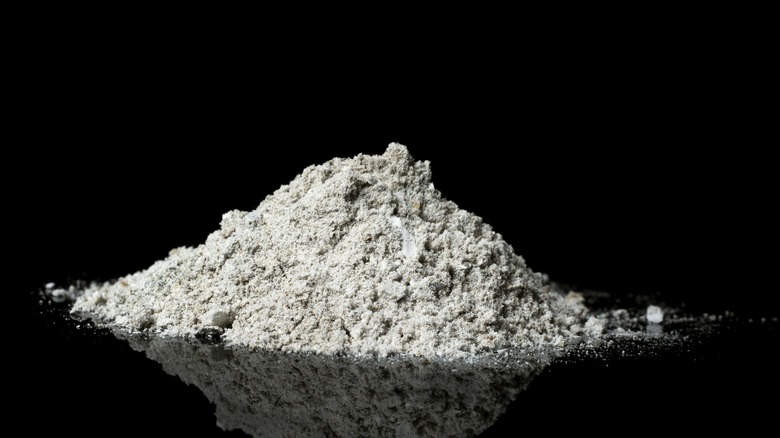
Paradoxically, adding fly ash to Portland cement to make poor man's concrete creates a stronger, not weaker, final product. Fly ash combines with the calcium hydroxide that forms when you add water to Portland cement to make a denser, more crack-resistant mixture. The main disadvantage of adding fly ash to concrete is that it makes the mixture harden more slowly.
Fly ash is not a substitute for Portland cement; it's just an additive. The typical concentration in concrete mix, relative to Portland cement, is from 15% to 25%, but it can be as much as 40% or higher in some circumstances. Being a by-product of industrial coal-burning operations, fly ash costs nothing to produce — compared to over $300 per ton for cement — and transportation costs range from $10 to $20 per ton. That makes concrete containing fly ash (also known as Ashcrete) significantly less expensive than concrete without it.
Fly ash has been a common additive to concrete since the mid 1900s, and Ashcrete continues to be a common material for road construction. Fly ash is also an additive in some paints, ceramic tiles, and plastics. Poor man's concrete is a great product to use for pouring a driveway or walkway, as long as you can give it the time it needs to harden. However, even though fly ash is environmentally friendly, coal burning is not, so Ashcrete has an uncertain future in a world in which coal gives way to cleaner methods of generating electricity.