

How Often Do You Need To Replace Soil In Raised Garden Beds?
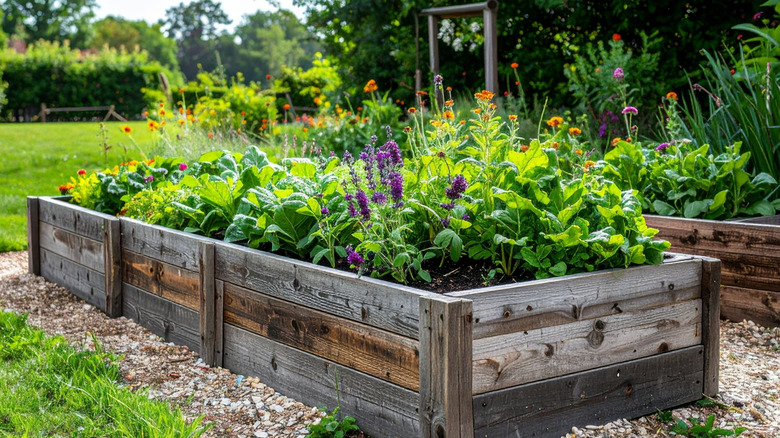
At the outset, raised garden beds can come across as a wonderful, low-maintenance option compared to working directly with garden soil. No longer do you have to address soil contamination, inherited pesky weed presence, or poor drainage, since you're building a healthy soil from scratch (or buying a raised garden mix from stores). Sadly, the reality is a tad different. Soils in elevated beds settle over time, as they have poor structure — at least initially. Moreover, they eventually run out of nutrients, either from leaching or as the plants uptake them to fuel their growth.
Given these realities, should you replace the soil in raised beds frequently? Turns out, you don't have to, and in fact, this may even be detrimental for your plants. When you build a simple raised garden bed and top it up with soil, it still lacks the beneficial ecosystem of microbes. However, as time passes and organic matter breaks down, these microbes establish beneficial chains, improving the overall structure, texture, and quality of the soil.
Throwing out the soil takes out these benefits with it. Instead of replacing the soil — an expensive affair to say the least — consider topping it up once or twice a year with compost and fertilizers to restore nutrient balance and increase soil depth. The only exceptions to this rule are when your soil has a significant buildup of disease-causing microbes, pests, or pesticides, necessitating immediate replacement.
Don't replace the soil — refresh it annually or twice a year
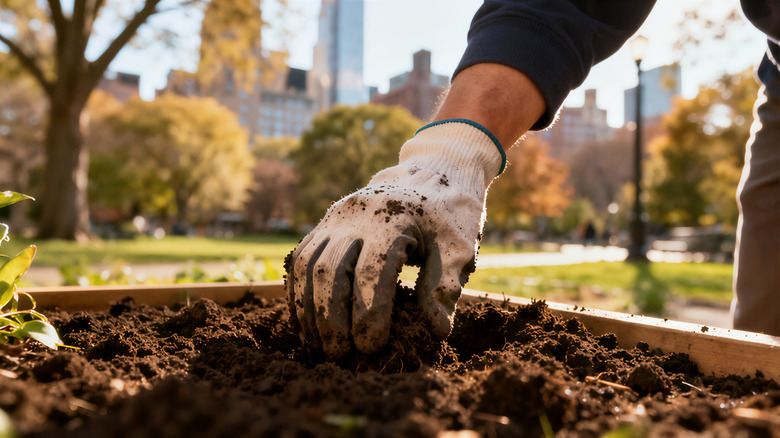
Typically, the year you start a raised garden bed is punctuated with a bountiful harvest or blooms. But as the plants develop and mature, they exhaust all nutrients. This lack materializes as yellowed or stunted growth, while the soil starts to look gray, compacted, or pelleted (rather than dark and crumbly). If you see any of these signs in your existing raised garden beds, take that as a cue to replenish the soil immediately.
If you're just embarking on a raised bed journey, develop a schedule around your plantings. If you've started a vegetable garden, top dress twice a year to restore the nutrient balance. As vegetables, especially heavy feeders, consume lots of nutrients over the season, replenish the soil immediately after harvesting in the fall. This will release nutrients for cool-season crops.
Follow up with a second amendment in the spring, so it can decompose during the warm months, becoming available for summer vegetables. For flower beds, first check whether your plants prefer organically-rich, poor, or average soils. For instance, wildflowers like tickseed flourish in infertile soils, but others, like pioneer violet, require high humus content. In the case of the latter, refresh the soil once a year in the fall.
Replenishing soil in raised garden beds
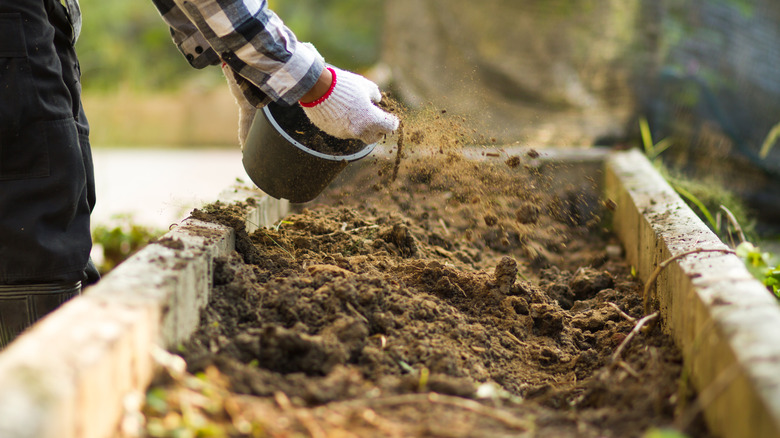
Ready to replenish your current soil? After you've settled on the frequency, get ahold of some bagged compost (unless you make your own compost at home). Spread a 1-inch-thick layer of it atop the soil without tilling it. Although decomposition may take longer in this case, it also minimizes any further soil disturbance that may hurt the beneficial ecosystem and drainage.
Do note that compost mostly works to improve soil structure and may not necessarily replenish all the nutrients necessary. To redress that, consider getting a soil test every three years and make the nutrient additions as necessary. Also, don't go overboard with compost, as it may lead to a salt and phosphorus buildup in the soil that can be harmful for young seedlings.
Apart from that, if your raised beds become bare in the winter, consider topping them with a 2-inch-thick layer of mulch, such as leaves, straw, or wood chips. Like compost, it will break down and enrich the soil, while preventing soil erosion or leaching. It also helps to keep weed pressure down.