

The Award-Winning Shade Perennial Even Beginner Gardeners Can Grow Successfully

If you need landscaping solutions for shady areas, shade-tolerant perennials are a great place to start. There are plenty of options to choose from, but one that you shouldn't overlook is blue liverleaf (Hepatica nobilis). The flowers of this plant might look dainty, but it's surprisingly hardy and easy to grow. If you need a perennial for a container garden that doesn't get much sun — or something to add a bit of charm to the shadier spots of your garden — you should absolutely consider planting blue liverleaf.
You don't need to take our word that blue liverleaf is easy to grow, either! The Royal Horticultural Society has awarded it and some of its close relatives the RHS Award of Garden Merit. This award is given to plants that can be grown easily and reliably, meaning that even beginner gardeners can enjoy the beautiful flowers of this plant.
Blue liverleaf blooms in early spring, producing lovely flowers in shades of blue, white, and pink. The flowers emerge before the new leaves, creating an almost magical effect. Even at its full height, however, blue liverleaf is a relatively small plant. This, combined with its easygoing care requirements, makes it an excellent plant for beginners. That said, it's also beautiful enough to be worth growing for experienced gardeners as well.
How to grow blue liverleaf
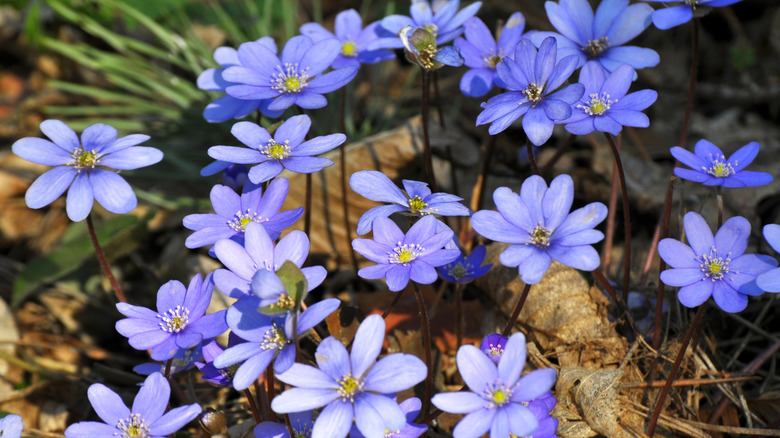
Blue liverleaf may have won an award for being easy to grow, but you do still need to make sure it's cared for correctly. These plants grow best in loose, loamy soil that's well-draining, and they can be planted in either your garden or a container. Blue liverleaf is only hardy in USDA zones 5 through 8, so be sure to take your hardiness zone into account when choosing where to plant it. These plants prefer partial to full shade, as well. If you have a spot that gets a bit of sun in the morning but is shaded for most of the day, that's an ideal place for them. You can also grow them underneath a tree or shrub, where they'll receive some dappled sunlight throughout the day. Water your blue liverleaf plants whenever the soil is dry to keep them perky.
Pollinators enjoy the flowers of these plants just as much as people do, but there is something to note if you plan on growing your blue liverleaf outdoors. After it blooms, it can produce a small fruit that rodents, including chipmunks, like to snack on. If you love wildlife gardening, then this may be great news! However, if you'd rather not see any rodents in your garden, then you should grow your blue liverleaf in a container or remove the fruit when it appears.
You can divide your blue liverleaf after it finishes blooming in mid to late spring. This is a great opportunity to grow your collection and increase the number of blue liverleaf plants in your garden. Alternatively, you could grow your second blue liverleaf in a container for yourself or a friend to enjoy. If you want a plant that makes a great housewarming gift, this award-winning flower is sure to win your friends' hearts, too!