

This Small Tree With Fragrant Blooms Is Highly Attractive To Birds And Butterflies
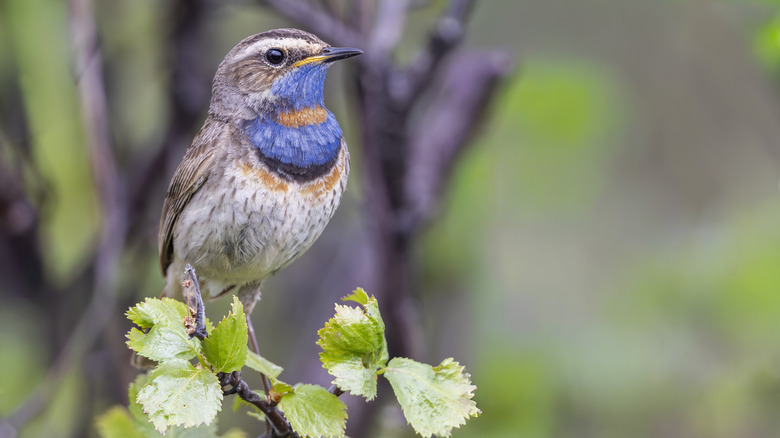
There are plenty of great ornamental trees for your garden, and the popular ones are all quite lovely. However, if you've already planted the most common options and are looking for something a little more unique, you might be interested in growing a mountain gordlinia (x Gordlinia grandiflora), a stunning hybrid tree with gorgeous, sweet-smelling flowers. Butterflies and other pollinators are drawn to the flowers, while birds enjoy resting and roosting among its branches.
Developed at North Carolina State University in 2003, this tree is a fascinating hybrid of the Franklin tree (Franklinia alatamaha) and the loblolly bay tree (Gordonia lasianthus), both of which are native to the U.S. Similarly to both of its parent trees, the mountain gordlinia grows large white flowers in summer and fall, which look similar to camellias or sweetbay magnolia flowers — they provide an excellent food source for all pollinators during late summer and fall, when many spring and early summer flowers have already faded. These flowers really are the star of the show, with their subtle, sweet smell and soft shape. Butterflies love them, making this tree an excellent centerpiece if you're planting a butterfly garden.
The branches are great for birds to nest in, too, offering shelter from the elements and a nice structure to support their nests. Mountain gordlinia trees grow quickly, so there'll be plenty of room for all your local birds to grab a perch! It is also semi-evergreen, meaning it provides shelter all year round rather than only in one season. If you want to attract birds without bird feeders, providing safe nesting spots is a great way to do it. Not to mention, many birds eat insects, so the wide variety of insects drawn to the mountain gordlinia's flowers provides a food source for them as well.
How to grow mountain gordlinia
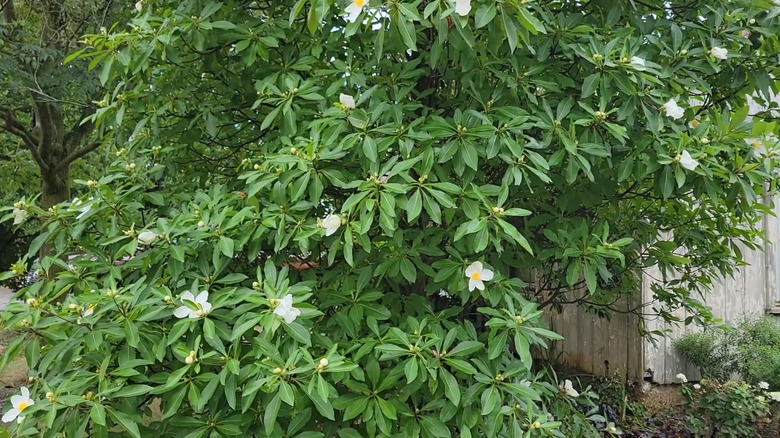
Mountain gordlinia trees are hardy in zones 7 through 9, and unfortunately, they aren't a good fit for containers. These aren't the largest trees, but they aren't tiny either, growing to around 15 feet wide and up to 20 feet tall. It's best to avoid planting them too close to any structures, overhangs, or other possible hazards. However, you probably will want your tree close enough to your home for you to enjoy the lovely smell of the flowers and all the butterflies and birds that will come to visit. In addition to spacing it correctly, you'll want to ensure it's getting proper care. After all, healthy plants grow more abundant flowers and stronger branches.
For a thriving tree, plant your mountain gordlinia in rich, well-draining soil. It thrives in soil that's loamy and full of organic matter, so consider amending your soil with compost. Mountain gordlinia can grow in full sun to partial shade, depending on where you live. In cooler regions, plant it in full sun to keep it warm and healthy through winter. In hotter regions, make sure it has some shade to protect it from the more intense afternoon sun — if you have any fast-growing shade trees that are taller than a mountain gordlinia, you may be able to plant it in their shadow.
Other than planting it correctly, your mountain gordlinia will benefit from some light pruning each winter to remove dead or broken branches. You can push it to early spring as long as it's still dormant, but be careful not to wait too long. Spring is nesting season, and you don't want to risk disturbing any birds. You won't want to prune in summer or fall either, as that would mean cutting the blooming season short for you and the butterflies!