

What To Do If You Find A Ground Bee Nest In Your Yard
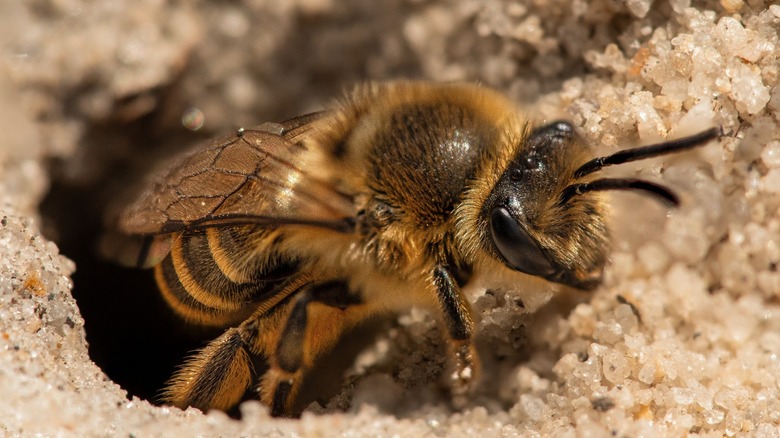
About 70% of the 20,000 bee species in the world build nests in the ground, although some of these so-called "ground bees" aren't bees at all — they're yellowjackets, which are wasps. While a yellowjacket nest isn't something you want in your yard, it will go away in the winter, but bees return to their nests year after year. Does that mean you need to get rid of the nest? The answer is probably no.
It's common knowledge that honeybees are important pollinators, but they seldom build nests in the ground. What might not be as well known is that ground-dwelling native bee species, including bumblebees, mining bees, sweat bees, and digger bees, are also important pollinators, and 80% of the world's flowering plants depend on them. If you remove their nests, you deprive your garden, as well as others in your neighborhood, of a vital vector for fertilization, and in most cases, there's no reason for it. Most ground-dwelling bees are docile, many are solitary, and some, like certain species of bumblebees, are on the verge of extinction.
Rather than getting rid of a ground bee nest, a savvy gardener, recognizing the value of bees, grows plants that attract them and help them and other pollinators do their job. Before you decide a nest is benign, though, it's important to distinguish it from that of more aggressive, less beneficial species (we're looking at you, yellowjackets).
Identifying and removing a ground bee nest
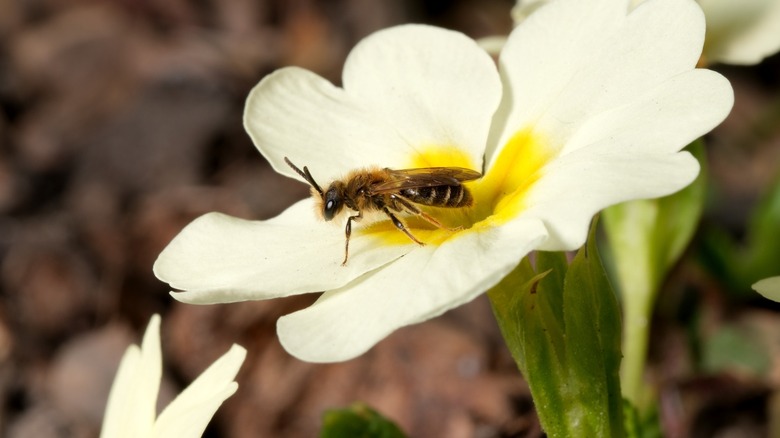
Your first indication of a ground bee nest might be the sight of a solitary bee buzzing close to the ground and disappearing into a hole at the top of a small pile of dirt on a patch of bare ground. Activity around the nest increases in spring, when ground bees hatch their young, so at that time you might see several bees. This seasonal activity is a good way to distinguish ground bees from yellowjackets, because the latter are most active in late summer or early fall.
Once you've determined a nest belongs to ground bees and not yellowjackets, you can relax. Ground bees aren't likely to attack you unless you disturb the nest. They will happily go about their work of collecting pollen and fertilizing plants, and your garden will reap the benefits. However, you may find a nest in an inconvenient location, and in that case, there are non-toxic ways to evict the bees. The process is not as difficult or dangerous as getting rid of a yellowjacket nest.
Ground bees prefer to build nests on bare ground, so you can break their connection to an undesirable nest by covering it with mulch, piles of leaves, or new grass to make it more difficult for them to burrow. Flooding the area with water regularly is another way to convince them to move elsewhere, because ground bees like it dry. If you've planted new grass, the extra water will help it grow.