

Give Your Driveway A Polished Edge With This Easy Concrete Bag Trick
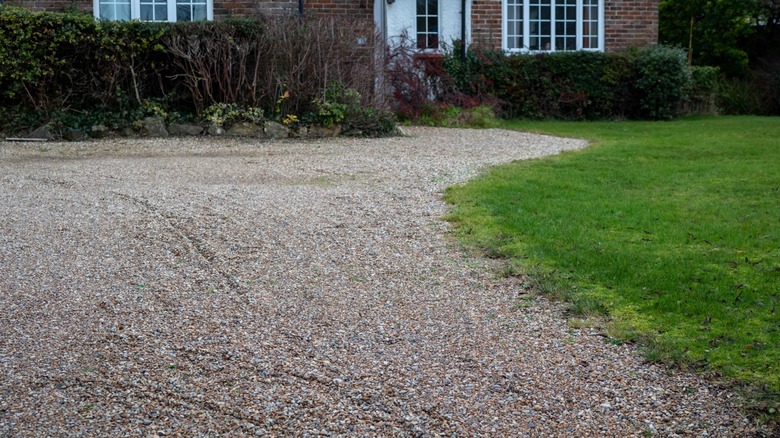
If you want a simple, inexpensive driveway, gravel is the way to go, but when you spread gravel, you really need a border to contain it. Otherwise, heavy rain and vehicle traffic fling the stones far and wide, creating an undefined edge that eventually gets overgrown. Installing concrete or natural stone edging is one way to border a gravel driveway, and wood and aluminum strip edging are also possibilities, but if you're looking for a solid border with no digging and little effort, YouTube user Mr Know It All has a simple alternative: make the border with full sacks of concrete mix.
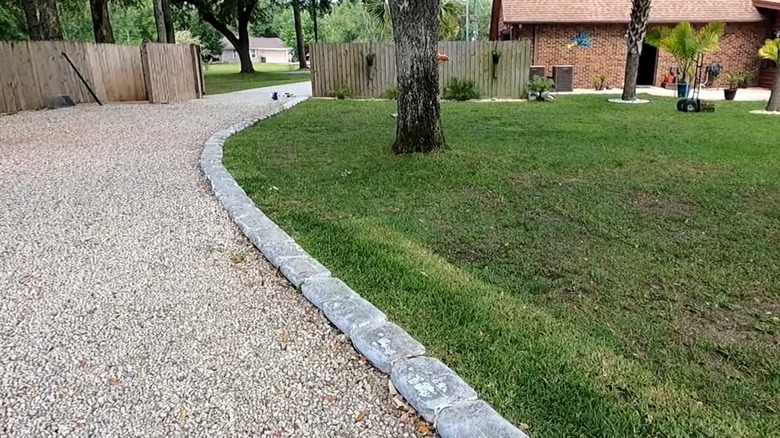
You're probably thinking that lining your driveway with concrete bags will make your property look like a construction zone. That might be true at first, but eventually the paper bags will decompose in the sun and rain, leaving behind the contents, which will have hardened into smooth, rounded edging blocks. Each one weighs from 40 to 80 pounds, depending on the size of the bag. That makes it heavy enough to stay where it is — even if you swipe it with your car — but you can move it with a shovel if necessary.
Consider this before bordering your driveway with concrete bags
Using bags of concrete isn't the cheapest way to border your driveway. A 60-pound bag of concrete spans about two feet, and the price is about $4.50 per bag, making the cost to border a 50-foot driveway on both sides about $225. A 20-foot length of wooden driveway edging, on the other hand, costs about $30, making the final price for the same driveway about $150. Plus, any work you save by not having to dig, you'll end up spending on carrying heavy bags of concrete. When your border is in place, though, it will last much longer than wood with little to no maintenance.
Once the bags have decomposed, the remaining concrete looks as attractive as concrete pavers or even something more ornate, like landscape edging made from angled brick. However, to get it that way, it's important to flip the bags over. The Portland cement in the mixture will have settled to the bottom during transport, and flipping it ensures it's at the top. When you wet down the bags thoroughly with a garden hose to activate the concrete mix, the cement will bind the aggregate below it and make a smooth surface.
The bags will decompose by themselves and become part of the soil, but this will take months or even years. If you don't want to wait, you can cut them off with a knife, blast them away with a pressure washer, or burn them with a torch. Lastly, you can paint the concrete once it's dry and the bags are removed, to match your look.