

DIYer Shares Their Solution For A Dated Kitchen Refresh On A Budget
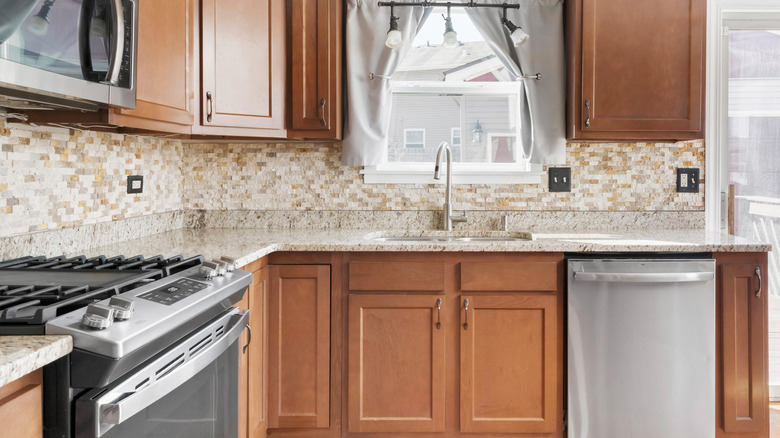
Tile backsplashes are a bit of tradition that too many of us accept without question. Thinking differently about these sorts of things is usually made easier by necessity, and TikToker sashablvc, also known as Sasha Marie, seems to have found a renter-friendly opportunity for inventiveness within her apartment's tenant damage provisions. When she grew tired of her tile backsplash, she installed a few sheets of Formica laminate over the existing tile temporarily — and she says she did it for less than $200.
Laminate sheets are usually used on countertops, but sashablvc's idea of using it as a backsplash isn't entirely novel. Formica mentions backsplashes as a potential use, though in my history as a remodeler and sometime homebuilder, I've not seen much of this in the wild. Granted, some metal laminates are specifically designed for vertical surfaces. And it's a completely sensible thing from a cost perspective; you can usually find 4x8-foot Formica sheets for around $100 or less.
There are a lot of design options, and if you include beadboard and other paneling in the pool of possibilities, you could have just about any backsplash look, from faux brick to shiplap. For my money, it's easy for these paneling, laminate, and metal sheets to come off a bit sterile when used as backsplashes. One gets the impression of a hospital break room or, with the stainless sheets, maybe a lab of some sort. The best-looking laminate sheet and paneling backsplashes I've seen avoid this problem by providing a high contrast with the cabinets — like a refined and richly hued wood pattern against light, neutral cabinets.
Installation challenges and tips
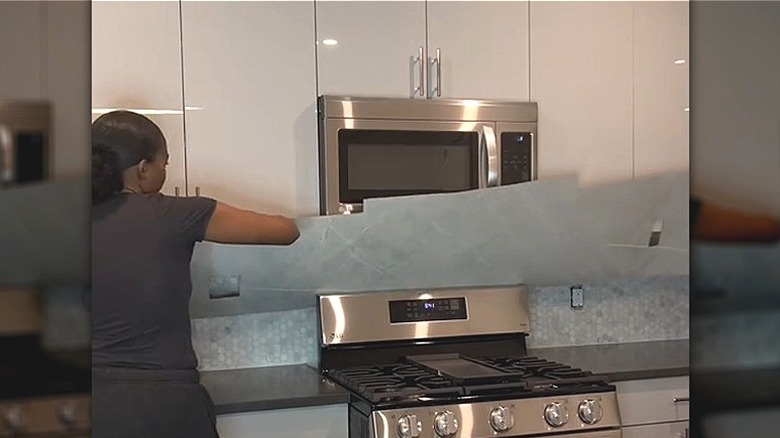
You'd normally use contact cement for a permanent laminate installation, which is obviously not a good solution in a rental. TikToker sashablvc says she used heavy-duty double sided tape, and that makes good sense. Thinner is better, but be careful with carpet tape and tapes designed for permanent installation of things like vinyl flooring. They might mostly peel up, but you'll probably still have to deal with using solvents to remove tape residue. Removing double-sided tape from a wall, especially mounting tapes like Gorilla tape and Scotch Mount, can result in the same residue problem. Nano-grip tapes like Alien Tape will do the job and clean up nicely. It's relatively thick, but it might be your best option.
The maker notes in the comments that the outlet cover plates help to hold the laminate in place. If possible, mark your electrical box locations while holding the laminate against the actual wall, rather than measuring. It's easier than you can imagine to transfer measurements imperfectly. She also notes that she cut the laminate herself "with a small drill." I'm guessing that means something like a rotary tool or a spiral cutter like a zip saw, which certainly works. If you can, cut the stuff with a trim router — just as you'd trim off the excess when cutting a laminate countertop — and use a straightedge. Using a saw blade, even if you use a fine-tooth blade and tape the cut properly, will probably result in an imperfect edge you can't leave exposed. Which leads me to the big challenge: dealing with edges and seams.
Keys to a seamless installation
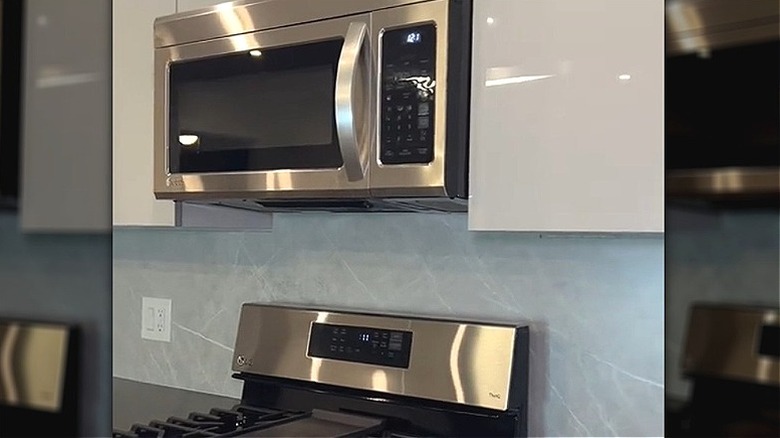
The real difficulty comes in cutting laminate sheets precisely enough to look finished without trim or caulk, which is somewhere between tricky and impossible. Visible edges should be factory edges whenever possible. As straight as you can cut it isn't always going to be straight enough, and in a rental situation you might not have the leeway you can get from trim, caulk, or even grout lines. Where edges butt against other surfaces, like countertops, are potential trouble spots. Tuck your edges behind things whenever possible, like stoves, microwaves, and even upper cabinets. Don't attempt to butt your cut edges against your other edges if you can avoid it.
Edges are tough, but seams can be a major hassle. It depends on the laminate design, of course, but I'd say you should generally think twice before using laminate sheet on a run that's longer than eight feet (or however long your sheets are). Any seams are going to be visible, and there aren't a lot of renter-friendly options for concealing them. Your instinct might be to glue on a thin bit of PVC or MDF trim, but that can easily look like mobile home paneling. I see this in bathrooms from time to time, and it emphasizes the inexpensiveness of the solution rather than the great patterns and textures these laminates usually have. If you're forced into, say, an awkward corner seam, camouflage it with some kind of countertop decor. A vase of flowers is always a nice addition.