

Not Pavers, Not Stones: A Classic Driveway Edging Idea For A Clean, Timeless Look
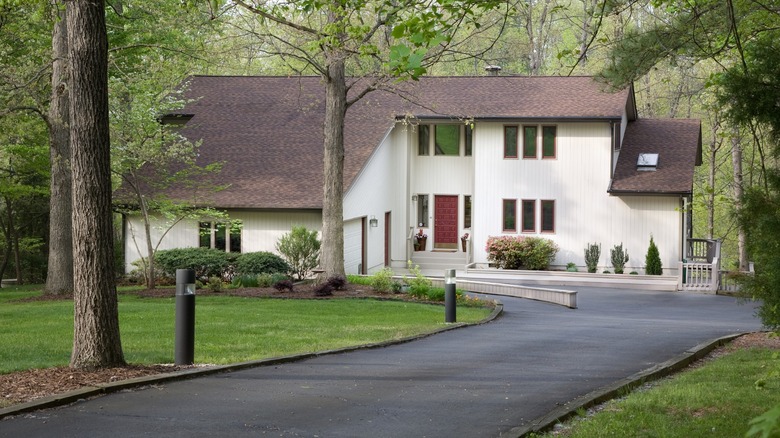
A driveway without a border looks like something is missing. The border protects the edges of the driveway material from crumbling or — in the case of gravel — dispersing, and it also helps control drainage. Whether your driveway material is concrete, asphalt, pavers, or gravel, there are several driveway border options to choose from, including concrete pavers, natural stones, or wood edging. However, one material offers a classic touch that looks good with almost any other material and especially complements traditional homes, and that's brick.
Price-wise, bricks cost a bit more than concrete edging and much more than gravel, which is a budget option. Although reclaimed and recycled bricks are more expensive than new ones, they can really add a timeless element to your landscape. They've had plenty of time to weather, and as a bonus, old bricks are often more durable than new ones. Putting old bricks to use also keeps them out of landfills, which is a plus for the environment.
Whether you use new or recycled bricks, the natural terracotta coloration contrasts well with most driveway materials, but especially with concrete and asphalt. The highly defined border turns a purely functional part of your property into an aesthetic feature. It's almost like having a brand new driveway to boost curb appeal and make your home look polished and neat. By the way, bricks come in colors other than terracotta, including black, white, and cream colored, and that provides extra design flexibility.
What's involved with brick installation?
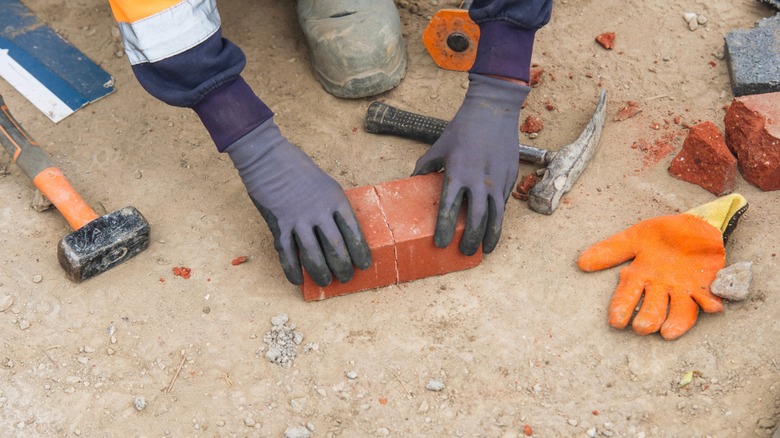
You don't have to lay bricks flat; you can also lay them on-edge or on-end to create a raised border. You also have the choice whether or not to mortar the bricks together. Using mortar makes the border more stable and suits an upscale property, but in a rural setting, it's probably overkill.
If you install a brick border by yourself, be prepared for more digging than you might have expected. For stability, the bricks need to sit on a one-inch bed of compacted sand, and underneath that should be layers of compacted gravel and fill dirt. Also, the trench needs to be wide enough to support the ends of the bricks and prevent them from tilting. You can save yourself a lot of work by skipping all this digging and laying the bricks directly on the ground, but they will probably move during the freeze-thaw cycle, creating a haphazard look that won't provide as much curb appeal.
All in all, that's a lot of digging, a lot of dirt to haul away, and a lot of sand and fill material to truck in. The amount of work involved is a good reason to opt for professional installation. Prices for driveway paver installation vary from $7.50 to more than $20 per foot, depending on the region and the contractor. Because of the wide variation in price, it's definitely a good idea to interview several contractors and get quotes from all of them before choosing one.