

Why There's Simply No Need For Hydrangeas Anymore
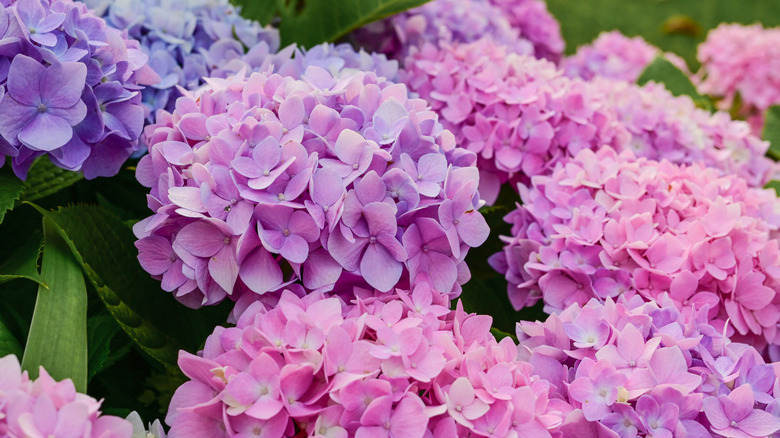
Hydrangeas (Hydrangea spp.) can be gorgeous when in full bloom, but the problem is, it might take a lot of work to get them there! And even then, there is no guarantee you'll find success in the long term, as they are picky plants. You have to make sure your hydrangeas get sun ... but not too much sun, because they don't like that. Knowing how often to water hydrangeas is tricky as well, as you need to keep the soil well-hydrated yet not oversaturated, because they don't like wet roots! With their high and consistent water demands, hydrangeas can easily suffer during periods of heat and drought. These flowers also need a balanced fertilizer, meaning you should stay away from any that has manure in it, due to it having too much nitrogen for hydrangeas to thrive (per Oregon State University).
Specific care requirements can make or break your chances of hearty blooming for the various types of hydrangeas. If you prune your Bigleaf hydrangea (Hydrangea macrophylla) or Mountain hydrangea (Hydrangea serrata) too early in the season, for instance, you risk not having any blooms at all. No matter the species of hydrangea, these flowers have a reputation for being beautiful to look at, but relatively high drama to keep them that way. When really, there is simply no need for hydrangeas anymore in most gardens. The new (easier!) way to do things is to pick one of the many lower-maintenance options to create gorgeous flower beds that will wow your neighbors this spring — no gentle plant parenting required.
Flowers to plant in your garden instead of hydrangeas
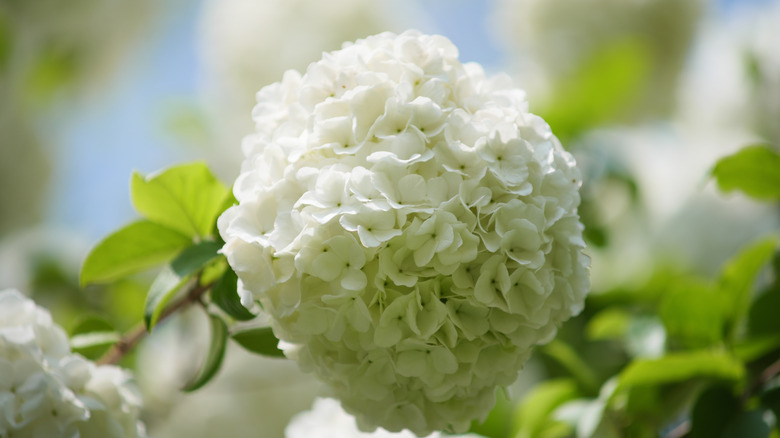
There are a few options to get the lush look of hydrangeas without all of the work. The first is Chinese snowball viburnum (Viburnum macrocephalum), also sometimes called a snowball bush. Just like Annabelle hydrangea (Hydrangea arborescens 'Annabelle'), the blooms are fluffy and white — and they even tend to grow just a little bit taller, too. Casual viewers of your garden may not be able to tell the two plants apart. Snowball bushes flower twice a year and have much more tolerance to heat and drought than hydrangeas do, making them a safer choice, especially for gardeners in USDA Hardiness zones 6 to 9 without time on their hands to figure out how to care for hydrangeas in their more challenging climate.
If you live somewhere that is particularly hot, the American beautyberry (Callicarpa americana), also called the French mulberry, is another great option to get the pop of color that hydrangeas bring to a yard. This plant is incredibly heat-tolerant, as it's native to USDA zones 6 and 10, making it a real set-and-forget kind of option that native wildlife also love. You can also try out colorful azalea varieties like the Encore azaleas (Rhododendron Encore Group). Much like their name might suggest, the azalea varieties within this group of cultivars were developed to bloom multiple times a year. So, your yard won't be without bright pinks, oranges, or reds for long.