

Topsoil Vs Garden Soil: What's The Difference And Why It Matters
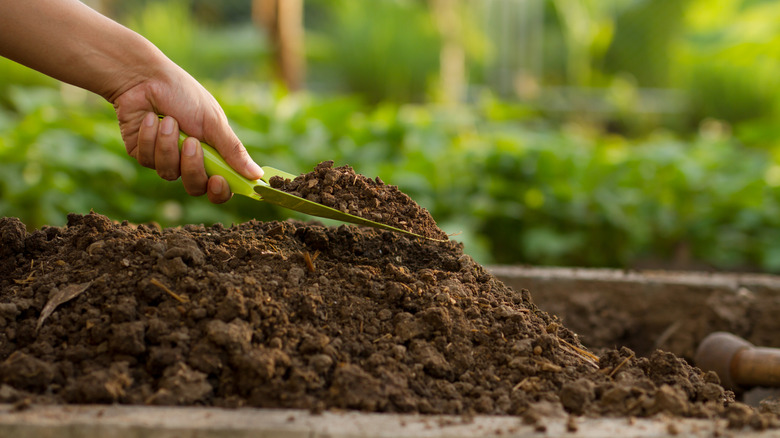
Sure, all soil might look pretty similar, but if you've watched plants falter or fail once you make them at home in your garden, you've probably realized that different soil types (and colors!) can deliver dramatically different results. And if you're wondering what the difference is between topsoil and garden soil — and if you should purchase garden soil — it's important to know that while topsoil and garden soil might seem similar, each serves a different purpose for your plants.
Topsoil is the topmost layer of your garden's soil, or the first 3 to 6 inches of soil you encounter. While its exact makeup will vary depending on your region and specific garden, topsoil typically includes materials like rocks and leaves as well as nutrients. This type of soil also often includes silt, clay, and sand, and when they're found in the ideal ratio, it's called loam.
Garden soil, while it technically begins as topsoil, is different. That's because garden soil is created when topsoil is altered by the addition of compost or other kinds of organic material to improve it based on your specific soil needs. Additives intended to boost nutrients, or soil amendments, make garden soil feel lighter and fluffier than topsoil, and you can think of it as more similar to potting soil mixes than the topsoil you'll find already present in your garden. However, before you settle on one or the other, it's important to know the different purposes topsoil and garden soil serve for your plants — along with how you can best utilize each.
Topsoil and garden soil work together to serve different plant needs
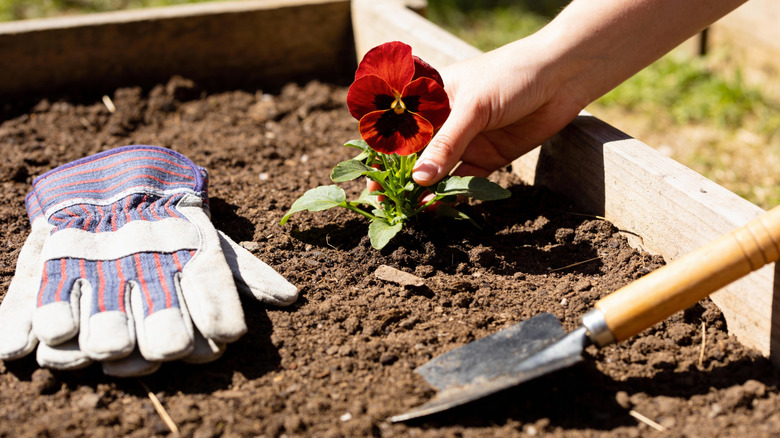
To understand when you should rely on topsoil versus garden soil, you'll want to know which scenarios suit each soil type. Topsoil is best used for filling in holes or low areas of your landscaping or altering your garden's structure; it isn't the best soil choice for planting flowers, vegetables, or herbs. You can put it to use in your garden beds and across your lawn, but you'll likely want to add garden soil (or amend your existing topsoil) before getting down to planting in it. However, unless you need to increase soil volume, you may not really need to purchase or add topsoil; instead, you can improve what you already have with organic matter like compost.
Garden soil takes your average topsoil and levels it up with extra nutrients; you can think of it as more of a growth-friendly soil. Since it's formulated specifically for growing plants, it includes extra organic materials that can provide what flowers, vegetables, and other plants need to thrive. There are no additives needed when you're working with this soil. You can spread garden soil in garden beds and planters, container gardens, window boxes, hanging planters — anywhere you'll be planting.
Essentially, you want your topsoil and garden soil to work together. Topsoil can form the first layer of dirt, but you'll want to add garden soil on top of it. Garden soil has the added perk of better moisture retention compared to topsoil, which can make a notable difference as you aim to keep your plants well-hydrated.