

Skip Vinyl Siding — There's A Stylish, More Durable Option For Your Home
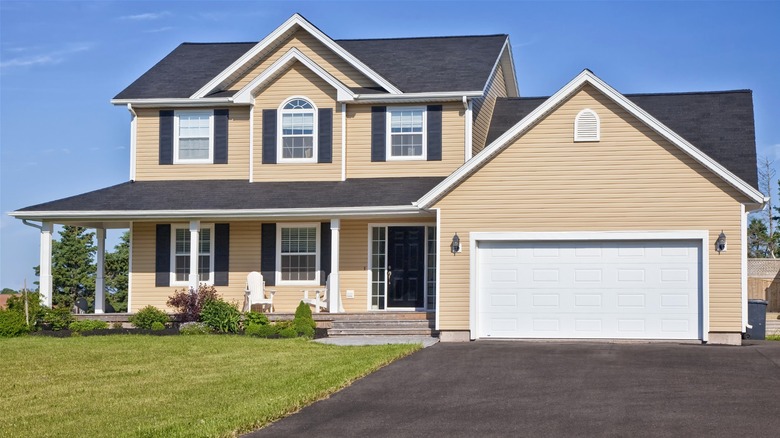
When choosing a siding material, you want a product that keeps looking good for a long time with as little maintenance as possible. Vinyl is the lowest-cost option that fulfills these conditions, but...it's vinyl, a type of plastic that doesn't do much for curb appeal. If your budget allows for a slightly higher price, there is an alternative that gives you the look of real wood and better durability while being more environmentally friendly, and that's engineered wood siding, also known as composite wood siding.
Not to be confused with plywood siding materials (which are also types of engineered wood), engineered wood siding is manufactured by compressing wood fibers and resins into planks with a plywood backing and a hardwood facing and then sealing the planks with a waterproof coating. When comparing wood and composite siding, the engineered variety offers a similar look and feel to the real thing but without the tendency to split or warp. It also lacks the various knots and irregularities that might allow water to pass through. Running roughly $7 to $15 per square foot installed (per Modernize), engineered wood costs about 25% more than vinyl siding, but it can last as much as 10 years longer.
The term "composite siding" may be a little confusing, because builders often use it to refer to another type of siding material known as fiber cement siding, which is also a great alternative to vinyl. Although it's also manufactured with recycled wood chips, fiber cement siding is mainly composed of Portland cement and sand. It's more expensive and lasts longer than engineered wood, but it doesn't look like real wood.
Why engineered wood siding is a great choice
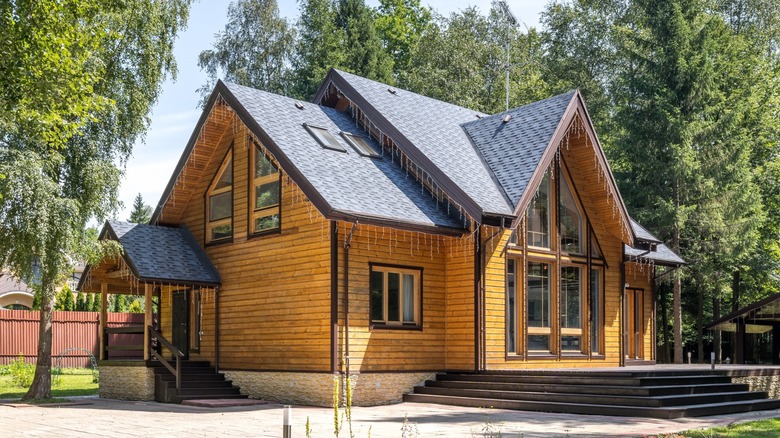
Wood siding has an appeal that other materials lack, but real wood is becoming more scarce as forest supplies dwindle and lumber prices rise. Engineered wood is less costly than real wood and has all the same sophistication and character. It's also easier to install, because the planks are more lightweight and uniform. In addition, LP SmartSide, a popular engineered siding product, offers two different textures: rough and smooth. Planks come pre-finished in a number of colors and natural wood tones and are ready for installation. You can also get pre-primed pieces that make it easy to paint your LP SmartSide siding to exactly match your color preferences.
Like composite decking products, engineered wood siding got a bad rap early in its development for its susceptibility to moisture, and even now, it's considered water-resistant but not completely waterproof. Also, because it's wood, it's vulnerable to insects. Planks are treated with borates and sealed with a polyurethane coating during manufacturing to combat these problems, but mistakes in installation can allow water to seep in and cause swelling or rot. Few problems should arise if a qualified and competent siding contractor does the installation.
Because it has a hard coating, engineered siding is easy to clean and considered a low-maintenance product. When you do need to clean it, it's important to to avoid abrasives, harsh cleaners, or pressure washing with an excessively high pressure, because that can wear through the coating and expose the wood to the elements. With annual cleaning, the siding will maintain its resilience and natural aesthetic appeal for years.