

The Fragrant Privacy Tree That Birds & Butterflies May Flock To In Your Yard
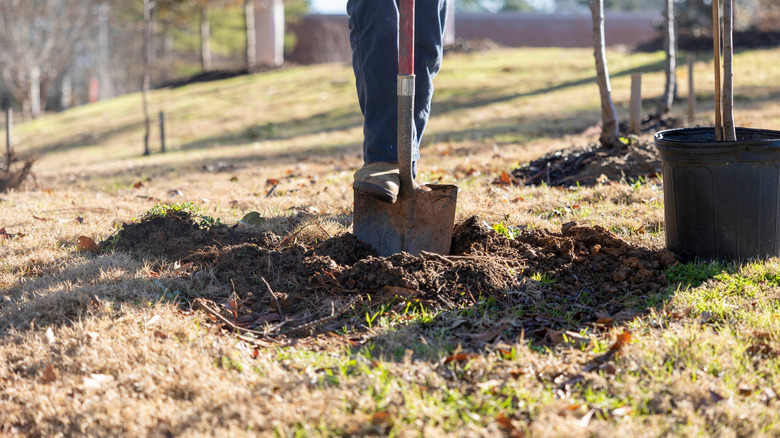
Fencing is often sought after by homeowners who want a bit more privacy around their yards. Yet fences don't have the same ornamental or wildlife value as privacy trees. If you want to plant trees for privacy screens in place of a fence, there are certainly a lot of options to consider. For an impressive tree that offers fragrant flowers for both you and pollinators to enjoy, you might consider planting yellow oleander (Cascabela thevetia).
Yellow oleander is a spreading evergreen plant that's native to Mexico, Central and South America, and the West Indies. It particularly thrives in warm tropical environments, and it does well as a privacy tree thanks to its abundant foliage, which stays green year-round. Aside from its ability to add a tropical-like barrier in your yard, yellow oleander also stands out among other common privacy trees for its pretty and fragrant flowers, which bloom in tubular shapes in yellow (and sometimes apricot).
But first, a note of caution: All parts of yellow oleander are poisonous if ingested, and direct contact with the tree can cause severe allergic skin reactions. To that end, if you have pets or young children, you might need to rethink planting yellow oleander in areas where the tree could be accessible to such groups.
What to expect when using yellow oleander as a privacy tree
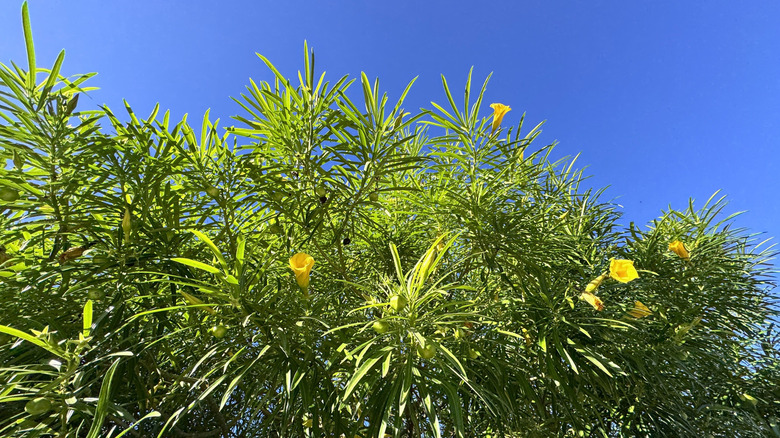
Yellow oleander is considered to be a moderate-growing plant. It may eventually reach at least 4 to 8 feet tall and up to 5 feet wide, though it grows much larger in native habitats. In your yard, it's likely to grow at a rate of 1 to 2 feet per year. When planted in ideal conditions, yellow oleander can produce flowers within its first year. You can expect the trees to bloom starting in the summer and until fall – when they do, your yard will be graced with sweet-smelling yellow tubulars.
Yellow oleander is grown in many countries for its ornamental qualities, but it's also possible for the flowers to attract pollinators. During blooming time, you might notice an increased presence of hummingbirds, butterflies, moths, and bees, who may be drawn to the sweet fragrance of the plant. Other birds might use yellow oleander as a food source, too, though larger wildlife will generally steer clear due to its toxic qualities. If you want even more pollinators to stop by your yard, you may want to consider adding some other stunning plants that attract butterflies and are easy to grow.
Ideal growing conditions for yellow oleander
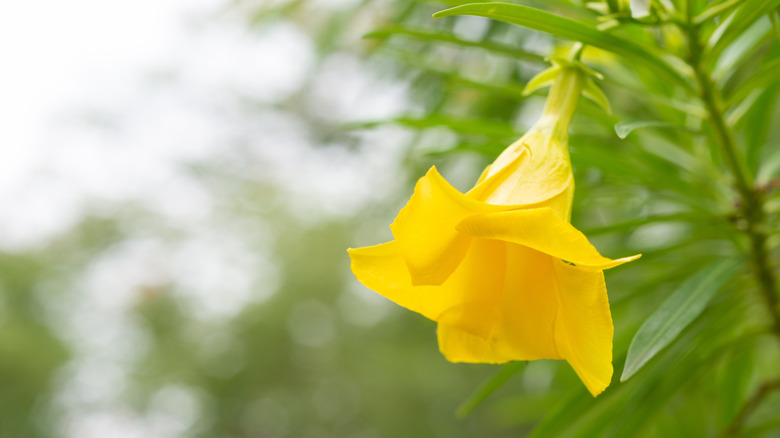
Yellow oleander is easy to grow and maintain, and there are typically no serious issues with pests and diseases. It's considered hardy in USDA zones 8 through 10, and it can survive in drought-like conditions. Overall, yellow oleander does best in sandy soils and full sun, and you should water only when the soil is dry in established plants. While part shade is still conducive to the growth of the tree, it might reduce the number of flowers that grow on your oleander. You should also consider pruning once flowering ends around the start of the autumn season, especially when planting as a privacy tree or hedge.
Aside from toxicity, there's another potential downside to consider when planting yellow oleander — especially if you're particularly worried about invasive garden plants to avoid. Given the fact that the tree is largely native to areas outside of the U.S., it is considered to have invasive qualities in certain countries. The detrimental impacts yellow oleander can have on natural ecosystems are especially problematic when the trees are planted in open areas. Notably, yellow oleander trees are considered to carry a "high invasion risk" in Florida, with reassessment currently in process to determine whether they should be deemed outright invasive.