

No More Plant Pots: This Ancient Technique Turns Houseplants Into Stunning Displays
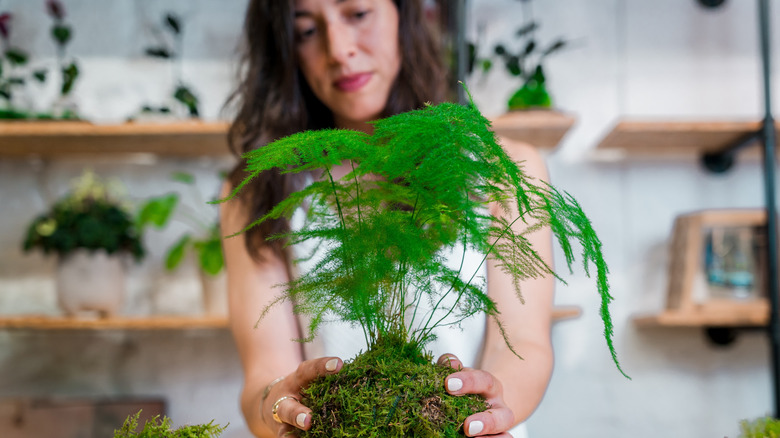
Whether houseplants are taking over your home or you're a beginner looking to flex your green thumb, one ancient technique lets you grow plants with no pot required. Kokedama, which means "moss ball," is a type of Japanese garden art involving a style of bonsai. While kokedama dates back to the Edo period of Japan in the 17th century, the style has been embraced by modern plant parents due to its simplicity and space-saving nature.
To make your own kokedama, all you need is a houseplant, some potting soil, sheet moss, and some string. While even houseplants that are best for beginners will work well with the technique, skip the cacti or succulents, as they need a loose, well-draining soil that doesn't easily form a ball. Also, be sure to pick plants that will thrive in your space. If you've got lots of light, go for ficus or croton, which thrive in bright conditions. Pothos, begonia, or philodendron are all good picks for darker spaces.
When choosing your plants, think about how you'll display the finished moss ball. Plants that vine or trail, like pothos, ivy, or spider plants, will look dramatic hanging in a window or from the ceiling. More compact plants, like peperomia or African violet, will look right at home resting on a vintage dinner plate or thrifted tray.
How to make your own kokedama
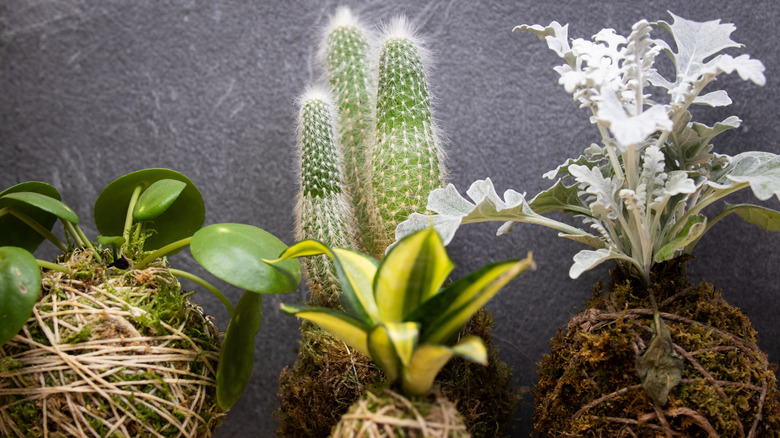
Get ready to get a bit messy, as you'll be working directly with the potting soil to form the moss-covered ball. To begin, put about two cups of potting soil in a bucket or large bowl, then add enough water to saturate the soil. If you pick up a handful of the soil, it should form a solid clump when you squeeze it. If not, add more water. If it's too wet, add more soil. At the same time, soak the moss in water.
Take your plant out from its pot, then give it a gentle shake to remove loose soil and expose the roots. Then, cover the roots with the damp soil, forming a ball around it. Don't worry if the ball isn't perfectly smooth — a bit of imperfection goes along well with the Japanese wabi sabi trend. Once you've got the ball formed, spread the sheet moss out on a flat surface, place the soil ball in the center, and wrap the moss around it. Finally, secure the moss to the soil by wrapping yarn, twine, or thread around it several times.
How often you need to water your moss ball depends on the plant. About once a week or so, fill a bowl with water and place the moss ball inside, then let it soak for about 10 minutes. You can mist the plant with water between soakings. Misting can be especially beneficial for plants like ferns, which do best in humid conditions.