

Atomic Ranch Homes Were Once Everywhere — This Is Why Builders Stopped Making Them
We may receive a commission on purchases made from links.
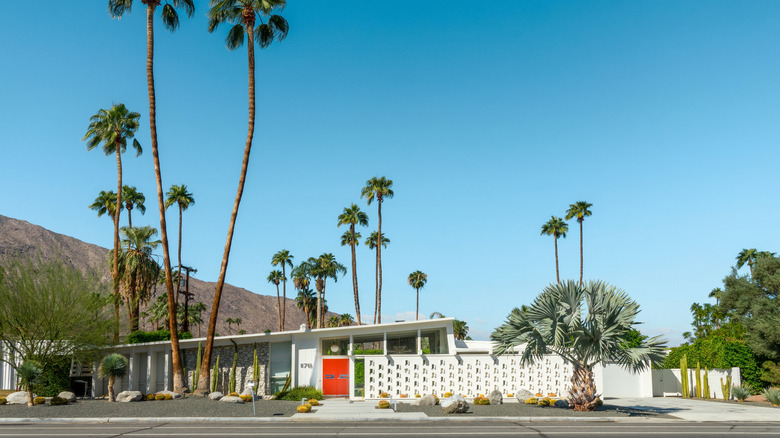
The atomic ranch might have seemed stylistically timeless, with its open floor plans, indoor-outdoor integration that would have made Frank Lloyd Wright proud, and truly jaw-dropping midcentury modern exteriors. But it was ahead of itself in one fairly mundane way that turned out to be important: We weren't ready to properly insulate homes with so much glass. At the advent of ubiquitous air conditioning in the 1950s, homeowners must have been standing by their Scandi credenzas and staring out at their backyards, thinking the view was going to cost a fortune to heat and cool.
At the same time, the view from that window was increasingly unimpressive as lot sizes in some areas shrank — and lot prices did anything but shrink. In many ways, the atomic ranch represented the freedom, openness, and casual luxury Americans aspired to, but these weren't your great-great-great-grandmother's 1,100-square-foot ranch homes. The atomic ranch would grow much larger, and, being ranch-style homes, that meant taking up more real estate.
These were the factors that put an end to the tract development of these horizontal masterpieces after the 1970s, and "builder-grade" would soon come to connote something boxy, tall, and just plain big. Having spent most of the 1950s and '60s as the top choice among house styles, the rambler gave way to split-level floor plans and then to a parade of McMansions in various styles. Architectural historian David Bricker is puzzled that the style hasn't come back around. "Perhaps for now it's just too ordinary and common," he said (via the National Park Service). But it seems more likely that the two big problems haven't been sufficiently solved yet.
The atomic energy problem
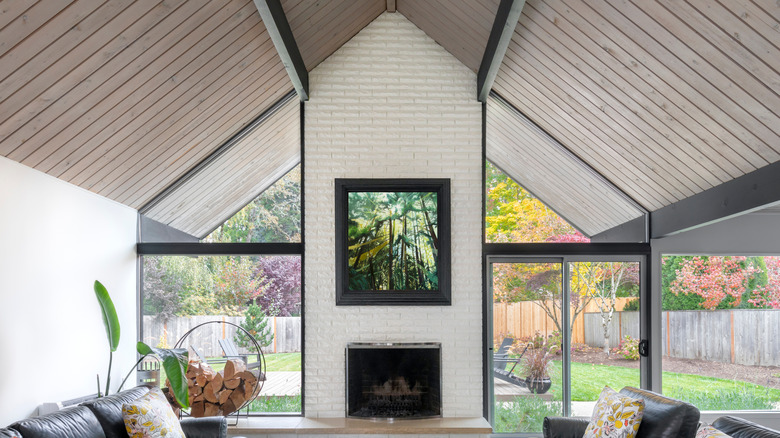
One feature that distinguishes atomic ranch homes from their more pedestrian ranch cousins is the use of great expanses of glass to ease the indoor-outdoor transition. What they didn't do well was insulate air-conditioned homes against serious power inefficiency, and they didn't help much in heating homes for which passive solar wasn't sufficient to the task. Air conditioning's march to ubiquity was a long one that started in the 1930s, but it topped 10% adoption in the 1950s and started a major acceleration in the late 1960s. It eventually leveled off at around 90% in the 2000s. Heat and AC were part of the widespread electrification of American homes in the late 20th century, and today HVAC accounts for more than half of the electricity used by our homes. And while overall residential energy consumption has remained remarkably stable for well over a century, electricity use has skyrocketed.
Windows have only just begun to catch up with walls in terms of insulation value and energy efficiency, and those gains still command a staggeringly high price. Basic windows can be had for as little as $100-150 each, while premium, super-efficient windows can run $1,200 or more. And picture windows can cost as much as $2,500 each. Solutions might be found elsewhere. Indow window inserts, for example, claim to provide most of the insulation value (and nearly all of the noise reduction) of triple-pane windows for less than half the price. So these acrylic inserts could be a step along the way of making the atomic ranch dream feasible again.
The space race: Building up, not out
The places where atomic ranch homes were most practical — California and the Southwest — also have a lot size problem. California has the second smallest lot sizes after Nevada, the second most expensive real estate in the country after Hawaii, and four of the five most expensive metro areas when it comes to lot price ... including the three most expensive. The state is also where you'll find the most surviving atomic ranches. And even in states with lower real estate costs, you'll end up paying higher property taxes for the larger lots that atomic ranches demand, while the states with the lowest property tax rates often have the highest property values, which translates to a high real estate property tax bill.
Because ranch homes in general — and sprawling atomic ranches in particular — have a habit of taking up horizontal rather than vertical space, the cost of that area became a big problem. "A 2,000-square-foot ranch house with a two-car garage, for example, needs a lot at least 120 feet wide," architect and author Witold Rybczynski wrote in his book "Last Harvest: How a Cornfield Became New Daleville." He explains that the move to multi-story houses made financial sense in other ways as well, noting that a builder can save 30% by virtue of the smaller foundations and roofs they require.
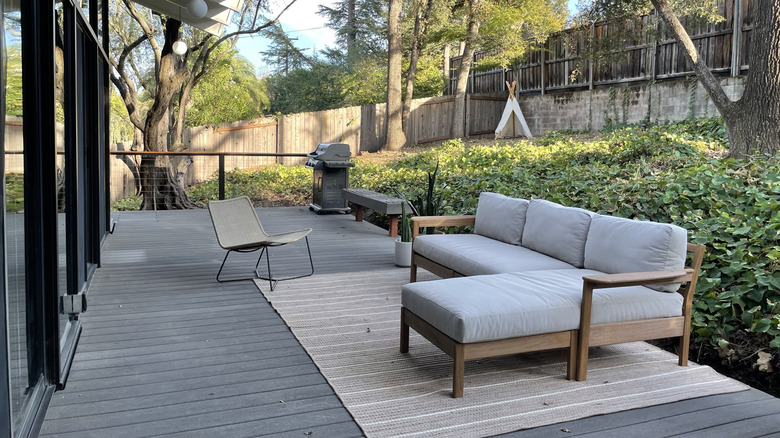
To some extent, atomic ranches in areas with small lots can undermine one of their key attributes: The transparent flow from indoor to outdoor spaces. If your lot space is limited, taking up more of the available real estate leaves less outdoor space to flow into.