

The Downsides To Home Mold Test Kits You'll Wish You Knew Before Trying
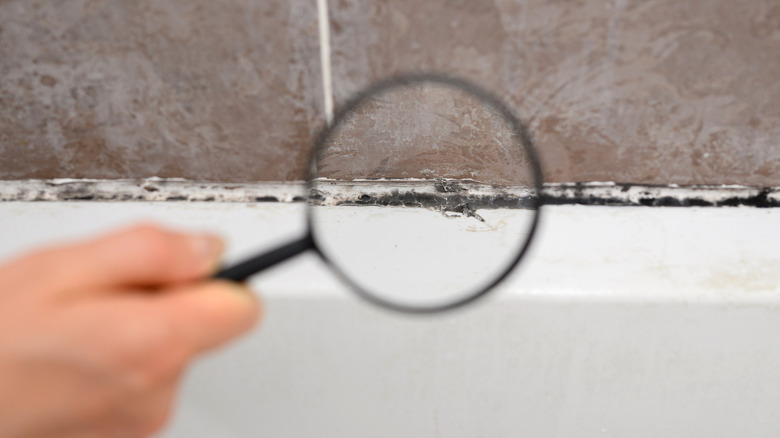
DIY mold testing seems like a perfectly intuitive thing to do. And the intuition itself is a good one because you do need to do something when you suspect you have a mold issue. But it's probably not using a DIY home mold test kit and, in fact, is often not professional testing either. Mold tests simply don't usually tell you what you want to know. When they do, there's a good chance they're not correct, and when they're correct, there's a good chance they'll be misinterpreted.
Okay, that's a lot of shade to throw at a poor test that's just trying to help you help yourself. But I've used them in two homes ... one professionally tested and one using a DIY air-sampling kit on my current property, and in both cases the tests failed to turn up substantial mold problems. Most rationales for testing are solid: visible mold, visible damage, that familiar musty odor of mold and mildew, or the likelihood of mold growth in your home because of a leak that you know about. You're worried about structural damage and the dangers of mold exposure.
The problems, though, are hinted at by one of the lab's disclaimers on my DIY test kit results: "Lab results alone are not actionable without the context of actual onsite conditions." If that sounds obvious, well, it is. A lab test alone isn't usually sufficient to establish the location, type, or extent of mold colonization or damage. Certain types of tests might sometimes help, but without a thorough visual inspection, you won't even know what to do. And with a thorough visual inspection, you won't need the mold test.
Types of mold tests and their problems
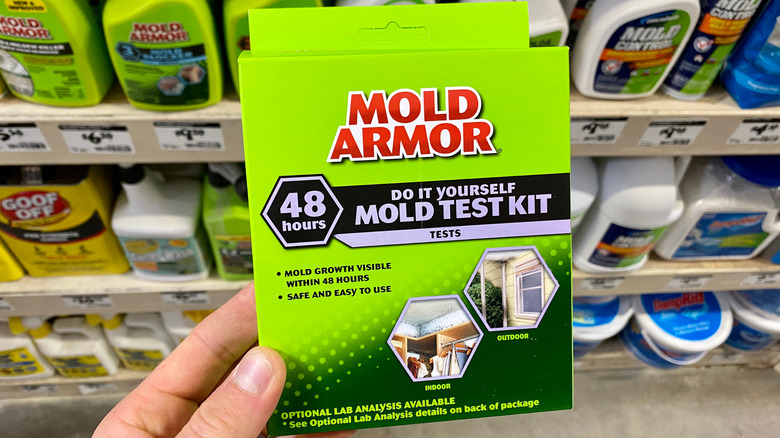
The types of DIY test kits all have their potential uses and failings. Surface tests attract mold spores to sticky tape or a swab. Air sampling draws a specific volume of air and any mold spores present from multiple points. Settling plates are trays set out to accumulate whatever spores fall out of the air. The key thing to remember is that mold is ubiquitous. That is, it is everywhere ... or at least everywhere you're likely to build a home. So if you're testing an air sample, settling, or a surface that isn't unusually clean, you will find mold spores, so you should be skeptical of any DIY test that can return only a positive or negative result.
The questions, then, are about types and quantities of mold spores. As the authors of a 2008 article in The Journal of Allergy and Clinical Immunology explain, the number of spores in the air "can vary by orders of magnitude over short periods of time." So, settling plates tests — the most common DIY kit type — aren't effective at measuring the amount of nearby mold. Professional tests tend to use air sampling, in which air is pulled into a single-use cartridge. When compared with outdoor samples (not always a given with DIY kits), indoor air samples can tell you about the types and relative quantities of mold present, but not about potential colonization. And because of the aforementioned variability of airborne spores, the accuracy of air tests is questionable. Surface testing can (somewhat unreliably) indicate potential colonization of the surfaces tested, but without culture plating, it won't identify species or indicate the mold's viability.
Problems common to most mold testing

The biggest problems, however, are common to both DIY and professional testing. Test results should be interpreted by trained laboratory personnel, but this is fraught with difficulties. There are no established standards by which mold tests or inspections can be evaluated or reports rendered. There's an even more worrisome problem with some labs, as well ... a tendency to make misleading and fraudulent claims about the risks of mold and the value of testing. Lab personnel or reports sometimes provide incorrect or misleading information about the steps necessary for mold remediation, the role of mycotoxins in health issues, the efficacy of blood tests in diagnosing mold-related illness, and their medical licenses and other credentials.
But the worst shortcoming of DIY mold testing is that it doesn't provide the most useful data in any mold inspection: a visual inspection. Mold inside walls is nearly impossible for DIY test kits to identify. If you have suspicions about mold growth and a reason to believe that water ingress or high humidity are present, the best course of action is usually to take a look. Visual inspections can (and DIY tests usually can't) give you critical information about the location and severity of a mold problem or the steps necessary to eliminate it. In my case, a high-quality DIY air sampling kit found every category of mold to be "not evident," even though there was an active problem near one of the test locations caused by improperly installed flashing. I found the issue and solved it by simply looking carefully at the area where I suspected a problem.